Organisers with a staffed drinks station
A pure-matcha powder in a larger pack suits a station where staff can measure portions and prepare each drink. Plan the number of servings from the chosen product’s stated preparation amount.


For a staffed conference drinks station, a larger pure-matcha pack with a stated preparation amount suits measured service; individual sachets make portions easier to distribute where guests serve themselves. Plain matcha and latte mixes have different ingredient and preparation requirements, so check the exact product before choosing. If a jar is essential, confirm the supplied container with the seller rather than assuming that a pack of matcha comes in one.
A pure-matcha powder in a larger pack suits a station where staff can measure portions and prepare each drink. Plan the number of servings from the chosen product’s stated preparation amount.
A ceremonial-grade product with clear preparation instructions can suit a limited, staffed service. Check the portion size and preparation steps before planning how many drinks a pack will provide.
Individual sachets avoid measuring from an open pack. Check whether they contain plain matcha or a latte mix, and whether the preparation method works with the drinks and equipment available.
Start with how drinks will be prepared, then match the portion format, ingredients and container to the service plan.
| Priority | What to check | Your needs |
|---|---|---|
| Portions and service | Check the amount used per drink and whether staff must measure, whisk, blend or shake it. Clearspring gives 1 g with 30 ml of hot water for its Premium Grade powder; JING specifies 1.5 g for a 160 ml cup at 70°C. | I need drinks to be prepared consistently during a busy break. If guests will serve themselves, individual portions may be easier to distribute than an open powder pack. |
| Pack capacity | Compare net weight with the product’s own preparation amount. Clearspring lists Premium Grade packs of 40 g, 100 g and 1 kg; do not assume another product uses the same amount per drink. | For a staffed station serving many attendees, I want enough matcha for the planned number of drinks without relying on a different brand’s portion size. |
| Ingredients | Read the exact product label, not just the brand name. Waitrose & Partners lists its PerfectTed 30 g powder as 100% matcha; matcha latte sachets need their own ingredient and allergen checks. | I may need a plain matcha base, or I may want a ready-portioned latte mix. The drinks menu should describe the one actually being served. |
| Container | Ask the seller to confirm the supplied container, closure and net weight if a jar is required. A product described as sachets identifies its portions, not necessarily its outer packaging. | If the matcha must arrive in a jar for storage or presentation, I need confirmation of that format before ordering. |
| Caffeine and drink choices | Use caffeine figures only for the exact product and serving stated. Waitrose & Partners lists 68 mg per 2 g serving for its PerfectTed 30 g powder; keep a non-caffeinated drink available. | Attendees may want to know whether a drink contains caffeine. I need serving information that matches the product and recipe used at the event. |
A pure powder and a matcha latte mix are different choices for an event menu, even when they share a brand or a matcha name.
Check the current label for the exact product and record the ingredients of the finished drink, including any milk, plant drink or toppings.
A small, carefully prepared plain-matcha service and a high-volume conference break place different demands on pack capacity and staff time.
Calculate the planned number of drinks using the chosen product’s stated amount per serving, then check that its preparation method is practical at the station.
Pack weight and preparation instructions do not establish the physical container. That distinction matters when the service plan calls for a particular closure or presentation.
Request confirmation of the container type, closure and net weight from the seller before placing a jar-specific order.
Other ingredients in a prepared drink, and equipment shared between recipes, also matter to the information given to attendees. GOV.UK guidance says food businesses in retail and catering must provide allergen information.
Keep current product labels and a recipe-level ingredient record for each drink, and check how staff will handle shared preparation equipment.
These references help distinguish preparation and product formats; a brand’s inclusion does not establish that a particular pack is a jar.
Clearspring lists Premium Grade matcha in 40 g, 100 g and 1 kg sizes, alongside a separate 30 g Ceremonial Grade product.
JING provides a preparation method for its ceremonial matcha aimed at a measured, plain-matcha serving.
The products listed by Waitrose & Partners include a 30 g plain matcha powder and an eight-stick variety pack; assess them as separate products.
teapigs has a matcha category that also features teaware.
These matcha and matcha-latte sachets are options for portioned drinks at a conference. Check each product’s ingredients and preparation instructions; the sachet descriptions do not establish that an outer pack is a jar.
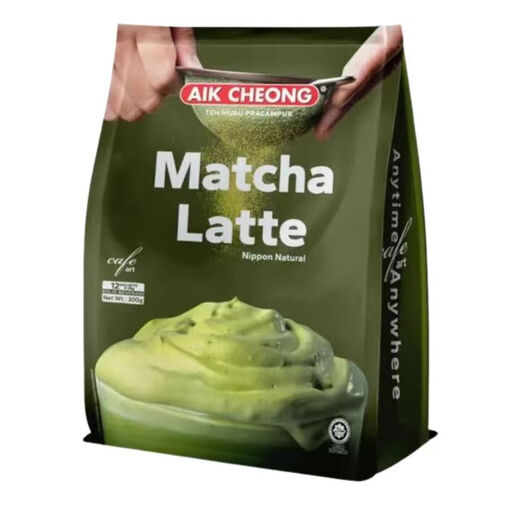 No image available
Twelve individual 25 g sachets provide portions for a matcha-latte service rather than an open pure-matcha powder station. Check the current label for milk and possible soy traces, and confirm the outer packaging if a jar is needed.
 No image available
Six individual vanilla matcha-latte sachets suit a small portioned service. Check the current label for oat-derived gluten and confirm the preparation instructions and outer packaging before planning the drinks station.
 No image available
Six 25 g sachets provide separate portions for a conference drinks point. Check the current label for milk, soy and oats, and for possible wheat or nut traces; confirm the outer packaging if a jar matters.
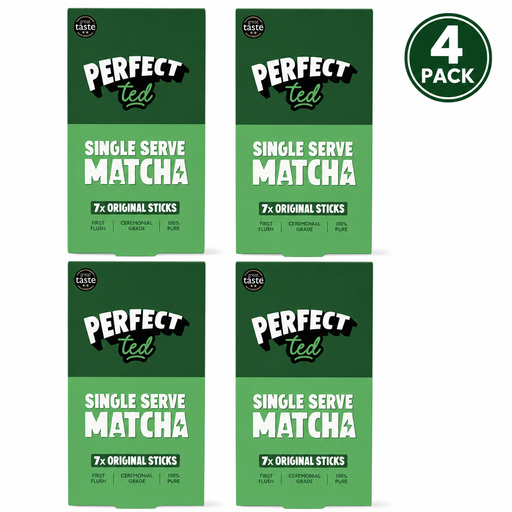 No image available
Four packs of seven 1.5 g sachets provide individually measured portions for a larger service point. Check the current ingredients, preparation liquid and mixing method before setting up service, and confirm the outer packaging if a jar is required.
Ask the seller to confirm the actual container, closure and net weight for the exact product. A pack size or preparation instruction does not identify the container, and individual sachets do not establish what their outer packaging is made of.
GOV.UK guidance says retail and catering food businesses must provide allergen information. For prepacked and prepacked-for-direct-sale foods, its guidance also specifies a food name and full ingredients list. Keep current labels for the matcha and every other ingredient used in each served drink.
It can be considered for both where the chosen product’s preparation instructions suit the recipe and equipment. Clearspring’s Premium Grade instructions give 1 g of powder with 30 ml of hot water; for a latte, check the intended milk or plant drink separately and include it in the drink’s ingredient information.
Identify matcha as a caffeinated option and keep a non-caffeinated drink available. Use a figure only for the exact product and portion served: Waitrose & Partners lists 68 mg caffeine per 2 g serving for its PerfectTed 30 g powder.