What should you check before choosing?
Decide how you will serve the matcha before comparing grades: a milk drink, a mixed dessert and a water-whisked tea put different demands on the powder.
| Priority | What to check | Your needs |
|---|
| Milk drinks |
Look for stated latte or milk-based use. Check the suggested amount of powder and liquid for the exact product; a ceremonial label alone does not describe its flavour in milk. |
I’m serving matcha with milk and want to choose a powder intended for that preparation, rather than rely on its grade name. |
| Baking and desserts |
Check for culinary-use guidance and the maker’s flavour description. Clearspring describes its Premium Grade as concentrated and suitable for culinary uses; the finished flavour depends on the recipe. |
Matcha is going into a cake, cream or icing, so I need a powder intended to be mixed with other ingredients. |
| Whisked tea |
Compare the stated tasting notes and water-whisking directions. Clearspring describes its Ceremonial Grade as slightly sweet and smooth; JING Tea describes vegetal umami in its ceremonial product. |
I’d like to serve a small matcha drink separately, with the tea’s own flavour as the focus. |
| Serving several guests |
Compare loose powder with pre-portioned sticks, then read the ingredients of each variant. Waitrose lists PerfectTed variety sticks for preparation with milk; its flavoured variants include coconut sugar and flavourings. |
When making several drinks, I may prefer measured portions, but I still want to know what each guest’s drink contains. |
| Guest suitability |
Check the current pack for ingredients, allergens, serving size and caffeine information. Include the milk and any syrups or other additions in the ingredient check. |
Before serving guests with ingredient restrictions or concerns about caffeine, I need to check the complete drink, not just the matcha powder. |
Which brands offer useful points of comparison?
These brand ranges illustrate differences in intended preparation; their inclusion does not indicate which products are available on Joybuy.
Clearspring
Clearspring distinguishes between its Ceremonial Grade for a smooth, whisked drink and its Premium Grade for drinks and culinary use.
- The brand describes Ceremonial Grade as slightly sweet and smooth, and Premium Grade as having concentrated flavour suitable for culinary uses.
- Those flavour descriptions are the maker’s own; choose according to whether the matcha will be whisked with water or mixed into other ingredients.
JING Tea
JING Tea offers a matcha intended for lattes alongside a separate single-cultivar ceremonial matcha.
- JING Tea describes its Ceremonial Latte Matcha as having vegetal notes that combine with milk.
- Its ceremonial matcha has a different, tea-focused flavour description; the two products should not be treated as interchangeable solely because both use ceremonial wording.
teapigs
teapigs has a matcha category for shoppers comparing specialist tea ranges.
- The category offers another place to compare matcha formats.
- For a particular teapigs powder, check its own ingredients, intended preparation and flavour description before choosing it for a latte or dessert.
Matcha powder on Joybuy
This matcha powder is an option to consider for cream tea drinks or desserts. Its product description identifies culinary and latte uses; that does not establish how strong it will taste after mixing.
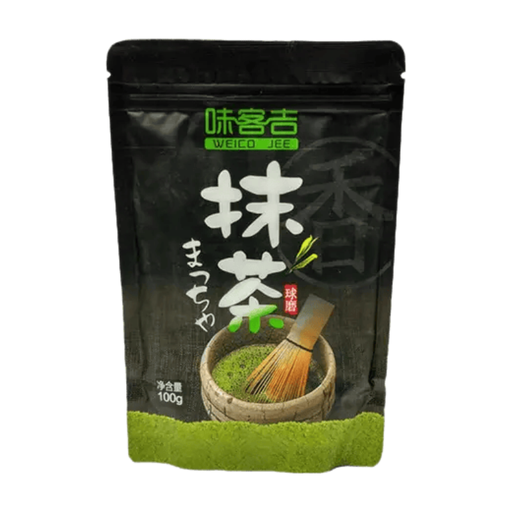 Image unavailable
WKJ Matcha Powder 100g
WKJ describes this powder for culinary uses, including lattes and baking, making it relevant if matcha will be mixed into a cream tea drink or dessert. The pack is 100g. Check its current ingredient and caffeine information before serving guests, and judge the flavour using your intended recipe rather than assuming it will remain extra-bold after mixing.
View on Joybuy
Frequently asked questions
Which matcha should I choose for a creamy afternoon drink?
Start with a powder whose maker recommends it for milk-based drinks. JING Tea describes its Ceremonial Latte Matcha as combining vegetal notes with milk; Clearspring positions its Premium Grade for drinks and culinary uses. Neither description guarantees the same flavour strength in every milk or sweetened recipe.
Can I use ceremonial matcha in cakes or matcha cream?
Yes, but check whether the product is intended for mixing into other ingredients. Clearspring describes its Premium Grade as having culinary uses, while it describes its Ceremonial Grade as slightly sweet and smooth. If the matcha will be whisked and served separately, the ceremonial product’s stated profile may be more relevant.
How can I prepare matcha without clumps?
Follow the mixing directions for the powder you buy. Directions for a water-whisked matcha and a latte product can differ, so use that product’s stated quantities and method rather than transferring instructions from another pack.
Does caffeine matter when serving matcha to a pregnant guest?
Yes. The NHS advises pregnant people not to exceed 200mg of caffeine a day from all sources. Check the matcha product’s caffeine and serving information, and account for other food and drinks consumed that day rather than treating the matcha serving in isolation.
What should I check before serving a matcha latte to someone with an allergy?
Check the current ingredient and allergen information for the exact matcha product and every addition, including milk or plant drinks, syrups and flavoured sticks. Keep the packaging available so the guest can check the details of the drink being served.


