Plain-matcha drinkers
If you whisk matcha with water, its flavour is exposed rather than softened by milk or syrup. Check for a 100% matcha ingredient list, preparation directions and flavour notes that suit you, such as smooth, grassy or umami.


For a stronger-tasting matcha whisked with water, start with plain matcha whose flavour description appeals to you; for a milk-based elevenses drink, look at powders specifically intended for lattes. An instant matcha-milk mix serves a different need: check its ingredients and nutrition panel rather than assuming that “strong” means unsweetened matcha.
How you make your elevenses drink matters more than the word “strong” on its own.
If you whisk matcha with water, its flavour is exposed rather than softened by milk or syrup. Check for a 100% matcha ingredient list, preparation directions and flavour notes that suit you, such as smooth, grassy or umami.
If you add dairy, oat or another milk, look for a powder intended for lattes and read its flavour description. “Ceremonial” alone does not tell you how the finished milk drink will taste.
If quick preparation matters most, an instant mix may appeal. Check whether it contains sugar or milk ingredients, and read its serving and caffeine information rather than treating it as interchangeable with plain powder.
Decide whether you will drink the matcha with water or milk, then compare ingredients, serving information and preparation directions.
| Priority | What to check | Your needs |
|---|---|---|
| Flavour and drink format | Check whether the powder is intended for water or milk. Read product-specific descriptions of smoothness, bitterness or umami as descriptions, not taste-test results. | I want the matcha to taste noticeable in the drink I actually make, whether that is plain matcha or a latte. |
| Ingredients | Check whether matcha is the sole ingredient or the product is a blend. For an instant mix, read the sugar information and milk allergen declaration. | If I want unsweetened matcha, I need plain powder rather than a sweetened matcha-milk mix. |
| Caffeine per serving | Check the stated powder quantity and caffeine amount for the serving you plan to make. Account for other caffeinated drinks and foods where relevant. | A mid-morning matcha needs to fit alongside the other caffeine I have that day. |
| Preparation | Check the directions for loose powder or an instant mix. For loose powder, JING Tea advises sifting it and making a paste with a little water before adding the rest. | On a short break, I would rather choose a preparation method I have time to use. |
A strong-labelled product can be a sweetened blend. Joybuy’s TSUJIRI Matcha Milk Strong Type listing names sugar and the milk ingredient sodium caseinate, and gives 70.6 g sugars per 100 g.
If you want powder to whisk with water, check that the ingredient list contains matcha alone. For a mix, compare the ingredients, allergen declaration and nutrition panel.
Clearspring says matcha grades do not follow an official grading system. The term alone cannot tell you whether a particular powder will taste smooth, vegetal or bitter.
Read that product’s ingredients, flavour description, intended use and preparation directions before deciding whether it suits a plain drink or a latte.
A larger scoop changes the amount of matcha in the drink, so the caffeine figure for the stated serving may no longer describe what you have made.
Check the product’s serving and caffeine information and count other caffeine you consume. For pregnancy, NHS guidance says to have no more than 200 mg of caffeine a day from all sources.
Joybuy Insights notes that matcha powder can absorb moisture and nearby aromas, making storage relevant if you open a pack only occasionally.
Choose a pack size that fits how often you make matcha, reseal it promptly and follow its own storage directions.
These brand examples show why it helps to compare individual products and their intended drinks, rather than choosing by brand or grade alone.
Clearspring lists Japanese matcha powders described as ceremonial and premium grade.
JING Tea offers separate matcha products for plain preparation and milk-based lattes.
M&S Food identifies Perfect Ted matcha in its café drinks, including versions customised with milk and syrups.
Teapigs has a dedicated matcha collection.
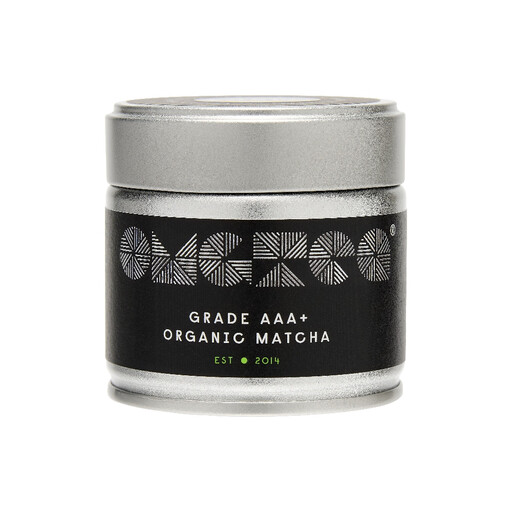
This plain-powder option is relevant if you plan to whisk matcha with water at elevenses; it is not an instant matcha-milk mix.
 No image available
For a water-whisked elevenses drink, the Joybuy listing describes this as 100% organic matcha intended to be served straight, with an umami-led flavour; that flavour is the listing’s description, not an independent tasting result.
The listing states approximately 34 mg caffeine per 1 g serving. It directs you to sift the powder before whisking and refrigerate it after opening.
No: “strong” can describe flavour or form part of a product name, and it can appear on a prepared drink mix. Clearspring also says matcha has no official grading system. Compare the ingredients, intended use and preparation directions of the product itself.
For matcha whisked with water, consider a plain powder whose stated flavour suits you. If you add milk, a product specifically intended for lattes is a more relevant starting point; check its ingredients rather than relying on its grade name.
JING Tea advises sifting the powder, whisking it into a smooth paste with a small splash of water, then adding the remaining liquid. Its guidance presents a shaker as a quicker option, though with less texture than whisking.
No. Joybuy’s TSUJIRI Matcha Milk Strong Type listing includes sugar, dextrin, matcha and sodium caseinate (milk), and gives 70.6 g sugars per 100 g. Read it as a sweetened, milk-containing mix rather than a 100% matcha powder.
NHS pregnancy guidance says to have no more than 200 mg of caffeine a day from all sources. Check the matcha product’s stated serving and caffeine amount, and include other sources such as coffee, tea, cola and chocolate when considering the daily total.