People eating close to bedtime
If you want a warm green drink without caffeine, distinguish green-tea matcha from a caffeine-free alternative made from another plant. A latte made with ordinary matcha still contains caffeine.


If avoiding caffeine near bedtime is the priority, choose a caffeine-free alternative rather than green-tea matcha. Doncaster and Bassetlaw Teaching Hospitals NHS Foundation Trust advises avoiding caffeine after 2pm in its sleep-hygiene guidance. For an earlier supper, choose plain matcha for whisking with water or a latte-oriented product for milk or food, then check the serving size, caffeine and ingredients; neither a grade label nor added milk removes caffeine.
If you want a warm green drink without caffeine, distinguish green-tea matcha from a caffeine-free alternative made from another plant. A latte made with ordinary matcha still contains caffeine.
If supper is well before bed, the amount of powder you use matters. Compare caffeine statements using each product’s stated serving rather than assuming that every cup contains the same amount.
If the powder will go into milk or food, check whether the product is intended for that preparation. For flavoured or ready-made versions, read the current ingredients and allergen information as well as the caffeine statement.
Start with bedtime and caffeine, then choose a preparation style and compare the portion information for the product you intend to use.
| Priority | What to check | Your needs |
|---|---|---|
| Caffeine and timing | Check whether the powder is green-tea matcha or a caffeine-free alternative. Doncaster and Bassetlaw Teaching Hospitals NHS Foundation Trust says caffeine can remain in the body for up to six hours and advises avoiding it after 2pm. | I am eating close to bedtime and want to avoid caffeine in my drink. Clearspring’s caffeine-free Kuwa Matcha is mulberry-leaf powder, not green-tea matcha. |
| Preparation style | Check whether the maker describes the product for whisking with water, mixing with milk or using in food. Milk changes the drink but does not remove caffeine from matcha. | For a plain cup, I want a powder intended for water. If I am making a latte or dessert, its suitability for that recipe matters more to me than a ceremonial label. |
| Serving size | Compare caffeine against the stated amount of powder, not just the figure on its own. Clearspring gives an approximate estimate of 32 mg per 1 g for finely ground matcha; Waitrose lists 68 mg per 2 g serving for PerfectTed ceremonial powder. | I want to measure the amount I use, especially if I might make a second drink. Figures for these different products should not be treated as one standard for all matcha. |
| Ingredients | Read the current pack for additions and allergen information; check the seller’s information for a café preparation. Waitrose notes that food formulations and displayed details can change. | If I choose a flavoured latte or blend, I need to know what is in that particular product, rather than assuming it contains only matcha. |
Milk can change the flavour and texture, but caffeine from green-tea matcha remains in the drink. That matters when supper is close to bedtime.
If avoiding caffeine is the priority, choose an explicitly caffeine-free alternative. For matcha at an earlier supper, measure the powder and check its caffeine statement.
Ceremonial, premium and latte descriptions indicate intended preparation or flavour; they do not establish that a powder contains less caffeine or suits late-night use.
Choose by whether you will whisk it with water or use it in milk or food, then check caffeine and serving information separately.
A figure per 1 g cannot be compared directly with one per 2 g as though both described the same-sized drink.
Read the unit and stated serving beside each caffeine figure, and measure the quantity you actually use.
A flavoured powder or prepared latte may have different ingredients from plain matcha, and formulations can change.
Check the current pack. For loose or non-prepacked food, ask the seller about allergens; the Food Standards Agency says businesses must provide allergen information for regulated allergens present in such food.
Its range distinguishes Japanese green-tea matcha from Kuwa Matcha, a caffeine-free powder made from mulberry leaf.
JING Tea describes a ceremonial product for plain preparation and a separate matcha intended for lattes.
UK retailer listings show PerfectTed in plain powder and other matcha formats, including flavoured products.
These options cover a roasted matcha powder and a ready-to-drink vanilla matcha latte for occasions when a caffeinated choice fits your supper timing. Neither is a caffeine-free alternative.
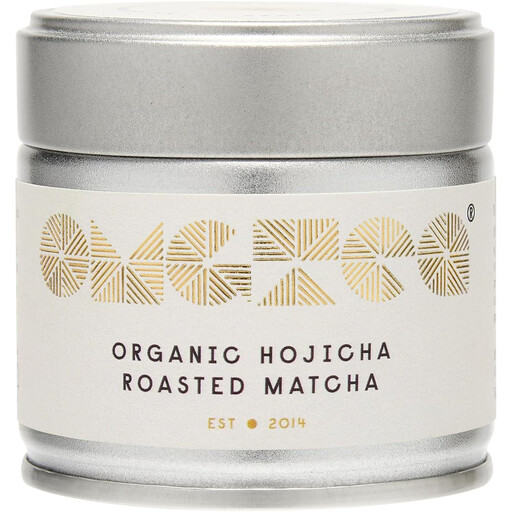 No image available
A roasted matcha powder to consider for a drink made with water or milk, or for a recipe at an earlier supper. It contains caffeine; check the current pack’s portion and preparation directions before use.
 No image available
A ready-to-drink vanilla matcha latte for someone who wants a prepared drink rather than powder to whisk. It contains caffeine and oats; check the current pack for serving, ingredient and allergen information.
If avoiding caffeine is important to you, choose a caffeine-free alternative instead. Green-tea matcha contains caffeine, and Doncaster and Bassetlaw Teaching Hospitals NHS Foundation Trust advises avoiding caffeine after 2pm in its sleep-hygiene guidance.
A ceremonial label does not establish a lower caffeine amount. These descriptions help indicate intended use, such as whisking with water rather than mixing with milk; compare caffeine and serving information for the particular products instead.
Read the caffeine figure alongside its stated portion and compare it with the amount you will use. Clearspring gives an approximate estimate of 32 mg per 1 g for finely ground matcha, while Waitrose lists 68 mg per 2 g serving for PerfectTed ceremonial powder; neither figure applies automatically to other products.
Check its current ingredients, allergens and caffeine information rather than treating it as plain matcha. For loose or non-prepacked food, ask the seller about allergens; the Food Standards Agency says businesses must provide information about regulated allergens present in such food.
No. Clearspring identifies Kuwa Matcha as caffeine-free mulberry-leaf powder. Its ingredient base differs from green-tea matcha, so choose it as a different green drink rather than expecting the same flavour.