Busy office tea drinkers
If you have a kettle and a mug but do not want to measure powder or wash a whisk, a bagged green-tea blend containing matcha fits that routine. Check the bag format and ingredients before choosing.


Choose a matcha-containing pyramid bag if you want a one-bag green-tea infusion at your desk; check the ingredients, because it is not the same drink as mixed matcha powder. A matcha-sencha sachet also offers a bagged routine when the pyramid shape does not matter. Choose powder if you want ground-leaf matcha and have somewhere to mix it and wash up.
If you have a kettle and a mug but do not want to measure powder or wash a whisk, a bagged green-tea blend containing matcha fits that routine. Check the bag format and ingredients before choosing.
A matcha-sencha sachet lets you try a bagged blend. Read the ingredient list if the distinction between an infused tea and ground matcha powder matters to you.
Keep the current pack available so colleagues can check ingredients, allergen information and brewing directions. Anyone managing caffeine intake should check product-specific information rather than assume all matcha-labelled drinks contain the same amount.
Decide whether you want an infusion or mixed powder before comparing bag shapes, ingredients and preparation instructions.
Choose when: You want a one-bag infusion and the product identifies both a green-tea base and added matcha.
Bear in mind: An infused blend is not a serving of mixed matcha powder; the matcha proportion varies by product.
Choose when: A portioned tea bag matters more than its pyramid shape. Clearspring lists its Matcha Sencha as a tea sachet.
Bear in mind: Clearspring specifies 97.5% sencha leaves and 2.5% matcha powder; it is not pure matcha.
Choose when: You want finely ground matcha rather than a tea-bag infusion and can mix it at work.
Bear in mind: Measuring, mixing and washing up add steps to an office break.
| Priority | What to check | Your needs |
|---|---|---|
| Ingredients and format | Read the tea base and any stated matcha proportion. Check whether the product is a pyramid bag, another sachet or powder. | I want to know whether I am making an infused green tea with added matcha or mixing ground matcha powder. |
| Preparation | Check the pack’s water and infusion instructions, plus whether mixing equipment is needed. Clearspring advises cooling boiled water for a minute and infusing its Matcha Sencha for one to two minutes. | A kettle-and-mug drink suits my break better than measuring powder, or I have the space to mix a powder drink and wash up afterwards. |
| Shared-kitchen use | Check the bag count and how the current outer pack can be stored with its ingredients and allergen information accessible. | If I am buying for colleagues, everyone needs a way to read the current label before making a drink. |
| Caffeine | Check product-specific caffeine information with the pack or manufacturer when intake matters; a matcha-containing tea bag should not be assumed caffeine-free. | I may need to account for tea alongside other caffeine consumed during the day. The NHS advises a limit of 200 mg of caffeine a day during pregnancy, but that is not a caffeine figure for any particular bag. |
A bagged drink may be mainly green tea with matcha added. Clearspring, for example, lists its Matcha Sencha as 97.5% sencha leaves and 2.5% matcha powder.
Choose between an infusion and ground powder first, then compare ingredient lists rather than relying on the word 'matcha' on the front.
A pyramid bag describes the format, not its ingredients. A brand’s wider pyramid-bag range does not establish that a particular bag contains matcha.
Open the individual product listing and check both the bag description and ingredient list.
Brewing directions differ by product. Clearspring advises a one-to-two-minute infusion for its Matcha Sencha after letting boiled water cool for a minute.
Keep the carton in the office kitchen and follow the instructions for the bag you bought.
The NHS identifies tea as a caffeine source and advises no more than 200 mg of caffeine a day during pregnancy. That limit does not tell you the caffeine content of an individual matcha-containing bag.
Keep the outer pack available for ingredient and allergen checks. If caffeine intake needs managing, seek product-specific information and account for other sources consumed that day.
These brand examples illustrate different formats; a pyramid-bag range does not necessarily include a matcha pyramid bag.
Kunitaro identifies a Green Tea with Uji Matcha Tetra Bag, and Japan Centre lists a 50-bag pyramid-format product.
Its Organic Japanese Matcha Sencha offers a specified bagged blend, described as tea sachets rather than pyramid bags.
JING offers pyramid tea bags and, separately, matcha powder with preparation accessories.
Its Tea Temples provide a point of comparison for pyramid-bag format.
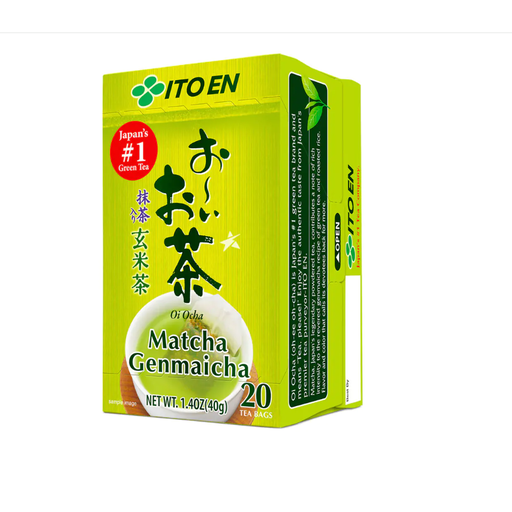
ITO EN lists matcha green-tea bags, including Oi Ocha matcha genmaicha.
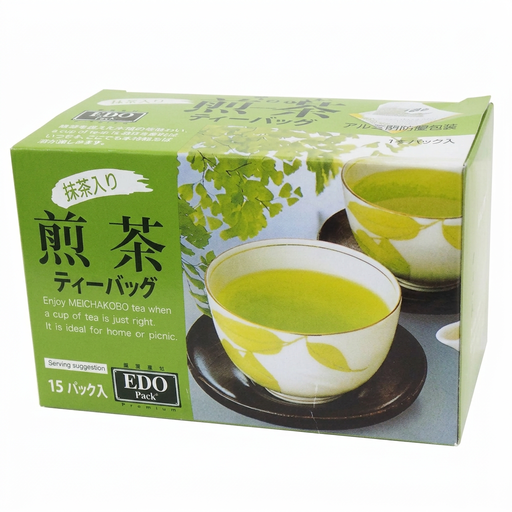
These two options are matcha-containing tea bags for a kettle-and-mug break. The EDO product is identified as a pyramid bag; the Oi Ocha product is a bagged alternative if that shape is not essential.
 No image available
A pyramid-bag option for an infused green tea at the office. The Joybuy product information lists 98% green tea and 2% green-tea powder; this is a blend, not pure matcha powder. Check the current pack for its bag count, brewing directions and any caffeine information you need.
 No image available
A 20-bag matcha genmaicha option for portioned office drinks. Choose it if a tea bag suits your routine without requiring a pyramid shape; check the current pack for the bag shape, brewing directions and ingredient information important to your office.
No. Matcha powder is ground tea leaf, while a bag can contain green tea with matcha added for infusion. Clearspring’s Matcha Sencha, for example, lists 97.5% sencha leaves and 2.5% matcha powder. Check the ingredients and preparation format of the product you are considering.
Check the tea base, any stated matcha proportion, bag count, brewing directions and current allergen information. Keep the outer packaging accessible so colleagues can refer to the label rather than an older online description.
Follow that product’s instructions. For example, Clearspring advises letting boiled water cool for a minute before infusing its Matcha Sencha for one to two minutes. Those directions should not be assumed to apply to every bag.
The NHS advises no more than 200 mg of caffeine a day during pregnancy and identifies tea as a caffeine source. Check the particular product’s caffeine information with its pack or manufacturer, and account for other caffeine consumed that day; the NHS limit is not a measure of caffeine in any one tea bag.