Older adults who prefer a straightforward hot drink
A tea bag avoids measuring and mixing powder. Check the ingredients if the distinction between a green-tea blend and pure matcha matters to the drinker.


For an older adult who wants a simple 80-serving supply, four 20-bag packs of a matcha-containing tea blend are an option, provided the pack labels and dates suit the intended routine. The bags are predominantly green tea rather than pure matcha; powder suits someone willing to measure and mix each serving. Neither format replaces meals, and anyone managing iron deficiency or taking warfarin should ask their care team before making green tea a daily habit.
The useful starting point is the drinker’s preparation routine and the reason for buying a larger supply, not the word “matcha” on its own.
A tea bag avoids measuring and mixing powder. Check the ingredients if the distinction between a green-tea blend and pure matcha matters to the drinker.
Four separate 20-bag packs can provide 80 tea bags. Check each pack’s ingredients, best-before date and storage instructions, particularly if the supply will be used slowly.
Caffeine sensitivity, iron-deficiency management or warfarin use can affect a decision to drink green tea regularly. Ask the relevant clinician, pharmacist or care team about the intended routine before buying in quantity.
Choose the preparation format first, then check the actual pack count and ingredients. An 80-bag ordinary green tea is not necessarily an 80-bag matcha product.
Choose when: Dropping a bag into a cup suits the drinker or carer better than measuring powder.
Bear in mind: The cited 20-bag products are chiefly green tea, with a small proportion of matcha.
Choose when: The drinker wants matcha powder itself and someone can prepare a measured serving.
Bear in mind: Powder needs measuring and mixing; count caffeine by the amount used, not by the number of cups alone.
| Priority | What to check | Your needs |
|---|---|---|
| Pack count | Check whether the listing is one 80-bag box, several smaller packs or an ordinary green tea. Check the date and storage instructions on each pack. | I want a cupboard supply that matches the planned routine, without mistaking four 20-bag packs for one 80-bag box. |
| Ingredients | Read the ingredient percentages. Waitrose & Partners lists Clearspring Matcha Sencha bags as 97.5% sencha and 2.5% matcha, and Pukka Supreme Matcha Green bags as 98% green tea and 2% matcha. | If matcha itself is the reason for buying, I need to know whether I am choosing a tea blend or pure powder. |
| Preparation | Compare a drop-in tea bag with the powder’s measured serving instructions. JING Tea specifies 1.5g of its ceremonial matcha per 160ml cup. | A bag may fit a routine where measuring and mixing powder would be difficult or require help. |
| Caffeine | Check the intended serving and other caffeine-containing drinks or supplements. Clearspring estimates approximately 32mg of caffeine per 1g of its own dry matcha powder; that figure is not a measure for every tea bag or powder. | I want to consider the whole day’s caffeine intake before making this a regular drink. |
| Food and fluids | Consider the drink alongside meals and other fluids, not in place of them. The NHS says tea counts towards fluid intake; the Eatwell Guide describes a varied pattern of foods. | A preferred hot drink can be part of the day, but I need a separate plan if eating enough is the concern. |
| Iron and warfarin | Ask for individual advice about tea timing during iron-deficiency management. If taking warfarin, discuss a planned change in green-tea intake with the anticoagulation team. | Before starting a daily supply, I want to check how it fits an existing treatment or monitoring routine. |
Tesco Groceries lists 80-bag ordinary green teas alongside 20-bag matcha blends. Bag count and the word “green” do not establish the ingredients.
Read both the pack count and ingredient list. For an 80-serving purchase, check whether the offer is one box or multiple packs of a matcha-containing tea.
A drink cannot replace the range of foods described in the Eatwell Guide. Choosing a matcha format does not address reduced food intake or difficulties with eating.
If low appetite, unintended weight loss or swallowing difficulty is the concern, seek advice from a GP, dietitian or relevant care team rather than relying on matcha.
Tea contains caffeine, and serving size matters for powder. Clearspring estimates approximately 32mg per 1g of its own dry matcha powder; the amount in a prepared tea bag should not be assumed from that figure.
Consider the planned servings alongside other sources of caffeine. If the drinker is sensitive to caffeine, check whether a caffeine-free drink would suit the routine instead.
Milton Keynes University Hospital NHS Foundation Trust advises that tea and coffee reduce iron absorption. Cambridge University Hospitals NHS Foundation Trust advises people taking warfarin to keep green-tea intake consistent.
Ask the clinician, dietitian, pharmacist or anticoagulation team about the intended frequency and timing before establishing a new daily habit.
These examples illustrate differences in format and ingredients; a brand name alone does not tell you the bag count or the matcha content of a particular product.
Clearspring offers both a matcha-and-sencha tea bag and a separate matcha powder, so the product format matters when comparing its range.
Pukka Supreme Matcha Green is a tea-bag option for someone seeking a green-tea blend with matcha.
JING’s ceremonial matcha is a powder option rather than a tea-bag format.
This tea-bag option suits a buyer considering an easy-to-prepare matcha-containing blend. Check the quantity before planning an 80-serving supply: the product shown is a 20-bag pack.
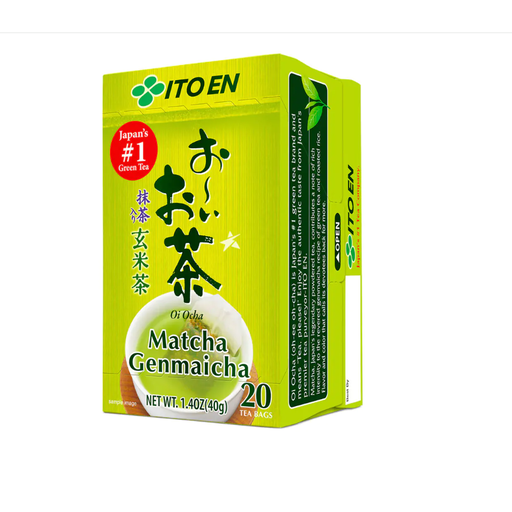 Image unavailable
The tea-bag format avoids measuring powder for a hot-drink routine. Joybuy lists roasted rice at 60% and matcha at 3% in this blend; it is not pure matcha or an 80-bag box. Check the label when considering caffeine as part of a daily routine, and seek individual advice before regular green-tea use during iron treatment or while taking warfarin.
No. Matcha is a drink choice, not a replacement for meals or individually advised nutrition support. The Eatwell Guide describes a varied pattern of foods; if reduced intake is the concern, ask a GP, dietitian or care team for advice.
Tea can count towards fluid intake, according to the NHS, alongside water and other drinks. Consider caffeine when deciding how often to serve it, particularly if the drinker is sensitive to caffeine.
No. An 80-bag green-tea box need not contain matcha, while a matcha-labelled bag may contain mostly green tea. Check the ingredients and whether the quantity is one 80-bag box or several smaller packs.
They should check the timing with their clinician or dietitian rather than assume it makes no difference. Milton Keynes University Hospital NHS Foundation Trust advises that tea and coffee reduce iron absorption.
They should discuss a planned daily green-tea routine with their anticoagulation team, GP or pharmacist first. Cambridge University Hospitals NHS Foundation Trust advises people taking warfarin to keep green-tea intake consistent rather than suddenly starting or stopping it.