Who is each pack for?
How often the household uses matcha, and what goes into the cup, matters more than choosing a pack by its grade name alone.
Households making frequent matcha lattes
A larger pack intended for milk drinks is worth considering if several people make lattes regularly. JING Tea offers a 100g Matcha Latte powder and gives a preparation measure of 2g per drink; use your household’s actual measure when judging how long a pack might last.
Households sharing matcha across drinks and baking
If the same powder needs to go into drinks and home baking, a pure matcha offered in a larger size may be more useful than a flavoured blend. Clearspring positions its Premium Grade for both drinking and baking and offers 40g, 100g and 1kg variants.
Occasional water-whisked matcha drinkers
A smaller ceremonial pack is an option when matcha whisked with water is the main use and a large household pack would be unnecessary. Clearspring offers its Ceremonial Grade in a 30g size; check that this quantity suits how often you will use it.
What should you check before buying?
Start with the drinks and recipes you make, then compare the selected pack’s net weight, ingredients and serving information. If the word ‘jar’ describes a container you intend to keep using, check the packaging separately from the powder.
| Priority | What to check | Your needs |
|---|
| Pack size |
Compare the exact selected net weight with the amount used per drink or recipe. JING Tea specifies 2g for its 100g Matcha Latte powder; other products may give different preparation measures. |
Several of us make matcha regularly, so I want a pack size that fits how quickly we will use it. |
| Intended use |
Check whether the maker positions the powder for milk drinks, cooking or whisking with water. Clearspring positions Premium Grade for drinking and baking; JING Tea presents its 100g Matcha Latte powder for milk drinks. |
Is this mainly for family lattes, or do we also want to use the same powder in recipes? |
| Ingredients |
Read the full ingredient list rather than relying on ‘matcha’ on the front. Waitrose & Partners lists PerfectTed pure powder as 100% matcha, while its 75g Vanilla Bean Matcha contains coconut sugar and 30% matcha. |
I want to choose between plain powder and a flavoured drink blend without mistaking one for the other. |
| Caffeine |
Compare declared caffeine alongside its serving weight: Waitrose & Partners lists 68mg per 2g serving for PerfectTed pure powder and 43mg per 5g serving for its vanilla blend. The NHS advises no more than 200mg of caffeine a day from all sources during pregnancy. |
Caffeine matters for someone in our household, so I need the figure for the serving we will actually prepare and must consider other caffeine consumed that day. |
| Pack and storage |
Check whether the selected product comes in a jar, tin, bag or sachets, how it closes, and its own storage directions. Waitrose & Partners instructs shoppers to keep its listed PerfectTed powders sealed in a cool, dry place after opening. |
I need to know whether the pack will close as required after opening, especially if several people will use it. |
| Allergen information |
Check the current pack’s ingredients and any ‘may contain’ statement, particularly for a latte mix. The Food Standards Agency explains that precautionary allergen wording communicates a possible cross-contact risk. |
If someone in the household has a food allergy, I need to check the specific product and pack we will receive. |
Brand and retailer references
These references help distinguish pack purposes and ingredients; they are not a list of products offered in the Joybuy section.
Clearspring
Clearspring offers Premium Grade Japanese matcha in 40g, 100g and 1kg variants and positions it for drinking and home baking. It also offers a separate 30g Ceremonial Grade.
- The range gives frequent users several Premium Grade pack sizes to consider.
- Check which variant you have selected; the 30g Ceremonial Grade is a different product.
JING Tea
JING Tea offers a 100g Matcha Latte powder with a stated preparation measure of 2g per drink.
- Its stated latte use and measure help households plan for regular milk drinks.
- Choose by your intended preparation rather than assuming a latte-positioned product is the same choice as one bought mainly for whisking with water.
PerfectTed
Waitrose & Partners lists a 30g pure PerfectTed matcha powder and a distinct 75g Vanilla Bean Matcha blend.
- The pure powder is listed as 100% matcha, with 68mg caffeine per 2g serving.
- The vanilla blend contains coconut sugar and 30% matcha; its declared caffeine figure uses a different, 5g serving.
M&S Food
M&S Food explains matcha as a powder made from ground, shade-grown green tea leaves.
- Its matcha information provides context for shoppers considering the ingredient.
- For a household pack comparison, check the size and ingredients of the particular powder you intend to buy.
Teapigs
Teapigs has a matcha category in its tea range.
- Shoppers can consider its matcha range alongside other tea brands.
- Check an individual product’s format, net weight and ingredients before comparing it with a larger pack of pure powder.
Matcha options on Joybuy
These options cover 100g matcha powders and smaller flavoured latte mixes or sachets for household drinks. If you specifically want a reusable jar, check each listing’s container and closure: net weight does not establish the packaging format.
 No image available
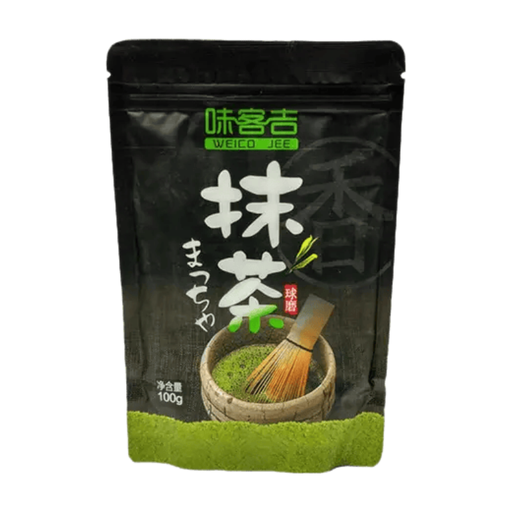
WKJ Matcha Powder 100g
The 100g size is worth considering if several people use matcha for drinks or recipes. Check the current ingredients, preparation measure, caffeine information and pack closure against your household’s needs.
View on Joybuy
 No image available
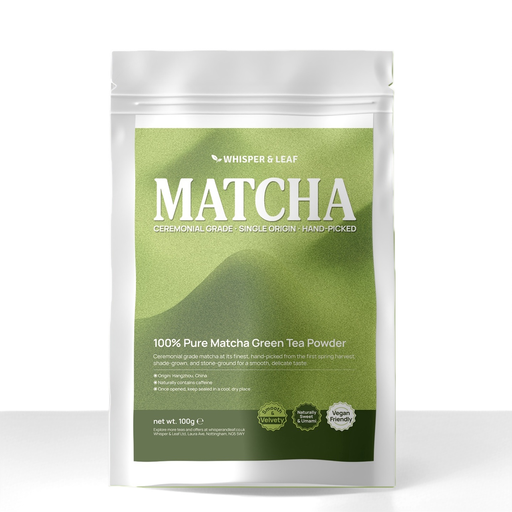
Whisper and Leaf Ceremonial Grade Matcha Powder 100g Bag
This 100g bag may suit a household considering a larger ceremonial-grade powder. Check how the bag closes after opening and confirm the preparation and caffeine information for the servings you make.
View on Joybuy
 No image available
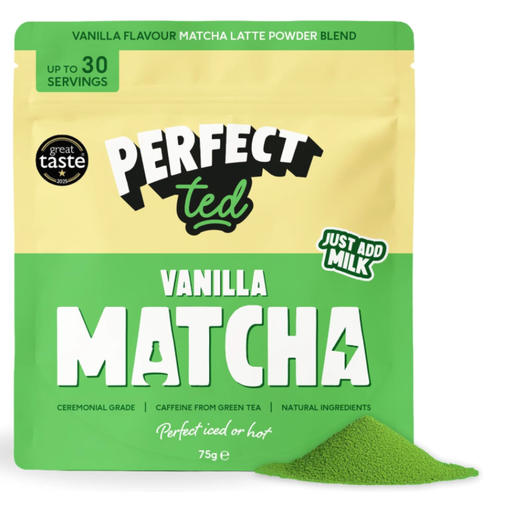
Perfectted Vanilla Matcha Powder 75g
Consider this 75g vanilla option if the household wants a flavoured matcha drink rather than plain powder. The listing describes a sweetened blend; check its current ingredients and caffeine information if either affects your choice.
View on Joybuy
 No image available
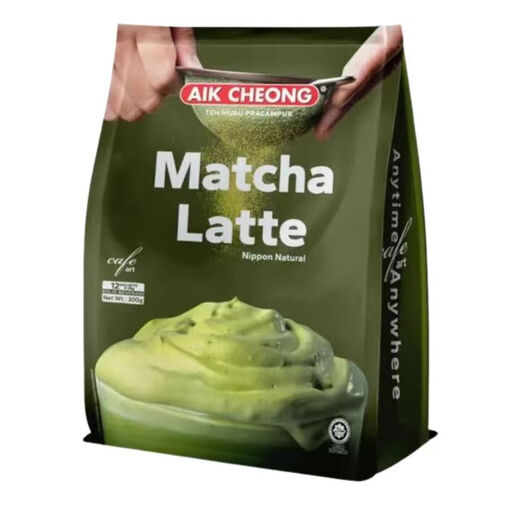
Aik Cheong Matcha Latte Instant Green Tea Powder, 25g x 12 Sachets
The 12 individual 25g sachets offer a portioned latte-mix format rather than a jar of plain matcha. The listing flags milk and possible soy traces; check the current packaging carefully if anyone in the household has an allergy.
View on Joybuy
 No image available
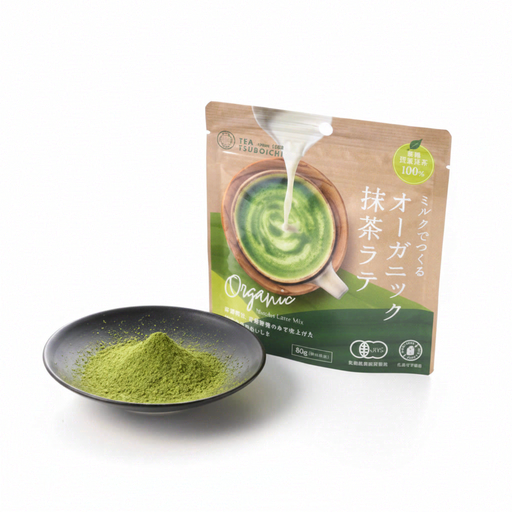
Tsuboichi Seicha Organic Matcha Latte Mix 80g
This 80g latte mix is a different choice from plain matcha powder. Its listing indicates sugars in the ingredients; check the current pack for the full ingredients, preparation directions and container closure before choosing it for shared use.
View on Joybuy
Frequently asked questions
Should a large household buy the biggest matcha pack?
Not automatically. Work from the amount used per drink and how often the household makes it: JING Tea specifies 2g per drink for its 100g Matcha Latte powder, which works out to 50 drinks at that measure. Check the chosen product’s storage directions before buying more than you expect to use.
Is ceremonial matcha necessary for family lattes and baking?
No. If milk drinks or baking are the main use, check powders positioned for those preparations rather than choosing by the ceremonial label alone. JING Tea positions its 100g Matcha Latte powder for milk drinks, while Clearspring positions its Premium Grade for drinking and home baking.
How can I tell pure matcha from a flavoured latte blend?
Read the ingredients. Waitrose & Partners lists PerfectTed pure powder as 100% matcha, while its Vanilla Bean Matcha contains coconut sugar, 30% matcha and natural flavourings. Check the exact product rather than assuming all packs with ‘matcha’ in the name are plain powder.
What caffeine check matters during pregnancy?
The NHS advises no more than 200mg of caffeine a day from all sources during pregnancy. Check the serving weight as well as the caffeine figure: Waitrose & Partners lists 68mg per 2g serving for PerfectTed pure matcha. Include other foods and drinks containing caffeine when considering the day’s total.
What should a household check for food allergies?
Read the current pack’s full ingredients and any precautionary allergen statement, particularly for a latte mix. The Food Standards Agency explains that wording such as ‘may contain’ communicates a possible cross-contact risk; do not assume a flavoured mix has the same ingredients as plain matcha.


