Who is each format for?

Shoppers who want matcha as the main ingredient

If you want to whisk matcha rather than brew a green-tea blend, look for an organic claim and an ingredient list identifying 100% matcha powder. Clearspring’s pure powders provide examples of that ingredient wording.

Tea drinkers taking a quick break

A tea bag avoids measuring and whisking powder. Check how much matcha the blend contains: Waitrose & Partners lists examples with 2% or 2.5% matcha, with green tea making up most of each blend.

People who prefer matcha whisked with water

If preparing a plain cup is part of the break, compare pure powders by their stated origin, portion and preparation directions. A ceremonial label does not replace those product-specific details.

What should you check before choosing?

Pure matcha powder

Choose it when: You want the matcha itself in a whisked afternoon drink.

Allow for: Measuring a portion and preparing the powder with water.

Tea bags containing matcha

Choose them when: A familiar brewed-tea routine matters more than whisking pure matcha.

Keep in mind: The examples listed by Waitrose & Partners are predominantly green tea, not pure matcha.

PriorityWhat to checkYour needs
Organic status Check the organic claim on the current pack and the product’s certification details. The Department for Environment, Food & Rural Affairs says UK organic food labelling requires compliance with organic production rules, at least 95% organic agricultural ingredients where applicable, and certification of the product and suppliers by an approved control body. I want an organic product, but I also need to know whether I am buying pure matcha or a blend.
Ingredients Read the full ingredient list and, for a blend, the matcha percentage. Clearspring lists 100% organic matcha for its pure powders; Waitrose & Partners lists Pukka Organic Supreme Matcha Green as 98% green tea and 2% matcha. For a whisked matcha drink, I would choose a single-ingredient powder. A green-tea blend would suit me if a brewed cup is what I want.
Preparation Compare portions, water directions and equipment. Clearspring gives 1 g of powder with 30 ml hot water; JING Tea gives 1.5 g per 160 ml at 70°C. Waitrose & Partners gives a 1–2 minute infusion for Clearspring’s Matcha Sencha tea bags. On a short break, I may prefer a tea bag; if I have time to measure and whisk, powder fits the drink I have in mind.
Plain drinking For ceremonial-labelled powders, compare the actual ingredients, origin and serving guidance rather than treating the label as a complete specification. JING Tea identifies its organic ceremonial matcha as the Okumidori cultivar and gives a 1.5 g portion. I plan to drink matcha plain, so preparation and the producer’s description of the particular powder matter more to me than the grade name alone.
Caffeine Use caffeine information for the particular product and portion; do not apply one powder’s figure to every matcha drink. The NHS advises no more than 200 mg of caffeine a day during pregnancy, counting caffeine from other foods and drinks too. If I need to keep track of caffeine, my afternoon cup is only one part of the day’s total.

Common buying mistakes

  • Assuming “matcha” means pure matcha

    A tea bag can have matcha in its name while containing mostly green tea. Waitrose & Partners lists matcha at 2% in Pukka Organic Supreme Matcha Green and 2.5% in Clearspring Organic Matcha Sencha.

    Choose an ingredient list stating 100% matcha powder if you want to whisk matcha itself; choose a blend for a brewed green-tea drink.

  • Choosing by the organic claim alone

    Organic labelling addresses production and certification, not whether a product is a powder or tea bag, how it is prepared, or how much matcha a blend contains.

    Check the current pack’s organic information and ingredients, then compare the format and serving directions.

  • Using “ceremonial” as the only deciding factor

    The grade wording alone does not tell you a powder’s portion, origin or how you will want to prepare it.

    If you mainly drink matcha plain, compare those details across the particular powders you are considering. If you will mix it with other ingredients, check whether the producer gives directions for that use.

  • Overlooking caffeine from the rest of the day

    An afternoon matcha contributes to total caffeine intake. During pregnancy, the NHS advises no more than 200 mg a day from all sources, including tea, coffee and chocolate.

    Check the portion and caffeine information for the product you use, and account for other sources rather than assuming all matcha servings are alike.

Brand examples and product differences

Compare individual products within a brand: pure powder and matcha-containing tea bags serve different afternoon routines.

Clearspring

Clearspring lists organic matcha powders as well as a Matcha Sencha tea-bag blend.

  • Its Premium Grade and Ceremonial Grade powder listings each state 100% organic matcha.
  • Its Matcha Sencha tea bags are a different format: Waitrose & Partners lists 97.5% sencha green tea and 2.5% matcha.

JING Tea

JING Tea lists an organic ceremonial matcha identified as the Okumidori cultivar.

  • Its product directions specify 1.5 g per 160 ml of water at 70°C.
  • Compare those directions with your usual portion and preparation method rather than assuming they apply to other powders.

SuperSelf

A Tesco Marketplace listing describes SuperSelf’s 50 g ceremonial matcha as a single-ingredient organic powder.

  • The listing gives storage directions: keep it cool, dry and away from sunlight, and reseal it after opening.
  • Check the current pack and Marketplace seller details when choosing this particular product.

Pukka

Pukka Organic Supreme Matcha Green is a tea-bag blend for brewing rather than a pure matcha powder.

  • Waitrose & Partners lists the ingredients as 98% green tea and 2% matcha, making the composition clear.
  • It does not meet a preference for matcha as the sole ingredient.

Matcha options on Joybuy

These Joybuy options are matcha products for a powder-based afternoon drink. Compare their pack details and preparation directions with the brewed tea-bag route discussed above.

OMGTea AA Organic Matcha Gift Set, 30 g

OMGTea AA Organic Matcha Gift Set, 30 g

Consider this for a matcha break that involves preparing powder. The title identifies a 30 g gift set; check what the set contains, the preparation directions and the organic certification details on the current pack.

View on Joybuy
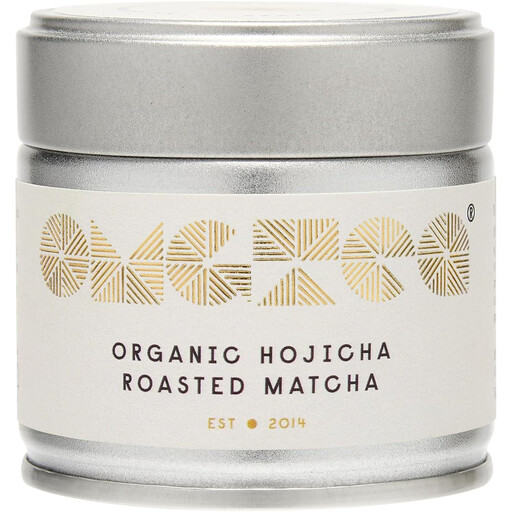
OMGTea Organic Hojicha Roasted Matcha, 30 g

OMGTea Organic Hojicha Roasted Matcha, 30 g

Consider this 30 g roasted-matcha variant if that is the type of powder you want for an afternoon drink. Check its ingredient list, organic certification details and recommended serving on the current pack.

View on Joybuy

OMGTea Organic Matcha AAA+, 30 g

OMGTea Organic Matcha AAA+, 30 g

For a whisked afternoon cup, compare this 30 g AAA+ variant with other powders using the ingredients and pack directions, not the variant name alone. Check its serving guidance and organic certification details on the current pack.

View on Joybuy

Questions about organic matcha

How can I check an organic matcha claim in the UK?

Check the current pack’s organic and certification details as well as its ingredients. The Department for Environment, Food & Rural Affairs says food labelled organic must meet organic production rules, have at least 95% organic agricultural ingredients where applicable, and have its product and suppliers certified by an approved organic control body. For pure matcha, look for an ingredient declaration identifying 100% matcha powder.

Is a matcha tea bag the same as matcha powder?

No. Waitrose & Partners lists Clearspring Matcha Sencha tea bags as 97.5% sencha and 2.5% matcha, and Pukka Organic Supreme Matcha Green as 98% green tea and 2% matcha. Choose a single-ingredient powder if you want to whisk matcha itself.

Which format takes less preparation during a short break?

A tea bag avoids measuring and whisking powder; Waitrose & Partners gives a 1–2 minute infusion for Clearspring Matcha Sencha. If you choose powder, follow that product’s directions: Clearspring gives 1 g with 30 ml hot water, while JING Tea gives 1.5 g per 160 ml at 70°C.

Does organic matcha contain caffeine?

Organic status does not mean caffeine-free. Clearspring states that 1 g of its dry matcha contains approximately 32 mg of caffeine on the food-composition basis it cites; do not apply that figure to every product or portion. During pregnancy, the NHS advises no more than 200 mg of caffeine a day from all sources.

How should I store matcha after opening?

Follow the directions for the product you buy. The Tesco Marketplace listing for SuperSelf matcha says to keep it in a cool, dry place away from direct sunlight and reseal it tightly after opening.