Busy green-tea breakfast drinkers
A matcha-containing tea bag offers a steeped drink without measuring and whisking powder. Check the pack’s brewing directions and decide whether you want plain green tea or added flavours.


Choose a matcha-containing pyramid bag if you want to steep breakfast tea without preparing powder, but check whether it contains mostly tea leaves, added flavourings or a declared amount of matcha. A conventional tea sachet may suit you if pyramid shape is less important; choose portioned 100% matcha powder if you specifically want a powdered matcha drink and are willing to whisk or shake it.
A matcha-containing tea bag offers a steeped drink without measuring and whisking powder. Check the pack’s brewing directions and decide whether you want plain green tea or added flavours.
Choose the pyramid format if that bag shape matters to you, but read the ingredients separately. The shape alone does not tell you how much matcha the blend contains.
A matcha-containing infusion is a different format from 100% matcha powder. Clearspring, for example, lists 97.5% sencha and 2.5% matcha in its Matcha Sencha tea sachets, while its separate Matcha Shot lists 100% matcha powder.
Start with the drink you want to make, then compare ingredients and preparation instructions on the exact product.
| Priority | What to check | Your needs |
|---|---|---|
| Preparation | Check whether the product is a tea bag or powder, and read its water-temperature and infusion or mixing instructions. | On rushed mornings, I want a drink I can steep rather than whisk or shake. |
| Matcha content | Read the full ingredients and any declared percentages. Clearspring lists 2.5% matcha in its Matcha Sencha sachets and 100% matcha in its separate Matcha Shot powder. | If I expect powdered matcha, I need to know whether I am buying powder or a tea-leaf blend containing matcha. |
| Flavour | Check for herbs and flavourings alongside the tea and matcha. Ahmad Tea’s Supreme Lemon & Matcha is presented as a flavoured green-tea blend, not plain matcha. | I would choose citrus and mint deliberately, rather than discover after brewing that the bag is flavoured. |
| Caffeine | Check the exact product’s caffeine information if you need to track intake. Do not apply a figure for dry matcha powder to a different tea-bag blend. | I need to know whether my breakfast drink contains caffeine and whether the pack gives an amount for my serving. |
| Bag material | Look for a material and disposal statement for the exact bag; pyramid shape does not establish either. | If the bag material affects my choice, I want a claim about this product rather than the brand’s other tea bags. |
A tea bag can contain matcha alongside a larger proportion of tea leaves. Clearspring’s Matcha Sencha sachets list 97.5% sencha and 2.5% matcha; its separate Matcha Shot is 100% matcha powder.
Read the ingredient declaration and choose between a steeped blend and powder according to the drink you want to prepare.
A lemon-and-matcha blend makes a different breakfast drink from sencha with matcha and no stated flavour additions.
Check the full ingredients for citrus, mint and flavourings before choosing a bag for its matcha name alone.
Preparation instructions differ between tea blends, so a routine used for one bag may not match another product’s directions.
Follow the time and water-temperature guidance on the exact pack, then adjust your choice of product to the time you have at breakfast.
A pyramid shape does not establish what the bag is made from or how it should be disposed of.
Check the exact product’s packaging statement rather than transferring a claim from another bag or brand.
These products illustrate different ways matcha appears in tea bags and powder; a brand’s pyramid-bag range does not necessarily contain matcha.
Shibui Tea Wholesale describes Matcha & Sencha Organic as Japanese sencha leaves coated with matcha in whole-leaf pyramid bags.
Supreme Lemon & Matcha is a flavoured green-tea pyramid-bag option described by retailer Tea Lovers.
Clearspring provides two distinct non-pyramid comparisons: Matcha Sencha tea sachets and portioned Matcha Shot powder.
teapigs describes its Tea Temples as pyramid tea bags packed with whole leaves.
JING Tea describes spacious pyramid bags for its whole-leaf teas and sells a separate 30g matcha powder product.
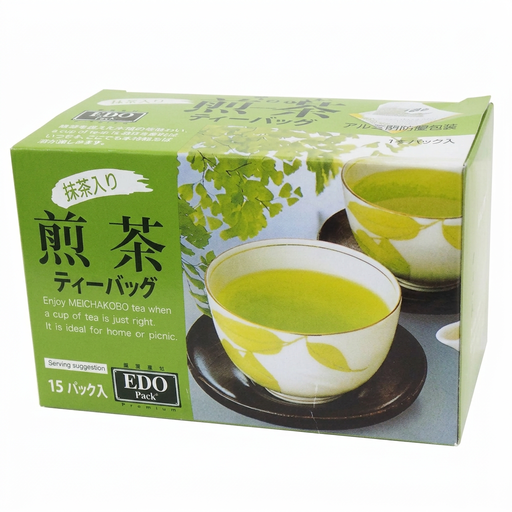
This matcha-and-sencha pyramid-bag option is for a steeped breakfast drink rather than a whisked powder drink.
 No image available
For a steeped breakfast drink instead of whisked powder, this 30g product is sold as matcha-injected sencha in pyramid tea bags. Check the exact pack’s ingredients, brewing directions and caffeine information when deciding whether it suits your routine.
No. A bag can be a blend intended for infusion: Clearspring’s Matcha Sencha sachets contain 97.5% sencha and 2.5% matcha, while its separate Matcha Shot lists 100% matcha powder. Read the exact product’s ingredients before treating the formats as interchangeable.
Follow the time and water-temperature directions on that product’s pack. A matcha-containing bag is steeped rather than prepared like powdered matcha, but brewing directions can differ between blends.
No. Shape alone does not establish bag material or disposal instructions. Check the statement for the exact product rather than applying a claim about another brand’s pyramid bags.
Do not assume they are caffeine-free. Check the exact tea’s caffeine information if you need to track intake, and do not use a caffeine figure for 100% matcha powder to calculate the amount in a different bagged blend.