For care-home dining, choose a matcha-containing tea bag only after checking that its ingredients, caffeine status and preparation fit the resident’s individual needs and preferences; a pyramid shape alone establishes neither matcha content nor suitability. Where a resident needs to avoid caffeine, choose a clearly labelled caffeine-free alternative instead. The Care Quality Commission’s guidance for providers in England emphasises meeting residents’ nutrition and hydration needs while taking their preferences into account.
Who needs which tea option?
The starting point for a care-home drinks choice is the individual resident, not the shape of the tea bag.
Care-home catering teams following individual plans
Choose drinks that fit each resident’s assessed needs, required support and preferences. The Care Quality Commission’s guidance for providers in England addresses nutrition, hydration and individual preferences.
Teams wanting a bagged matcha drink
A matcha-containing tea bag offers a different preparation method from whisked matcha powder. Check the ingredients to see whether the product is a green-tea blend rather than pure matcha.
Teams offering a caffeine-free choice
Where a resident’s plan or preference calls for avoiding caffeine, keep a clearly labelled caffeine-free drink available alongside any matcha or green-tea option.
What should you check before choosing?
Decide whether the requirement is matcha in an easy-to-brew bag, a pyramid bag for another tea, or a caffeine-free drink. Then check the particular product against the resident’s needs.
Matcha-containing tea bag
Consider when: A single-bag brew is wanted and green tea fits the resident’s individual plan.
Bear in mind: Clearspring’s Matcha Sencha is a sencha-and-matcha blend, not pure matcha powder; its tea-bag description does not establish a pyramid shape.
Pyramid tea bag
Consider when: A pyramid-shaped bag for whole-leaf infusion is the format the service wants.
Bear in mind: JING Tea and teapigs describe whole-leaf pyramid bags, but the shape does not tell you whether a particular bag contains matcha.
Caffeine-free alternative
Consider when: Avoiding caffeine is part of a resident’s documented plan or preference.
Bear in mind: M&S describes its decaffeinated tea bags and Sticky Toffee Rooibos pyramid infusion as caffeine-free alternatives; neither is matcha.
| Priority |
What to check |
Your needs |
| Individual suitability |
Check the resident’s assessed needs and preferences. Compare the current pack’s ingredients and allergen information with the individual record. |
I need a drink choice that fits this resident, rather than one tea served to everyone. The Care Quality Commission’s guidance for providers in England emphasises individual nutrition and hydration needs and preferences. |
| Matcha and bag format |
Read the ingredient list for matcha and check the stated bag shape separately. Clearspring lists its Matcha Sencha sachets as 97.5% sencha leaves and 2.5% matcha powder. |
If I want matcha in a pyramid bag, I need both details confirmed for the same product; a pyramid bag by itself could contain another tea. |
| Caffeine choice |
Check caffeine information for the particular drink. If a caffeine-free option is needed, look for an explicit claim on its current pack. |
Some residents need a drink without caffeine, so I cannot treat matcha, green tea or a pyramid shape as evidence that the drink meets that requirement. |
| Preparation and service |
Follow the purchased product’s brewing directions and check what staff need to prepare it. Clearspring specifies a 1–2 minute infusion for its Matcha Sencha and Matcha Genmaicha sachets. |
Our team needs a preparation method it can follow consistently while still offering residents a choice of drinks and flavours. |
Mistakes to avoid with matcha tea bags
-
Assuming a pyramid bag contains matcha
A pyramid describes the bag’s shape, not its ingredients. JING Tea describes pyramid bags for whole-leaf tea and presents matcha powder separately.
Check the specific product name and ingredient list for matcha before ordering.
-
Treating a matcha blend like pure matcha powder
Clearspring lists its Matcha Sencha sachets as 97.5% sencha and 2.5% matcha, while its Matcha Shot contains 100% matcha powder and is prepared by whisking.
Specify whether staff need to brew a tea bag or prepare powder, and use the directions for the chosen product.
-
Offering the same matcha drink to every resident
A standard drinks selection cannot replace an individual check of needs and preferences. The Care Quality Commission’s guidance for providers in England addresses both nutrition and hydration provision and residents’ preferences.
Check the resident’s plan before serving matcha and provide a suitable alternative where caffeine is to be avoided.
-
Using a retailer listing instead of the delivered label
Waitrose and M&S both warn that product information, including ingredients or allergen details, can change.
Check the current pack against the resident’s records when the product arrives and before service.
Brand references for tea formats
These examples illustrate differences between matcha blends, pyramid bags, powder and caffeine-free drinks; the product name and current pack determine what a particular purchase contains.
Clearspring
Clearspring lists Matcha Sencha and Matcha Genmaicha as matcha-containing tea sachets and sells a separate 100% matcha powder product.
- Its product pages give ingredients and brewing directions for the tea sachets.
- A tea-sachet description does not establish pyramid construction or the caffeine content of a prepared cup.
JING Tea
JING Tea describes pyramid-shaped bags for whole-leaf teas and presents matcha powder in its matcha range.
- Its format descriptions help distinguish an infused whole-leaf tea from prepared matcha powder.
- Check an individual pyramid-bag product’s ingredients rather than assuming that it contains matcha.
teapigs
teapigs describes its Tea Temples as pyramid bags containing whole leaves.
- The Tea Temples description identifies the bag format.
- Format alone does not identify matcha content; check the selected tea and its pack.
M&S
M&S describes a decaffeinated tea-bag product and a naturally caffeine-free Sticky Toffee Rooibos infusion in a pyramid bag.
- These are separately labelled non-matcha options when a caffeine-free drink is required.
- M&S advises checking the current label because product information can change.
Waitrose
Waitrose lists Clearspring Organic Matcha Sencha as a 36g pack of 20 tea bags containing sencha leaves and matcha powder.
- The listing specifies 97.5% sencha leaves and 2.5% matcha powder.
- Waitrose advises checking the product label because recipes and allergen information can change.
Joybuy matcha tea-bag options
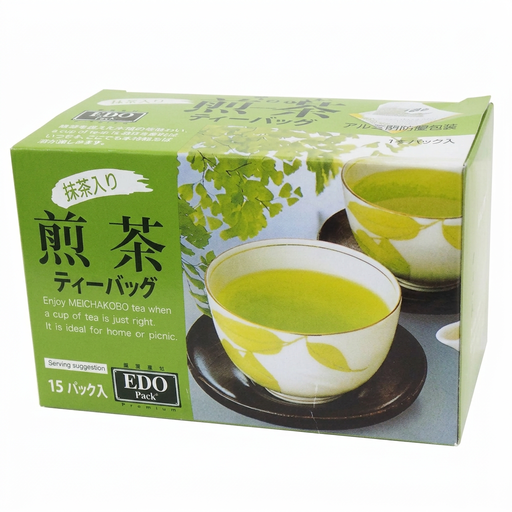
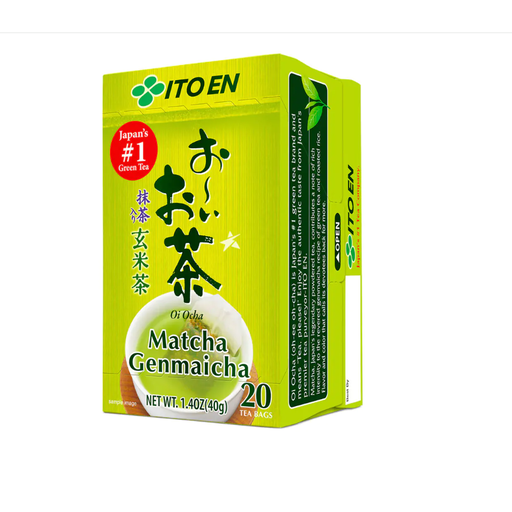
These matcha-containing tea-bag options serve different format needs: the EDO product is named as a pyramid bag, while the Itoen product is a matcha genmaicha tea bag whose pyramid shape should be checked if that format matters. Assess either drink against the individual resident’s needs before service.
 No image available
Cooling Hydration EDO Matcha Injected Sencha Pyramid Tea Bags, 30g
A matcha-containing sencha option when a pyramid tea bag is wanted and the drink fits the resident’s individual plan.
Check the current pack for ingredients, allergens, caffeine information and preparation directions before service.
View on Joybuy
 No image available
Itoen Oi Ocha Japanese Matcha Genmaicha Tea Bags, 20 Bags, 40g
A matcha genmaicha tea-bag option for a service where the drink suits the resident’s individual plan.
If pyramid construction matters, confirm it on the pack. Check the current ingredients, allergens, caffeine information and preparation directions before service.
View on Joybuy
Questions about serving matcha tea
Is a matcha pyramid bag suitable for every care-home resident?
No. Check the particular drink against the resident’s assessed needs and preferences, including any requirement to avoid caffeine. The Care Quality Commission’s guidance for providers in England emphasises meeting individual nutrition and hydration needs; a pyramid shape does not establish suitability.
Does a pyramid tea bag always contain matcha?
No. Pyramid describes the bag format, not its ingredients. JING Tea and teapigs describe whole-leaf pyramid bags; confirm matcha in the name and ingredients of the specific product you intend to serve.
How do you prepare Clearspring Matcha Sencha tea bags?
Clearspring says to boil fresh water, let it cool for a minute, pour it over the tea bag and infuse for 1–2 minutes. Follow the current pack directions for the product actually purchased.
When should a caffeine-free drink replace matcha?
Choose a caffeine-free alternative when avoiding caffeine is part of the resident’s documented plan or preference. M&S describes a decaffeinated tea and a naturally caffeine-free rooibos pyramid infusion; both are alternatives to matcha, and their current labels still need checking.


