Parents who want a quick, bagged cup
A matcha-sencha tea bag avoids measuring powder or using a whisk. Clearspring specifies a 1–2 minute infusion for its Matcha Sencha, which is a sencha-and-matcha blend rather than pure matcha.


Choose a matcha-sencha tea bag if making a cup without measuring powder matters more than pyramid shape; choose a whole-leaf pyramid green tea if the bag format matters more than matcha. For both features together, Joybuy lists an EDO matcha-infused sencha pyramid bag, although its ingredient breakdown calls the 2% powdered portion green-tea powder rather than specifying matcha powder. If avoiding caffeine matters more than either feature, look for an explicitly caffeine-free infusion instead.
A matcha-sencha tea bag avoids measuring powder or using a whisk. Clearspring specifies a 1–2 minute infusion for its Matcha Sencha, which is a sencha-and-matcha blend rather than pure matcha.
Teapigs and JING describe whole-leaf pyramid bags. Check the ingredients of a particular tea before choosing it for matcha: a pyramid bag can contain green tea without matcha.
Include tea alongside other sources when considering daily caffeine intake. The NHS advises no more than 200mg a day during pregnancy; its current breastfeeding pages give differing figures of 200mg and 300mg a day.
Start with the feature you would not want to compromise on: the preparation method, matcha in the ingredients, pyramid construction or caffeine content.
| Priority | What to check | Your needs |
|---|---|---|
| Preparation | Check the stated brew time and water instructions. Clearspring specifies 1–2 minutes for Matcha Sencha; Teapigs specifies about 80°C and three minutes for Mao Feng. | I want to make a cup in a mug without measuring powder or using a loose-leaf strainer. |
| Matcha content | Read the ingredient names and proportions. Clearspring lists 97.5% sencha and 2.5% matcha powder; Joybuy lists the EDO matcha-infused pyramid tea as 98% green tea and 2% green-tea powder. Teapigs Mao Feng lists pure green tea. | If matcha is the reason I am buying, I want to know whether it is an ingredient, rather than relying on a green-tea label or product name. |
| Bag construction | Look for an explicit pyramid-bag description. Teapigs calls its Tea Temples whole-leaf pyramid bags, and JING describes its tea bags as pyramid-shaped. | I care about the pyramid format, so a product described only as a tea bag or sachet does not settle the choice for me. |
| Caffeine | Check whether the product is labelled caffeine-free and whether caffeine per serving is given. The NHS sets a 200mg daily limit during pregnancy; its breastfeeding pages give differing 200mg and 300mg figures. | I need to consider caffeine from tea alongside coffee, chocolate and other sources. If I want to avoid it, I would choose an infusion explicitly labelled caffeine-free rather than assume a green tea is caffeine-free. |
Bagged blends can have a different ingredient balance from pure matcha powder. Clearspring lists 2.5% matcha powder in its Matcha Sencha; Joybuy lists 2% green-tea powder in the EDO matcha-infused sencha.
Read the ingredient list before choosing between an infused tea bag and a drink made from matcha powder.
Teapigs and JING explicitly describe pyramid-shaped bags, while Clearspring describes its Matcha Sencha as tea sachets without identifying a pyramid shape.
If the shape matters to you, check that the specific product description says it is a pyramid bag.
Green tea contributes to total caffeine intake. The NHS advises no more than 200mg a day during pregnancy, but a serving count cannot be worked out for a particular tea without its caffeine amount per serving.
Consider caffeine from all foods and drinks. For breastfeeding, NHS pages currently give different daily figures of 200mg and 300mg; ask a midwife, health visitor or GP if you need advice for your circumstances.
Its Matcha Sencha and Matcha Genmaicha are matcha-containing tea sachets.
Teapigs describes its Tea Temples as pyramid bags containing whole leaves.
JING describes spacious, whole-leaf pyramid tea bags and lists matcha separately in its collections.
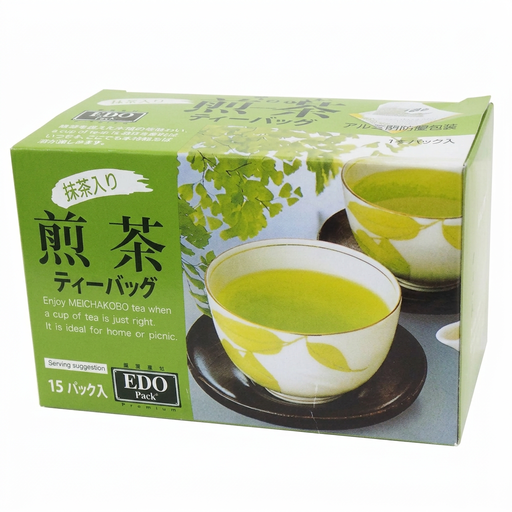
This option is listed as a matcha-infused sencha in pyramid tea bags. Check its ingredient breakdown and caffeine information against what you need from the drink.
 No image available
The pyramid-bag format allows you to prepare an infused tea without measuring powder. The Joybuy listing gives the ingredients as 98% green tea and 2% green-tea powder; check caffeine per serving and brewing instructions if they affect your choice.
No. Clearspring Matcha Sencha lists 97.5% sencha leaves and 2.5% matcha powder. Joybuy describes its EDO pyramid tea as matcha-infused sencha, while its ingredient breakdown lists 98% green tea and 2% green-tea powder. Check the ingredients if you want matcha powder specifically.
No. Clearspring describes its Matcha Sencha as tea sachets without identifying them as pyramids. Teapigs and JING explicitly describe pyramid-bag ranges, but the bag shape does not tell you whether an individual tea contains matcha.
The NHS advises no more than 200mg of caffeine a day during pregnancy. Count caffeine from all relevant foods and drinks, not just tea, and check a product’s caffeine amount per serving before working out how it fits into a day’s total.
Two current NHS pages give different advice: its breastfeeding-and-diet page recommends no more than 200mg a day, while NHS Best Start in Life says to try not to have more than 300mg a day. A 200mg approach is the more cautious of those figures; ask a midwife, health visitor or GP for advice relevant to you.
Follow the instructions for the tea you buy. Clearspring says to let freshly boiled water cool for a minute before infusing Matcha Sencha for 1–2 minutes; Teapigs specifies water at about 80°C and a three-minute brew for Mao Feng. Do not apply either set of instructions to a different product without checking its label.