Tea drinkers refilling the cupboard
A matcha-labelled tea bag keeps the familiar kettle-and-mug routine. Read the ingredients if it matters whether you are buying a green-tea blend containing matcha rather than powder to whisk into a drink.


Choose a matcha-labelled tea bag for a straightforward brew, a whole-leaf pyramid bag if that bag format matters most, or powder if you want to whisk matcha into your drink. These are not interchangeable: Clearspring and Pukka list 2.5% and 2% matcha respectively in their green-tea blends, while a pyramid shape alone does not establish matcha content. For the weekly shop, check both the ingredients and the stated bag format, then choose a pack quantity and preparation method that suit your routine.
The useful starting point is whether you want a quick infusion, a particular type of tea bag or a drink made with matcha powder.
A matcha-labelled tea bag keeps the familiar kettle-and-mug routine. Read the ingredients if it matters whether you are buying a green-tea blend containing matcha rather than powder to whisk into a drink.
If the pyramid bag is the attraction, check that the pack explicitly names that format. JING and teapigs describe pyramid bags containing whole-leaf tea, but bag shape does not tell you whether a particular tea contains matcha.
Choose a product sold as matcha powder if you want to prepare the powder in your drink. This involves measuring and mixing it, rather than steeping and removing a tea bag.
Decide on the preparation method first. Then use the ingredients, pack details and brewing directions to choose within that format.
Choose when: You want to brew a bag in a mug without measuring powder.
Bear in mind: Clearspring and Pukka each list matcha as a small proportion of a green-tea blend, not as the whole contents.
Choose when: You specifically prefer whole-leaf tea supplied in a pyramid-shaped bag.
Bear in mind: The shape describes the bag, not its matcha content; check the ingredients separately.
Choose when: You want to prepare matcha powder as a whisked drink or use it in a latte.
Bear in mind: Powder needs measuring and mixing, so it is a different routine from brewing a bag.
| Priority | What to check | Your needs |
|---|---|---|
| Ingredients | Read the ingredient list and any stated matcha percentage. Clearspring lists 97.5% sencha and 2.5% matcha; Waitrose lists Pukka Supreme Matcha Green as 98% green tea and 2% matcha. | I want to know whether I am buying a green-tea infusion containing matcha or powder that I will mix into the drink. |
| Bag format | Look for an explicit description of a pyramid bag, rather than assuming any tea bag or sachet has that shape. Check the ingredients separately if matcha matters too. | The pyramid construction matters to me, but I do not want to mistake it for a statement about what tea is inside. |
| Weekly quantity | Check the bag count or powder weight and the preparation directions on the pack. Clearspring Matcha Sencha and Pukka Supreme Matcha Green are each listed as 20-bag products; JING sells its ceremonial matcha as a 30g powder. | I would rather buy a pack that fits how often I make tea than rely on the size of the box alone. |
| Current label | Read the physical pack for its current ingredients and allergen information. Waitrose advises checking labels because recipes can change. | If an ingredient or allergen affects my choice, I need the details on the box I am actually taking home. |
Clearspring Matcha Sencha lists 2.5% matcha alongside sencha, while Pukka Supreme Matcha Green lists 2% matcha alongside green tea. Neither ingredient list describes a pack of pure matcha powder.
Read the proportions where stated. If you intend to whisk powder into a drink, choose a product explicitly sold as matcha powder.
JING and teapigs explicitly describe pyramid-shaped bags in their whole-leaf ranges. A matcha-labelled tea bag or sachet is not identified as a pyramid bag merely by its ingredients.
If the shape is important, look for an explicit pyramid-bag description on the particular product you plan to buy.
Waitrose warns that product recipes can change. An ingredient list viewed before the weekly shop may therefore differ from the pack in hand.
Check the current pack’s ingredients and allergen information, particularly when buying for someone with an allergy or intolerance.
These examples show why the precise product and format matter more than a familiar name on the shopping list.
Clearspring Matcha Sencha is an organic Japanese green-tea and matcha blend sold in a 20-sachet, 36g pack.
Waitrose lists Pukka Supreme Matcha Green as a 20-bag, 30g green-tea blend.
teapigs describes its whole-leaf Tea Temples as pyramid tea bags.
JING describes whole-leaf tea in spacious pyramid bags and separately sells a 30g ceremonial matcha powder.
M&S lists Pure Green Tea Bags and separately explains what matcha powder is.
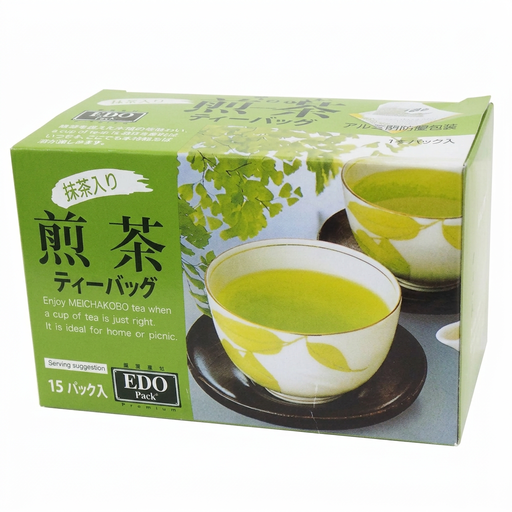
This option is labelled as a sencha and matcha pyramid tea bag. Check its pack details against your weekly tea routine rather than treating it as powdered matcha.
 No image available
A 30g pyramid tea-bag option for shoppers who want sencha and matcha in a bag. Check the pack for its ingredient proportions, number of bags and brewing instructions when deciding how many to buy.
No. Tesco Real Food explains that matcha powder is consumed in the drink, whereas the leaves in a regular green-tea infusion are steeped and removed. Clearspring’s Matcha Sencha sachets contain 2.5% matcha, and the Pukka Supreme Matcha Green ingredient list at Waitrose states 2% matcha; both are green-tea blends.
No. Pyramid describes the bag’s shape, not its ingredients. JING and teapigs describe whole-leaf tea in pyramid bags, so check the particular product’s ingredient list if you also want matcha.
Buy tea bags if you want to steep a bag in a mug; choose matcha powder if you want to measure and mix it into a drink. Check the quantity and directions on the particular pack: Clearspring and Pukka have 20-bag matcha blends, while JING sells its ceremonial matcha as a 30g powder.
Use the current physical pack as your final check. Waitrose advises checking product labels because recipes can change; this is particularly important when an ingredient or allergen affects what you can buy.