Short-break tea drinkers
A matcha-containing tea bag suits a mid-morning break when you want to steep a drink without whisking powder. Check the instructions on the product you choose.


A matcha-labelled tea bag is not necessarily pure matcha or pyramid-shaped. For a quick mid-morning infusion, compare matcha-containing tea bags; if drinking the ground leaf matters more, consider powder instead. If the pyramid shape is essential, check that the exact product and current pack confirm it—the shape cannot be assumed from the word “matcha”.
A matcha-containing tea bag suits a mid-morning break when you want to steep a drink without whisking powder. Check the instructions on the product you choose.
If you want to drink the ground tea rather than remove an infused bag, choose a powder and allow for mixing or whisking it. Clearspring lists its Matcha Sencha sachets as 97.5% sencha and 2.5% matcha, so that blend serves a different preference.
Check the shape on the exact matcha product, not just the brand’s wider tea range. JING describes its tea bags as pyramid-shaped, while its matcha range is presented separately as powder.
Decide whether the priority is a quick infusion, ground matcha or a particular bag shape, then check the ingredients and pack details of the exact product.
| Priority | What to check | Your needs |
|---|---|---|
| Matcha content | Read the ingredient list and any stated proportions. Clearspring lists Matcha Sencha as 97.5% sencha and 2.5% matcha; Tesco lists Twinings Super Green Matcha with 84% green tea and 15% matcha. | Am I after an infused green-tea blend containing matcha, or do I want to mix powdered matcha into the drink? |
| Preparation | Check the steeping instructions for bags or the mixing instructions for powder. JING describes powdered matcha as fine powder rather than leaves that are infused and discarded. | For a short break, I may prefer to remove a tea bag rather than bring equipment for mixing powder. |
| Bag shape | Look for a pyramid-shape statement for the exact matcha product and confirm it on the pack. A brand’s pyramid-bag range does not establish the shape of its separate matcha products. | If a pyramid bag is the reason I am buying, the word “sachet” or “matcha” alone will not settle the choice. |
| Current label | Check the physical pack for ingredients, declared allergens and storage instructions. Waitrose advises that recipes can change. | When ingredients or an allergy affect my choice, I need the current pack rather than relying solely on a retailer page. |
A matcha tea bag can be a blend: Clearspring lists 2.5% matcha in its Matcha Sencha sachets, while Tesco lists 15% matcha in Twinings Super Green Matcha.
Check the full ingredients and proportions. Choose powder if drinking ground matcha, rather than an infused blend, is the deciding factor.
JING explicitly describes its tea-bag range as pyramid-shaped. That description does not establish the format of every matcha product, including products sold under other brands.
Look for an explicit shape description for the exact product and confirm it on the pack if the format is essential.
Waitrose advises that recipes can change. An earlier listing may therefore differ from the pack you receive.
Read the current pack for ingredients and allergens before consumption, particularly if you have an allergy or dietary requirement.
These examples show why matcha content and bag shape need separate checks; a brand’s inclusion here does not establish that it sells a matcha pyramid bag.
Its Matcha Sencha and Matcha Genmaicha are matcha-containing tea sachets.
JING describes pyramid-shaped bags in its tea-bag range and presents matcha as a separate powdered format.
Teapigs has a UK matcha category for shoppers considering its matcha range.
Its Camomile Flowers Infusion illustrates a pyramid-bag option in a different tea category.
Waitrose lists Clearspring Matcha Sencha as a green-tea and matcha blend in tea bags.
Tesco lists matcha-labelled green-tea bags, including Pukka and Twinings blends.
This listed sencha-and-matcha option is described as pyramid tea bags for an infused mid-morning drink. If the shape is essential, confirm it on the current pack before buying.
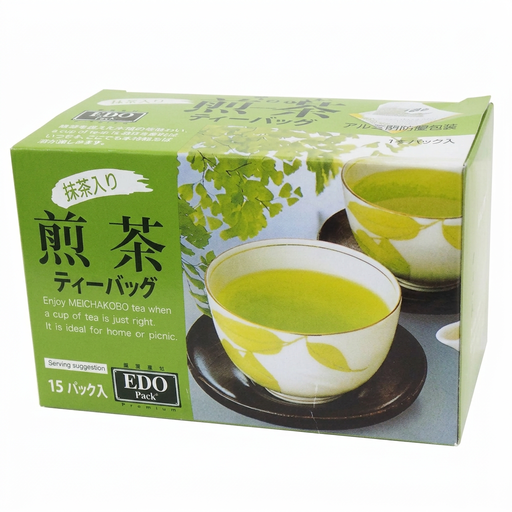 No image available
A bagged sencha-and-matcha option for an infused mid-morning drink. The product title states 30g and describes pyramid tea bags; check the current pack for the bag shape, ingredients, allergens and brewing instructions.
No. A bag may contain a green-tea blend with some matcha: Clearspring lists 97.5% sencha and 2.5% matcha in its Matcha Sencha sachets. A bag is infused and removed, whereas JING describes matcha powder as mixed into the drink.
No. A matcha label does not specify bag shape. Check the exact listing and pack for an explicit pyramid description rather than applying a claim about a brand’s wider tea-bag range to its matcha products.
Read the current ingredients label. GOV.UK says that any of the 14 specified allergens used as ingredients in prepacked food must be clearly labelled; contact the business if you need clarification about a product.
Use it to compare products, but check the current physical pack before consumption. Waitrose advises that recipes can change, so its online description may not be the final ingredient information for the pack you receive.