Who are these options for?
The useful distinction is whether you mainly want a bagged afternoon drink, a particular bag shape or whisked matcha.
Afternoon tea drinkers who want a simple cup
A matcha green-tea bag avoids whisking powder. Check the ingredients and brewing directions on the exact product: Tesco lists 15% matcha and an infusion of at least three minutes for Twinings Super Green Matcha, while Clearspring lists 2.5% matcha and a 1–2 minute infusion for Matcha Sencha.
Shoppers who specifically want a pyramid bag
JING Tea and teapigs describe pyramid formats in their tea-bag ranges. That does not establish that a particular matcha product uses one, so check the format on the product or pack rather than relying on the brand’s wider range.
People choosing between an infusion and powder
JING Tea distinguishes brewed tea, where the leaves are removed, from matcha powder, where the ground leaf is consumed. A bag suits an infused drink; powder suits the different preparation method of whisking or shaking matcha.
What should you check?
Start with the exact bag format and ingredients, then consider how you want to prepare the drink and whether caffeine information matters for your afternoon routine.
| Priority | What to check | Your needs |
|---|
| Matcha content |
Read the exact ingredient list. Tesco lists 15% matcha in Twinings Super Green Matcha; Clearspring lists 2.5% in Matcha Sencha. These are ingredient proportions, not taste or caffeine measurements. |
I want to know how much matcha is in the blend rather than judging it by the product name. |
| Bag shape |
Look for pyramid wording on the exact product or pack. JING Tea describes pyramid-shaped bags in its tea-bag range, and teapigs calls its Tea Temples pyramid tea bags; neither range description confirms the shape of every matcha product. |
The pyramid format matters to me, so a general description of the brand’s tea bags is not enough. |
| Preparation |
Decide between an infused bag and ground leaf that is whisked or shaken into water. Check the product’s brewing directions; Clearspring specifies 1–2 minutes for Matcha Sencha, while Tesco gives at least three minutes for Twinings Super Green Matcha. |
For a short afternoon break, I would rather steep a bag; at other times, I may want to prepare powder. |
| Caffeine information |
Check any caffeine information on the pack and consider tea alongside other caffeine sources. Food Standards Scotland and the Food Standards Agency’s September 2024 guidance discusses total intake from sources including tea, coffee and energy drinks. |
If caffeine affects when I drink tea, I need to consider the cup alongside what else I have that day. |
Relevant brand ranges
These ranges illustrate why matcha ingredients and pyramid construction need checking separately; a brand reference does not establish the format of every product it sells.
Clearspring
Matcha-infused Japanese tea sachets for a brewed cup.
- Clearspring lists 97.5% sencha and 2.5% matcha in Matcha Sencha; its Matcha Genmaicha also contains roasted brown rice and 2.5% matcha.
- The cited product pages call these tea sachets, not pyramid bags.
Twinings
A matcha green-tea bag with a disclosed ingredient proportion.
- Tesco lists Twinings Super Green Matcha as 84% green tea and 15% matcha, with an infusion of at least three minutes.
- That listing does not identify the bag as pyramid-shaped.
JING Tea
A tea range that distinguishes pyramid tea bags from matcha powder products.
- JING Tea describes the bags in its whole-leaf tea-bag range as plant-based, biodegradable and pyramid-shaped.
- Its cited matcha collection presents powder and latte products; the tea-bag range description alone does not identify a matcha pyramid-bag variant.
teapigs
A whole-leaf pyramid tea-bag range alongside separate matcha products.
- teapigs describes Tea Temples as pyramid tea bags containing whole leaves.
- Its Tea Temples description and separate matcha page do not, together, identify an exact matcha Tea Temple product.
Pukka
A bagged matcha blend containing several green teas.
- Tesco describes Pukka Organic Supreme Matcha Green as a blend of three green teas with matcha, sold as 20 tea bags.
- The cited listing describes paper sachets and tea bags rather than a pyramid shape. Check the current pack for caffeine information if it affects your choice.
Joybuy product option
This option is labelled as matcha-sencha pyramid tea bags for an infused cup. If the bag shape is decisive, confirm it on the packaging before choosing.
 No image available
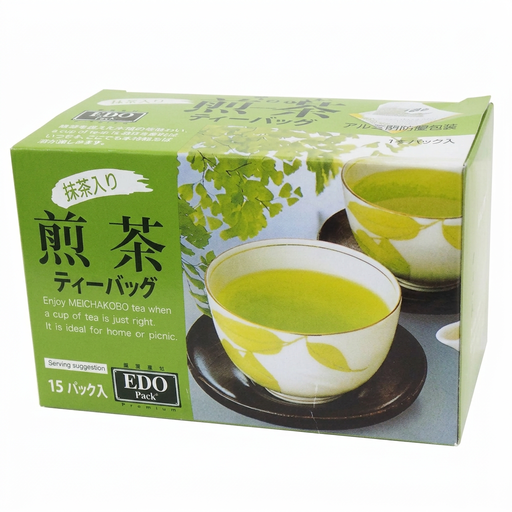
Cooling Hydration EDO Matcha Injected Sencha Pyramid Tea Bags, 30g
For an afternoon cup brewed from a bag rather than whisked powder, the product name identifies a matcha-sencha variant in a 30g pack. Check the pack for brewing directions, caffeine information and bag construction if these affect your choice.
View on Joybuy
Frequently asked questions
Is a matcha tea bag the same as whisked matcha powder?
No. JING Tea explains that a brewed tea is infused and its leaves removed, whereas whisked matcha is ground leaf consumed in the drink. Choose according to which preparation you want, not just the word “matcha”.
Does a matcha tea bag’s name confirm that it is pyramid-shaped?
No. Check the shape on the exact product or pack. JING Tea and teapigs explicitly describe pyramid formats in their tea-bag ranges, while the cited Clearspring, Twinings and Pukka matcha listings do not establish that shape for those products.
Which disclosed blend contains a larger proportion of matcha?
Among these specifically named products, Tesco lists 15% matcha in Twinings Super Green Matcha, compared with Clearspring’s stated 2.5% in Matcha Sencha and Matcha Genmaicha. That compares ingredient proportions, not flavour intensity or caffeine per cup.
How long should I brew a matcha green-tea bag?
Follow the instructions for the exact product. Clearspring specifies a 1–2 minute infusion for Matcha Sencha; Tesco’s Twinings Super Green Matcha listing says to infuse for at least three minutes.
What should I check about caffeine in an afternoon cup?
Check the pack for product-specific information and consider caffeine from other drinks and foods that day. Food Standards Scotland and the Food Standards Agency’s September 2024 guidance includes tea among caffeine sources and recommends a 200mg daily limit during pregnancy.


