If the triangular bag is essential for a quick cup with biscuits, choose a product that explicitly identifies its bags as pyramids; the identified options are green-tea blends containing matcha, not whisked matcha powder. If bag shape matters less, compare the ingredients of other matcha tea bags for the flavour you want; choose powder when you want to whisk and drink the ground tea itself.
Who is each format for?
Tea-and-biscuit drinkers who want a pyramid bag
If the triangular shape is part of your buying decision, look for an explicit pyramid-bag description. A matcha-containing green-tea blend gives you a tea to steep and remove, rather than powder to whisk.
Green-tea drinkers exploring matcha blends
If bag convenience matters more than its shape, compare the disclosed matcha proportion and the rest of the ingredients. Sencha blends and versions containing roasted rice offer different flavour directions for a biscuit break.
Drinkers who want whisked matcha
If you want to consume the ground tea rather than steep and remove a bag, choose matcha powder and allow for measuring and whisking. JING Tea describes this as a different preparation from infused green tea.
What should you check before choosing?
Decide whether pyramid shape is essential, then compare ingredients and preparation: a matcha-labelled bag does not necessarily meet the same need as whisked powder.
Verified pyramid bag
Choose when: The triangular bag itself matters for your steeped tea-and-biscuits break.
Bear in mind: The identified Kunitaro and EDO products combine green tea with matcha or green-tea powder; they are not pure whisked matcha.
Other matcha tea bags
Choose when: You want a steeped drink and care more about its ingredient blend than a pyramid shape.
Bear in mind: A listing that says only “tea bag” or “tea sachet” does not establish a pyramid format.
Matcha powder
Choose when: You want to whisk the powder into water and drink the ground tea.
Bear in mind: Measuring and whisking take more preparation than steeping a bag, and powder does not meet a pyramid-bag requirement.
| Priority | What to check | Your needs |
|---|
| Bag shape |
Look for “pyramid”, “triangular” or an equally explicit description. Check the bag count and pack weight if those affect your choice. |
I want the triangular bag format, not just any tea with matcha in its name. |
| Ingredients |
Read the matcha proportion alongside the green-tea base and any additions. Joybuy lists EDO as 98% green tea and 2% green-tea powder; Clearspring lists 2.5% matcha in each of its Matcha Sencha and Matcha Genmaicha sachets. |
I want to know whether I am buying a green-tea infusion containing matcha or powder that I will whisk and drink. |
| Flavour direction |
Check for additions rather than relying on “matcha” alone. Clearspring lists roasted brown rice in Matcha Genmaicha and describes its flavour as nutty. |
With plain biscuits, I might prefer roasted-rice notes; for a simpler green-tea blend, I would look at Matcha Sencha. |
| Preparation |
Follow the specific pack. Clearspring instructs a one-minute cooling period after boiling and a 1–2 minute infusion for its Matcha Sencha and Genmaicha sachets; Tesco lists at least three minutes in freshly boiled water for Twinings Super Green Matcha. JING Tea instructs whisking or shaking its powder. |
For a short break, I would rather steep a bag; if I choose powder, I am prepared to measure and whisk it. |
Common buying mistakes
-
Assuming every matcha tea bag is a pyramid bag
Product descriptions distinguish the shapes: Kunitaro and EDO explicitly identify pyramid bags, while Clearspring describes tea sachets and the Tesco Twinings listing says tea bags.
If pyramid shape matters, confirm it in the individual product description rather than inferring it from the word “matcha”.
-
Expecting a bag to prepare like matcha powder
A green-tea-and-matcha bag is steeped and removed. Matcha powder is whisked into water and consumed, as JING Tea explains.
Choose the bag for an infusion or the powder for a whisked drink; check the ingredients before assuming they are interchangeable.
-
Choosing by the front-of-pack name alone
Additional ingredients change what goes into the cup: Clearspring Matcha Genmaicha contains roasted brown rice, while Tesco lists manganese among the ingredients of Twinings Super Green Matcha.
Read the full ingredient list and the brewing instructions for the specific product, especially if you want a particular flavour alongside biscuits.
Brand and product-line references
These examples illustrate different formats and blends; a matcha product from a brand should not be assumed to be a pyramid bag.
Kunitaro
Japan Centre Wholesale identifies Kunitaro Green Tea with Uji Matcha as a 22-bag, 44 g pyramid product.
- Its listing explicitly describes the triangular bag format.
- Confirm current availability with a retailer before planning to buy it.
EDO
Joybuy lists EDO Matcha Infused Sencha as a 30 g pyramid tea-bag product.
- The listed ingredients are green tea (98%) and green-tea powder (2%).
- It is a green-tea-led blend, not powdered matcha for whisking.
Clearspring
Clearspring offers Japanese Matcha Sencha and Matcha Genmaicha in tea-sachet form.
- Both ingredient lists disclose 2.5% matcha; Genmaicha also contains roasted brown rice.
- The product descriptions identify tea sachets, not a pyramid shape.
Twinings
Tesco lists Twinings Superblends Super Green Matcha as a tea-bag option.
- The Tesco ingredient list states 84% green tea and 15% matcha, with instructions to infuse for at least three minutes.
- That listing does not establish a pyramid-bag shape.
Pukka
Tesco describes Pukka Supreme Matcha Green as a blend of three green teas with matcha in tea bags.
- It provides another bagged blend to consider when the precise bag shape is optional.
- The Tesco description does not verify a pyramid shape or state a matcha percentage.
JING Tea
JING Tea offers a 30 g organic matcha powder for a whisked drink rather than a steeped bag.
- JING Tea gives preparation instructions of 1.5 g per 160 ml cup, water at 70°C and 30 seconds of whisking or shaking.
- The powder requires a different preparation method and is not a pyramid-bag alternative.
Pyramid-bag options on Joybuy
This matcha-and-sencha option is for a steeped cup when a pyramid bag is part of the decision. Check the pack’s brewing directions and current listing details before ordering.
 No image available
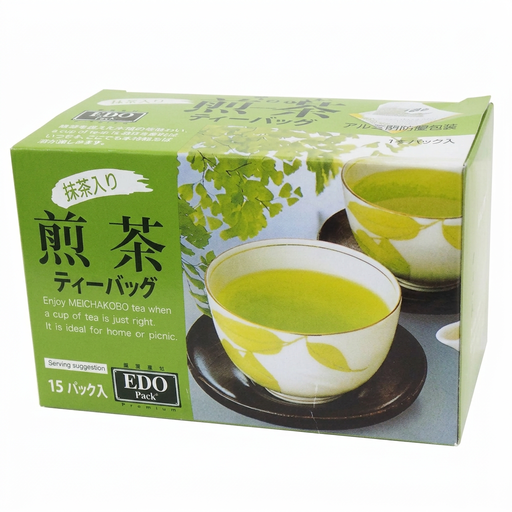
EDO Matcha Infused Sencha pyramid tea bags, 30 g
For a tea-and-biscuits break where the pyramid bag matters, this is a green-tea blend to steep rather than matcha powder to whisk. Joybuy lists green tea (98%) and green-tea powder (2%); follow the directions on the pack for brewing.
View on Joybuy
Questions about matcha bags
Are matcha pyramid bags the same as whisked matcha?
No. The identified Kunitaro and EDO pyramid products combine green tea with matcha or green-tea powder and are made as infusions. JING Tea describes powdered matcha as being whisked into water and consumed rather than steeped and removed.
Which matcha blend goes with plain biscuits?
If you like roasted, nutty notes, consider Clearspring Matcha Genmaicha: its ingredient list includes sencha, roasted brown rice and 2.5% matcha. Clearspring Matcha Sencha omits the roasted rice if you prefer a simpler green-tea blend. Their tea-sachet descriptions do not confirm a pyramid shape.
How long should I brew a matcha tea bag?
Use the instructions for the particular bag. Clearspring says to let freshly boiled water cool for a minute and infuse its Matcha Sencha and Genmaicha sachets for 1–2 minutes; Tesco lists freshly boiled water and at least three minutes for Twinings Super Green Matcha.
Does a larger matcha percentage settle which blend to buy?
No: the disclosed percentage describes the ingredients, not which flavour you will prefer. Tesco lists 15% matcha in Twinings Super Green Matcha, whereas Clearspring lists 2.5% in Matcha Genmaicha alongside roasted brown rice. Compare the whole ingredient list and whether the bag format meets your needs.


