Shoppers who want a convenient green-tea infusion
A tea bag avoids measuring and whisking powder. Check whether the drink is a sencha-and-matcha infusion or a blend with other ingredients before choosing it as your matcha option.


For a convenient premium-shop purchase, choose a matcha-containing tea bag only if the exact pack meets your pyramid-bag requirement. Check the ingredients, matcha proportion and brewing instructions: a steeped blend is different from powdered matcha, which is whisked into the drink rather than removed after brewing.
The first choice is whether you want a tea bag to steep or matcha powder to whisk into the cup.
A tea bag avoids measuring and whisking powder. Check whether the drink is a sencha-and-matcha infusion or a blend with other ingredients before choosing it as your matcha option.
The word “matcha” does not tell you how much is in a bag. English Tea Shop lists 6% matcha in Mighty Matcha, Clearspring lists 2.5% in Matcha Sencha, and Joybuy lists 2% green tea powder in the EDO product.
If a pyramid bag matters for presentation, look for that wording on the individual product or pack. Check any material or disposal claim for that bag too, rather than applying a brand-wide statement to every product.
Start with how the tea is prepared, then narrow the choice by bag shape, ingredients and the current pack information.
| Priority | What to check | Your needs |
|---|---|---|
| Tea bag or powder | Check whether you steep and remove a bag or whisk powder into the drink. For a bag, read the ingredient list and stated matcha proportion. | I want a quick infusion, or I specifically want to drink whisked matcha. Those are different purchases even when both say “matcha”. |
| Pyramid format | Look for pyramid-bag wording for the exact product and confirm it on the current pack. Do not treat “tea sachet” as confirmation of its shape. | If the bag’s shape is part of my shop presentation, I need confirmation for the product I am buying, not just its brand’s wider tea-bag range. |
| Ingredients and origin | Read the full blend, the matcha or green tea powder proportion, and any stated country of origin. Distinguish a sencha-led tea from one containing roasted rice, cacao, maté or flavouring. | For a sencha-led infusion, I would compare the simpler ingredient lists. If I want a flavoured blend, I would choose its added ingredients deliberately rather than relying on the word “premium”. |
| Brewing and packaging | Follow the instructions for the exact tea; Clearspring specifies one to two minutes for Matcha Sencha, while English Tea Shop specifies 80°C and two to three minutes for Mighty Matcha. Check bag-material claims and the current ingredient and allergen label separately. | I want preparation instructions I can use consistently, and pack information that fits my packaging or ingredient requirements. |
A bag may contain matcha alongside a larger proportion of other tea or ingredients. Steeping and removing that bag is not the same preparation as whisking matcha powder into a drink.
Compare the complete ingredient list and serving format. If drinking the ground leaf is the aim, choose powder rather than a tea bag.
“Tea bag”, “sachet” and “pyramid bag” do not confirm the same shape. Clearspring describes its Matcha Sencha as tea sachets; that description alone does not establish a pyramid format.
Check the individual product description and current pack for an explicit pyramid-bag statement.
English Tea Shop’s Mighty Matcha lists roasted rice, cacao, maté and flavouring as well as green tea and matcha. It is a different ingredient choice from Clearspring’s sencha-and-matcha product.
Read all the ingredients before choosing between a flavoured blend and a sencha-led infusion.
Waitrose & Partners advises that recipes and allergen information can change. This matters particularly when buying for someone with an ingredient requirement or preparing products for a shop.
Check the current physical pack. If your shop repacks food for direct sale, check the labelling requirements that apply to that activity and location.
These examples show why a brand’s tea bags and its matcha products should be checked as separate product lines.
Mighty Matcha is a multi-ingredient tea infusion containing matcha.
Organic Japanese Matcha Sencha is a sencha-led tea sachet rather than powdered matcha for whisking.
JING offers pyramid-bag teas and, separately, matcha powder for whisking.
The Joybuy listing identifies an EDO matcha-infused sencha product as pyramid tea bags.
This Joybuy option is a pyramid-bag green-tea infusion containing green tea powder. It is for shoppers choosing a bag to steep, not powdered matcha to whisk.
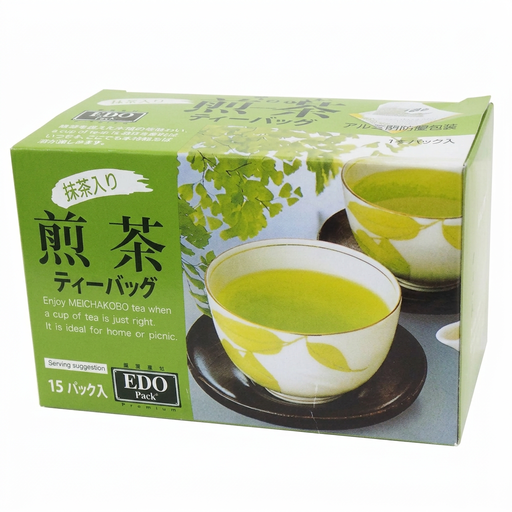 Image unavailable
For a steeped green-tea infusion in a pyramid bag, rather than whisked matcha powder. Joybuy lists 98% green tea and 2% green tea powder, with China as the country of origin. Check the current pack for brewing instructions and bag-material details if these matter to your purchase.
No. A tea bag is steeped and removed, whereas matcha powder is whisked into the drink. JING describes this preparation difference between infused green tea and its powdered matcha; check the individual bag’s ingredients to see what it contains.
It varies by product, so read the ingredient list. English Tea Shop lists 6% matcha in Mighty Matcha, Clearspring lists 2.5% in Matcha Sencha, and Joybuy lists 2% green tea powder in EDO Matcha Infused Sencha. These are ingredient figures for three different blends, not measures of their flavour or quality.
No. JING explicitly describes its tea-bag range as pyramid-shaped, while Clearspring describes Matcha Sencha as tea bags or sachets without establishing that shape. Confirm the format for the exact product you plan to buy.
Follow the instructions for the particular blend. Clearspring says to boil fresh water, let it cool for a minute and infuse Matcha Sencha for one to two minutes; English Tea Shop specifies 80°C and two to three minutes for Mighty Matcha.
For food prepacked for direct sale in England, Wales and Northern Ireland, the Food Standards Agency says the label must give the food name and a full ingredient list, with allergenic ingredients emphasised. Check whether your shop’s activity falls within that category and confirm the requirements for its location. For a manufacturer-packed retail product, check its current label rather than assuming that the rules for food packed by the shop apply to it.