For afternoon tea with older guests, choose plain matcha powder if they want a whisked green-tea drink, or plain single-serve sticks if measuring several portions would be awkward. A sencha, ginger and matcha tea bag is a different brewed drink, not an equivalent serving of pure matcha. Check each guest’s flavour preferences, the exact ingredients and the serving’s caffeine information; offer a caffeine-free alternative for anyone who prefers one.
Who is each format for?
The useful distinction for an afternoon-tea host is whether guests want a whisked matcha drink, a portioned serving or a familiar brewed tea.
Hosts serving a small group
Loose powder lets you measure individual servings. Plain sticks avoid measuring, while a tea-bag blend can be served like conventional brewed tea. Check which drink each guest actually wants before preparing a whole round.
Guests attentive to afternoon caffeine
Matcha and the green tea in a brewed blend contain caffeine. NHS guidance notes that caffeine can make people feel more awake, so serving time and other caffeinated drinks matter to guests who know it affects their sleep.
People trying matcha for the first time
Ask whether they would prefer a straight whisked drink, matcha with milk or a ginger-flavoured tea. A plain stick simplifies portioning, but flavoured sticks can have different ingredients from the plain version.
What should you check before choosing?
Settle the drink format first, then check the individual product’s portion, ingredients and preparation directions.
| Priority | What to check | Your needs |
|---|
| Drink format |
Read the ingredient list to distinguish 100% matcha powder from a tea blend. The Clearspring Matcha Ginger tea bags listed by Waitrose contain 53.6% sencha, 45% ginger and 1.4% matcha. |
I want to serve whisked matcha if guests ask for matcha itself, but a brewed ginger and green-tea drink if that is more familiar to them. |
| Flavour |
Check whether the product is intended for straight whisking, mixing with milk or brewing as a tea bag. Treat descriptions such as “ceremonial” as product positioning, not a promise that every powder tastes alike. |
A guest who dislikes an assertive green-tea flavour might prefer matcha mixed with milk; another may want to taste a plain powder without added flavourings. |
| Portion and caffeine |
Measure the serving and use the exact product’s caffeine information. Clearspring gives approximately 32 mg per 1 g of its dry ceremonial matcha; the PerfectTed powder listed by Waitrose gives 68 mg per 2 g serving. Neither figure applies automatically to another product. |
I need to know what I am serving, particularly when afternoon tea is late or a guest says caffeine affects their sleep. |
| Preparation |
Check the quantity and mixing method on the pack. JING Tea recommends 1.5 g of its ceremonial powder in 160 ml water at 70°C; Waitrose lists 1.5 g plain sticks and 5 g flavoured sticks in the PerfectTed variety pack. |
For several guests, I may prefer portioned sticks or tea bags to measuring and whisking each cup of loose powder. |
| Ingredients |
Read the label for the exact flavour and format. Waitrose lists coconut sugar and natural flavourings in the flavoured PerfectTed variety sticks, while its original stick contains matcha. |
I want to offer an unsweetened option and check the current pack for any ingredients a guest needs to avoid. |
Common buying mistakes
-
Assuming every matcha-labelled drink is pure matcha
Waitrose lists Clearspring Matcha Ginger as predominantly sencha and ginger, with 1.4% matcha. Its ingredients and brewing method differ from those of a 100% matcha powder.
Choose a product listing 100% matcha when you want a plain matcha drink; choose the tea bag when the brewed green-tea-and-ginger flavour is the point.
-
Assuming every stick is unsweetened
The original stick in the PerfectTed variety pack listed by Waitrose contains matcha, while its flavoured sticks list coconut sugar and natural flavourings.
Check the ingredients of the individual stick, and keep a plain option if guests prefer a drink without added flavourings or sugar.
-
Ignoring the serving size at a late gathering
Caffeine figures for matcha powders are tied to particular measured amounts. NHS guidance also notes that caffeine in tea can make people feel more awake.
Use the product’s serving directions, ask about guests’ preferences without making assumptions based on age, and have a caffeine-free drink available.
-
Relying on an older online ingredient listing
Recipes and individual flavours can differ. A range description cannot establish the ingredients of the pack you will serve.
Check the current physical pack for ingredients, allergen information, caffeine declarations and preparation instructions, especially when accommodating an allergy or intolerance.
Brand and product-line references
These examples illustrate different matcha formats; a brand’s range is not interchangeable with every product bearing its name.
Clearspring
Clearspring offers plain Japanese matcha powders as well as a separately formulated Matcha Ginger tea-bag blend.
- Its premium powder is positioned by Clearspring for drinking and baking; its ceremonial powder is a plain matcha option for whisking.
- The Matcha Ginger blend listed by Waitrose contains 1.4% matcha, so it should not be treated as a portion of pure matcha powder.
JING Tea
JING Tea’s 30 g ceremonial matcha is presented as a single-Okumidori-cultivar powder for a measured, whisked serving.
- JING Tea gives a preparation measure of 1.5 g in 160 ml water at 70°C.
- Loose powder requires measuring and preparation rather than simply infusing a tea bag.
PerfectTed
PerfectTed has a plain powder listed by Waitrose alongside a variety pack containing plain and flavoured sticks.
- The plain powder listing specifies 100% matcha and 68 mg caffeine per 2 g serving.
- The flavoured sticks list coconut sugar and natural flavourings; the plain powder’s ingredient list does not describe the whole stick range.
Matcha options on Joybuy
These products cover portioned plain matcha, loose powders with different stated flavour profiles and an instant matcha latte blend. Compare their individual labels rather than treating the formats as equivalent.
 No image available
Perfectted Matcha Powder Sachets, 7 × 1.5 g
For a host who wants plain, individually portioned matcha without measuring loose powder. The product description lists seven 1.5 g sachets containing 100% matcha; check the current pack for caffeine and mixing directions before serving.
View on Joybuy
 No image available
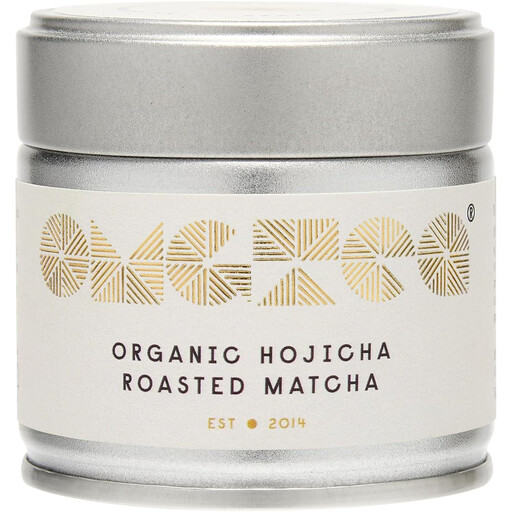
OMGTea Organic Hojicha Roasted Matcha, 30 g
A loose roasted-matcha option for guests who want a different flavour from plain matcha. Its product description states 15.7 mg caffeine per 1 g and advises water at 80°C or below; use the current pack’s directions and do not apply that caffeine figure to other powders.
View on Joybuy
 No image available
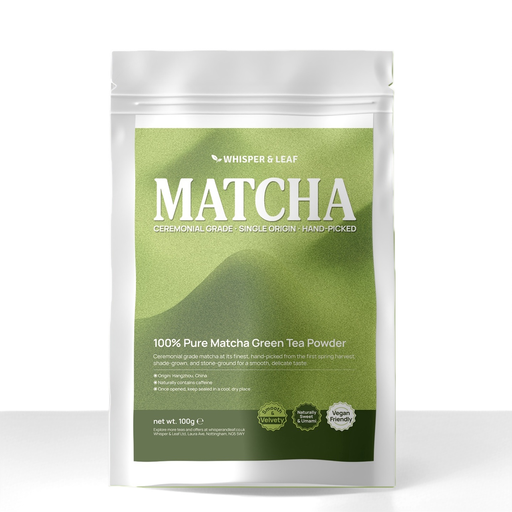
Whisper and Leaf Ceremonial Grade Matcha Powder, 100 g
A loose, plain powder for a whisked serving or a latte. The product description lists 100% matcha in a 100 g bag; measure portions using the current pack’s directions and check its caffeine information when serving sensitive guests.
View on Joybuy
 No image available
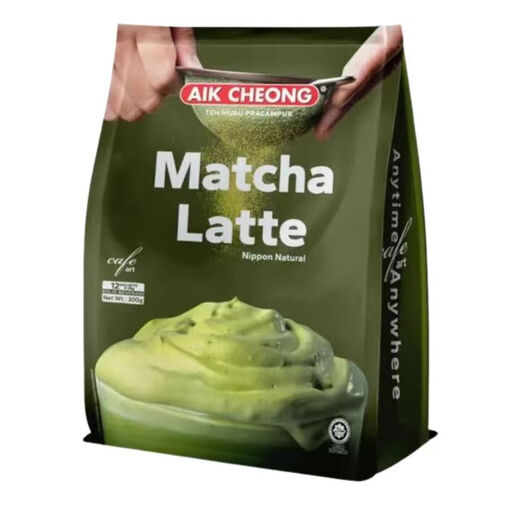
Aik Cheong Matcha Latte, 12 × 25 g sachets
A portioned instant latte blend rather than plain matcha. Its product description lists matcha, milk powder and sugar, with 60 g sugars per 100 g; it contains milk and may contain traces of soy. Check the current label for ingredients, matcha proportion and caffeine information before serving.
View on Joybuy
 No image available
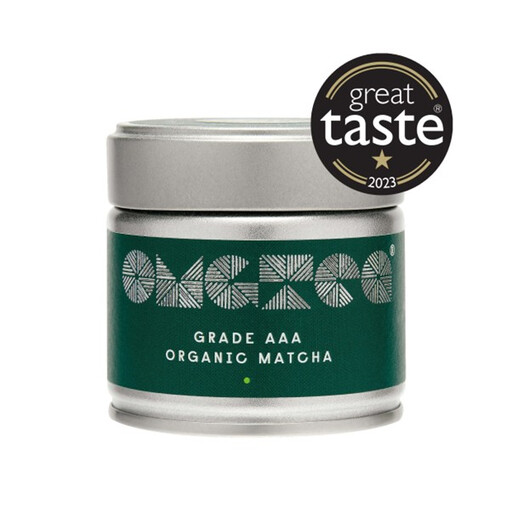
OMGTea AAA Organic Matcha Green Tea, 30 g
A 30 g plain powder whose ingredient description lists 100% organic matcha. Product descriptions use differing grade terms, so check the package if the designation matters to your choice; also follow its serving directions and caffeine information.
View on Joybuy
Questions about serving matcha
How much caffeine is in a serving of matcha?
It depends on the product and the amount used. Clearspring states approximately 32 mg per 1 g of its dry matcha, while the PerfectTed plain powder listed by Waitrose specifies 68 mg per 2 g serving. Measure the portion and use the information for the exact product; neither figure describes every matcha drink or tea-bag blend.
Could matcha served in the afternoon affect sleep?
Yes, for someone who finds caffeine affects their sleep. The NHS notes that caffeine in tea can make people feel more awake. Ask guests what they would prefer, particularly for a late gathering, and offer a caffeine-free alternative.
Are flavoured matcha sticks the same as plain powder?
No. In the PerfectTed variety pack listed by Waitrose, the original stick contains matcha, while the flavoured sticks list coconut sugar and natural flavourings. Read the ingredients of the individual flavour before serving it.
What if a guest has been advised to restrict caffeine?
Offer a caffeine-free drink rather than assuming a small matcha serving is suitable for that person. If they have a question about a medical condition or medicine, they should follow advice from their clinician or pharmacist.


