Older people who enjoy brewed green tea
A bagged matcha-and-green-tea blend avoids preparing whisked powder. It remains an infusion: JING Tea explains that, unlike brewed tea leaves, prepared powdered matcha is consumed whole.


Choose a matcha-containing pyramid bag for an older adult who enjoys brewed green tea and can drink ordinary hot beverages safely, not as a substitute for nutrition support. Joybuy UK lists an EDO pyramid-bag sencha with 2% green-tea powder; if poor appetite, swallowing difficulty, warfarin use or disrupted sleep is a concern, address that need before choosing the tea.
A convenient bag format may suit a familiar tea routine, but the older person’s ability to drink safely and their reason for choosing the drink matter more than the shape of the bag.
A bagged matcha-and-green-tea blend avoids preparing whisked powder. It remains an infusion: JING Tea explains that, unlike brewed tea leaves, prepared powdered matcha is consumed whole.
Tea counts towards fluid intake, according to British Nutrition Foundation guidance published by Oxford Health NHS Foundation Trust. That guidance also points people with poor appetites towards drinks that provide energy and nutrients; a matcha tea bag should not be chosen to meet that separate need.
Swallowing difficulty calls for individual advice about suitable drinks. Someone taking warfarin should discuss a substantial change in green-tea intake with their care team, while someone whose sleep is affected by caffeine may prefer a caffeine-free evening drink.
Start with the drink the person can and wants to have, then check the exact bag format and ingredients. A matcha blend, a pyramid bag and powdered matcha are not interchangeable descriptions.
| Priority | What to check | Your needs |
|---|---|---|
| Fluids and nutrition | Check whether the aim is a pleasant drink or a drink that provides energy and nutrients. For poor appetite or weight loss, ask a clinician or dietitian about suitable options rather than judging a tea by its format. | I want a hot drink the person enjoys, but I would not rely on a matcha infusion to address poor appetite. British Nutrition Foundation guidance published by Oxford Health NHS Foundation Trust distinguishes drinks that count towards fluid intake from drinks that provide energy and nutrients. |
| Bag format and ingredients | Read the exact product title for a pyramid-bag claim and the ingredient list for matcha content. Joybuy UK lists EDO as pyramid tea bags with 98% green tea and 2% green-tea powder; Clearspring describes its Matcha Sencha as tea sachets containing 97.5% sencha and 2.5% matcha. | If pyramid shape is essential, I need confirmation for the individual product. If an ordinary tea sachet is acceptable, the Clearspring blend is another matcha-containing infusion; neither bag should be mistaken for whisked matcha powder consumed whole. |
| Caffeine and medicines | Check caffeine information and the person’s tolerance, particularly for an evening drink. For warfarin, follow the care team’s advice before making a substantial change in green-tea intake. | Sleep or warfarin treatment could change my choice. NHS Borders advises that caffeine-containing drinks can disrupt sleep, while University Hospitals Coventry and Warwickshire NHS Trust advises people taking warfarin to avoid big or sudden changes to their usual intake of foods including green tea. |
| Swallowing and access | Follow any individual swallowing advice before offering ordinary hot tea. Consider whether the person can prepare, reach and drink it with the help available. | For someone with swallowing difficulty, I need an appropriate drink and preparation method, not simply an easier bag. Healthcare Improvement Scotland notes that swallowing difficulties can affect both nutrition and hydration. |
Tea can contribute to fluid intake, but a bagged infusion does not establish that someone with poor appetite is getting the energy and nutrients they need. British Nutrition Foundation guidance published by Oxford Health NHS Foundation Trust makes that distinction for older adults with poor appetites.
Choose the tea as a drink the person enjoys. If appetite or weight loss is a concern, ask a GP, nurse or dietitian about appropriate nutrition support.
Joybuy UK identifies the EDO matcha-sencha product as pyramid tea bags, whereas Clearspring describes its Matcha Sencha product as tea sachets. Both list a small proportion of green-tea powder alongside tea leaves; neither description means pure powdered matcha.
Check the individual product’s bag description and ingredients. A brand selling both matcha and pyramid bags does not establish that the two are combined in one product.
University Hospitals Coventry and Warwickshire NHS Trust lists green tea among vitamin-K-containing foods and advises people taking warfarin to keep their usual intake regular rather than making big or sudden dietary changes.
Discuss a meaningful change in green-tea or matcha consumption with the clinician or anticoagulation team. Do not stop a usual drink solely because it contains green tea.
NHS Borders advises that caffeine-containing hot drinks can increase wakefulness and disrupt sleep. The EDO ingredient list identifies green tea but does not give a caffeine amount per serving.
If caffeine affects the person’s sleep, check the product information and consider a caffeine-free drink for the evening. A caffeine-free pyramid infusion is a different choice from matcha.
These examples illustrate differences in ingredients and bag formats; a brand’s wider range does not establish the format of every product it sells.
Joybuy UK lists EDO Matcha Infused Sencha as a 30g pyramid tea-bag product.
Clearspring describes its Matcha Sencha and Matcha Genmaicha as matcha-containing tea sachets.
JING Tea describes spacious pyramid bags for whole-leaf tea and offers powdered matcha as a separate format.
M&S describes its Camomile Flowers Infusion as naturally caffeine-free and supplied in silken pyramid bags.
Teapigs has a UK matcha range.
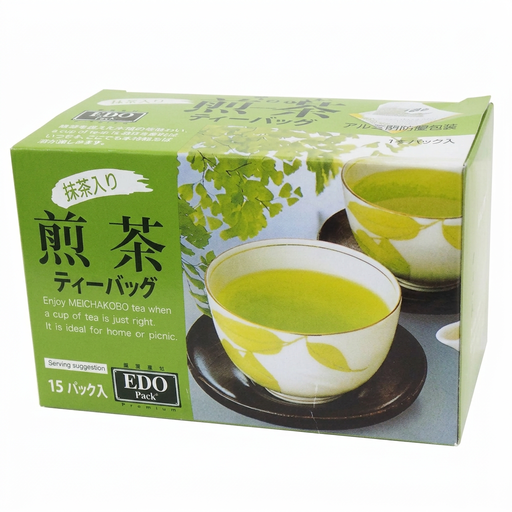
This Joybuy option is a matcha-containing pyramid tea bag for a brewed green-tea drink. Choose it for that format and flavour preference, not on the assumption that tea provides nutrition support.
 No image available
A bagged green-tea infusion for someone who wants the pyramid format and can drink ordinary hot tea safely. Joybuy UK lists green tea (98%) and green-tea powder (2%) as its ingredients. If caffeine, swallowing or warfarin use affects the choice, follow the person’s individual advice before making it a regular drink; do not rely on this tea to meet nutrition needs.
Do not rely on it for nutrition support. British Nutrition Foundation guidance published by Oxford Health NHS Foundation Trust says tea counts towards fluid intake but suggests considering drinks that provide energy and nutrients when appetite is poor. Ask a GP, nurse or dietitian for advice if poor appetite or weight loss is a concern.
Discuss a substantial change with their clinician or anticoagulation team first. University Hospitals Coventry and Warwickshire NHS Trust includes green tea among vitamin-K-containing foods and advises people taking warfarin to keep their usual intake regular, without big or sudden changes.
No. JING Tea explains that prepared powdered matcha is whisked into water and consumed whole, whereas brewed tea leaves are infused. A tea bag containing some matcha powder remains a bagged infusion; check its ingredient list to understand what else it contains.
Bag shape alone does not establish suitability. JING Tea describes how its pyramid bags give whole leaves room to infuse, but the older person’s ability to drink safely, preferences and any individual swallowing advice should determine whether an ordinary hot tea is appropriate.
Consider a caffeine-free evening drink if caffeine disrupts their sleep. NHS Borders advises that caffeine-containing hot drinks can increase wakefulness; M&S describes its Camomile Flowers Infusion as a naturally caffeine-free pyramid-bag option, though it is not matcha.