
24/7 Customer Support

Free returns

Same-day & Next-day Delivery

Quality Guaranteed

Unlock Your Welcome Offers: FREE Delivery | Up to 80% OFF | Free 30-day JoyPlus trial
Download the APP
Matcha tea can be a simple daily drink, a latte ingredient, a baking staple or a thoughtful gift. However, the product descriptions can make similar-looking tins seem difficult to compare. Terms such as ceremonial grade, premium matcha, Japanese matcha and organic matcha powder do not always tell you how a product will fit your routine.
Before buying, look beyond colour and promotional language. The ingredient list, serving format, storage instructions and intended use usually provide more practical information.
“Ceremonial grade” is widely used by sellers, but it is not a single UK-wide legal grading system with one mandatory specification. Treat it as a product description rather than a guarantee of flavour or quality.
Check the details behind the label:
For example, Perfectted Ceremonial Grade Matcha 30g lists Ceremonial Grade Matcha (100%), while some flavoured products contain matcha alongside coconut sugar, coconut milk and natural flavourings.
Flavoured matcha powder can be convenient for beginners and latte drinkers, but it is not equivalent to plain matcha green tea. PerfectTed blueberry matcha contains coconut sugar, ceremonial grade Japanese matcha, natural flavourings and coconut milk. Its listed sugar content is 49.6g per 100g, so it should be assessed as a sweetened drink mix rather than an unsweetened tea powder.
The strawberry version also contains coconut sugar, Japanese whisked tea grade matcha, natural flavouring and coconut milk. Always compare the per-serving nutrition panel, particularly if you are trying to control sweetness in drinks or recipes.
Matcha is a finely milled powder, so it can absorb moisture and nearby aromas. A large pack may appear economical, but it can lose freshness if opened infrequently or stored incorrectly.
Look for:
Most products should be kept in a cool, dry place away from direct sunlight and strong odours. Some products, including OMGTea organic varieties, advise refrigeration after opening. Follow the instructions on the specific product rather than applying one storage rule to every matcha.
For traditional preparation, choose a product with a short ingredient list, ideally 100% matcha powder. Yamasekien-Seicha Matcha Powder 40g lists green tea as its ingredient and provides instructions for using approximately 0.8g with 100ml of water.
For easy lattes, smoothies and desserts, a flavoured matcha powder or matcha latte powder may be more suitable. These products often include sweeteners or milk ingredients, reducing the need to add separate ingredients but changing the nutritional profile.
Blended tea bags require another distinction. PUKKA Mint Matcha Green contains roasted tea, spearmint, mint leaves and 2% matcha, so it offers a mint-led infusion rather than a cup of powdered matcha. PUKKA Ginseng Matcha Green and PUKKA Clean Matcha Green also contain matcha as one component of wider herbal blends.
“Japanese matcha” refers to origin, but check how clearly that origin is presented. Yamasekien-Seicha describes its powder as made from domestically grown Japanese tea leaves. Whisper & Leaf identifies a single-origin Yabukita matcha and states that it is shade-grown and finely milled.
A UK-made product may still use Japanese matcha as an ingredient, so distinguish between:
This information helps you compare like with like.
Boiling water can make matcha taste more bitter. Several listed products recommend water at 80°C or below, while Yamasekien-Seicha gives a range of approximately 70–80°C. If you do not have a temperature-controlled kettle, boil the water and allow it to cool before whisking.
For a smoother drink:
A matcha whisk set can make traditional preparation easier. Bamboo whisks should generally be hand-washed, dried thoroughly and stored on a holder to help maintain their shape.
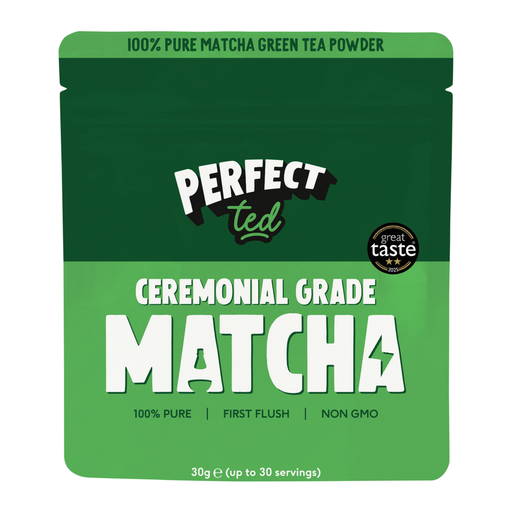
Why This Fits Their Persona: A compact plain matcha option for UK shoppers who want to try traditional preparation without committing to a large pack.
The ingredient list identifies 100% ceremonial grade matcha, without added sugar or flavouring.
30g net quantity; compact format; no listed allergens.
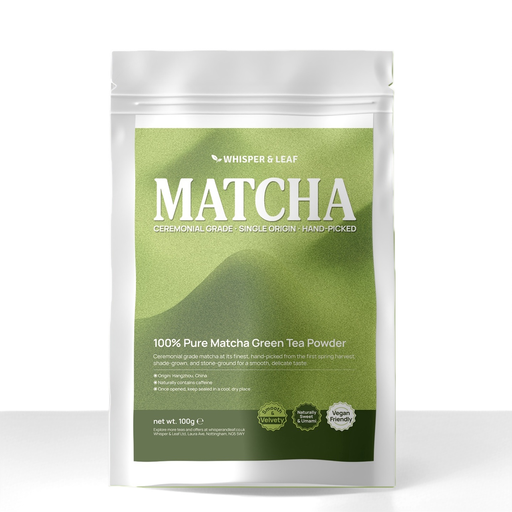
Why This Fits Their Persona: Suitable for regular drinkers who want a larger plain powder format for usucha, lattes or planned household use.
The listing provides specific details including 1200-mesh fineness, shade-grown leaves and single-origin Yabukita.
100g pack; 100% ceremonial grade matcha powder; stated fine milling.
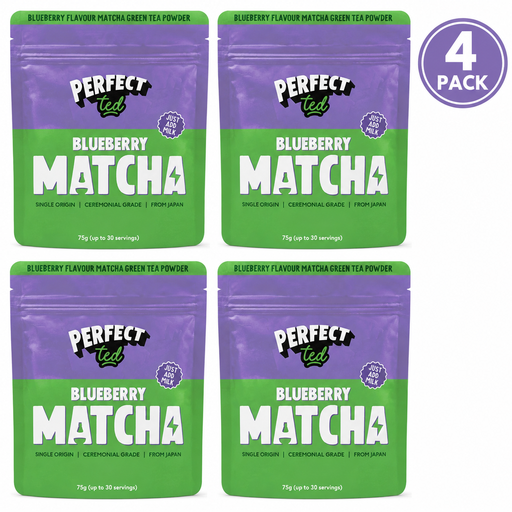
Why This Fits Their Persona: Designed for shoppers who regularly make flavoured drinks, smoothies, snacks or desserts and prefer to keep multiple tins available.
The product description clearly identifies coconut sugar and gives nutrition per 5g, making the sweetened format easier to assess.
Four 75g tins; blueberry flavour; suitable for drinks, meals and snacks.

Why This Fits Their Persona: A practical matcha gift set for someone who wants the bowl, whisk and preparation accessories together.
The included components are specified: ceramic bowl, bamboo whisk, scoop, holders, tea towel and stainless-steel strainer.
510ml bowl; approximately 76-prong bamboo whisk; ceramic parts are dishwasher safe.
We have compiled a complete, real-time list of products that fully satisfy these strict selection criteria and UK safety regulations.
Sift around 0.8–1g of plain matcha into a bowl, add a small amount of water at approximately 70–80°C, and whisk until smooth. Add more water for a traditional tea or warm milk for a matcha latte. A bamboo whisk is useful, but a handheld frother can also be used for latte-style drinks.
Follow the product label. Keep the container tightly sealed and protect it from moisture, sunlight and strong kitchen smells. Some products advise refrigeration after opening, while others specify a cool, dry cupboard. Sachets can help reduce repeated air exposure when you prepare matcha occasionally.
Yes, although the most suitable product depends on the recipe. Plain Japanese matcha works in lattes, smoothies, desserts and savoury dishes. Flavoured matcha powders such as blueberry or strawberry can add sweetness and flavour, but check their ingredients and nutrition information before using them regularly.