
24/7 Customer Support

Free returns

Same-day & Next-day Delivery

Quality Guaranteed

Unlock Your Welcome Offers: FREE Delivery | Up to 80% OFF | Free 30-day JoyPlus trial
Download the APP
Buying a matcha tea set should make preparation easier, not leave you with a decorative bowl, a fragile whisk and several missing essentials. For UK shoppers, the main challenge is separating practical equipment from attractive packaging and exaggerated claims.
A complete set may be described as a Japanese matcha set or matcha ceremony set, but the number of pieces alone does not indicate value. Before purchasing, check what is actually included, how each item should be cleaned and whether the bowl suits your preferred drink.
A five-piece set might contain only a whisk, scoop, spoon, holder and stand. That can be suitable if you already own a bowl and sieve, but it is not a complete matcha starter set.
For traditional preparation, useful matcha tea accessories include:
If you want to serve matcha to guests, a matcha bowl and whisk alone may not be enough. Look for cups or a bowl with a pouring spout.
A bamboo matcha whisk is made with fine tines that help disperse powder and create a layer of foam. However, the whisk needs careful handling. It should generally be rinsed with water, air-dried upright and stored on a holder rather than left in a drawer while damp.
Listings may mention 76, 77 or 100 prongs. This is an objective feature, but it does not remove the need for proper care. Fine bamboo tines can bend or break with rough use, prolonged soaking or very hot water. A set with a holder is therefore more practical for regular drinkers than one that provides no safe storage.
A ceramic matcha bowl may have a beautiful glaze, gradient colour or traditional shape, but visual design does not tell you whether it is comfortable to whisk in or easy to clean. Similarly, “ceremony” in a product name does not necessarily mean that the set includes serving cups or all the tools used in a formal Japanese tea ritual.
Prioritise measurable details such as bowl capacity, included components, material information and cleaning instructions. Choose colour and presentation after those practical checks.
A bowl around 510–560 ml gives plenty of room for whisking without splashing. It can also be useful for matcha lattes, where you may add milk after mixing the powder with a small amount of water.
A smaller bowl can be easier to store and may suit a single serving, but restricted space can make the whisking motion less comfortable. A pouring spout is useful when sharing a drink or transferring matcha into a separate cup.
Ceramic is common for chawans because it is stable, easy to wipe clean and suitable for everyday use when handled correctly. Check whether the listing identifies the ceramic as lead-free and cadmium-free. Several sets below state that their ceramic components have this specification or related test reports; shoppers should still follow the product instructions and retain the listing information.
Bamboo tools need different treatment from ceramic pieces. Do not assume that a dishwasher-safe claim applies to the whole set. In the products featured here, dishwasher guidance applies to ceramic components only, while bamboo tools should be washed by hand and dried thoroughly.
For everyday matcha, a strainer is particularly useful because it breaks up powder clumps before whisking. A whisk holder helps the chasen retain its shape while drying. If gifting or serving two people, a 9-piece set with two cups may offer more practical value than a larger-looking set with duplicate small tools.
Use water below boiling point, follow the manufacturer’s temperature guidance and inspect bamboo tines regularly. Matcha powder, milk and sweeteners are separate purchases, so also consider whether you need a dedicated matcha latte kit or simply a complete preparation set.

Why This Fits Their Persona: A compact option for UK beginners who already own a cup or bowl and want the core whisking tools without buying a full ceramic collection.
The listing identifies the whisk, bamboo scoop, teaspoon and porcelain whisk holder, so the contents are clearer than a vague “starter kit” description.
Includes a 76-tine bamboo whisk and a dedicated holder. Its compact 4-piece format can reduce storage requirements.

Why This Fits Their Persona: Suitable for shoppers seeking coordinated presentation, a complete Japanese matcha set and a gift-ready arrangement for a tea enthusiast.
The contents specify the bowl, whisk, scoop, sifter, holders, cloth and two cups, avoiding the common omission of serving ware.
The 510 ml bowl is paired with two approximately 205 ml cups. The listing states that the ceramic is lead-free and cadmium-free.
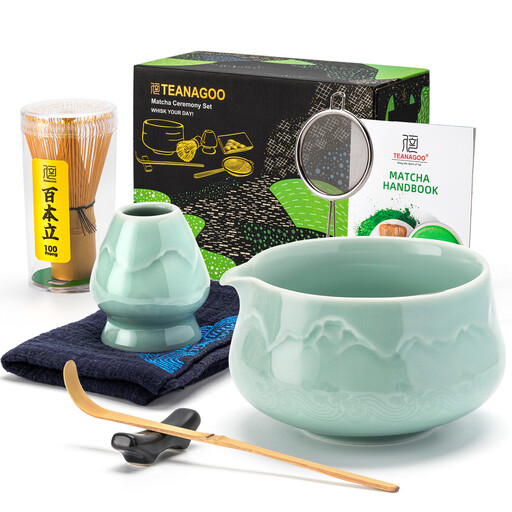
Why This Fits Their Persona: A practical choice for frequent home baristas who prepare matcha drinks regularly and want a larger bowl with the full preparation sequence covered.
The 560 ml bowl provides more whisking space, while the included sifter addresses powder clumping rather than relying on marketing language about smoothness.
Includes a 76-tine bamboo whisk, ceramic holder, scoop stand, stainless steel sifter and cotton tea towel. Ceramic parts are listed as dishwasher-safe.
We have compiled a complete, real-time list of products that fully satisfy these strict selection criteria and UK safety regulations.
Choose a set containing a bowl, bamboo whisk, scoop, sifter and whisk holder. A 510–560 ml bowl gives useful space for whisking, while a holder helps the whisk dry in an appropriate shape. If you mainly drink lattes, a spout or serving cup is helpful but not essential.
Lifespan depends on frequency of use and care. Regularly used bamboo whisks naturally change shape and may need replacing after several months. Replace one sooner if tines become damaged, loose or inflexible. Avoid prolonged soaking, boiling water, soap and damp storage.
It can be, particularly if you want a consistent preparation routine. A whisk and sifter help disperse powder before milk is added, while a larger bowl gives room for mixing. Those who already own suitable crockery may prefer a smaller matcha whisk set rather than a full ceramic collection.