Who is each type of matcha for?
How you make your morning drink matters more than the grade name alone: plain powders and flavoured blends call for different ingredient and preparation checks.
People who whisk matcha with water
A plain powder lets you measure your own portion and choose whether to add anything else. Clearspring and JING Tea both describe ceremonial-grade products for drinking this way; their flavour descriptions are the brands’ own.
People who make matcha lattes
If you usually add dairy or plant milk, decide whether you want unsweetened matcha or a blend with sweetness already included. Check the ingredient list before assuming two latte-friendly powders contain the same amount of matcha.
People keeping track of caffeine
Check caffeine against the stated serving size, especially if matcha is one of several caffeinated drinks in your day. The NHS advises a limit of 200mg of caffeine a day during pregnancy from all sources, including drinks, chocolate and some supplements.
What should you check before choosing?
Start with the drink you intend to make, then compare ingredients, preparation instructions and serving sizes on the exact product.
Plain premium-grade powder
Choose it when: You want an unsweetened powder for drinks and occasional recipes; Clearspring positions its premium grade for both drinking and baking.
Bear in mind: You measure and whisk each portion, and Clearspring’s description of how its grades taste is a brand assessment, not an independent comparison.
Plain ceremonial-grade powder
Choose it when: Your usual drink is matcha whisked with water and you want to explore the plain-cup profile described by Clearspring or JING Tea.
Bear in mind: A ceremonial label alone does not establish how a product will taste to you or make it necessary for a milk-based drink.
Sweetened flavoured blend
Choose it when: You deliberately want a sweet matcha drink, particularly one prepared with milk.
Bear in mind: The PerfectTed Vanilla Bean Matcha listed by Waitrose contains coconut sugar, flavourings and 30% ceremonial-grade matcha, rather than 100% matcha.
| Priority | What to check | Your needs |
|---|
| Drink style |
Check whether the powder is intended for whisking with water, mixing with milk or using in recipes. Treat makers’ flavour descriptions as their own assessments. |
I usually drink matcha plain, so the way the powder is meant to be prepared matters more to me than a grade name on its own. |
| Ingredients |
Read the ingredient list and, for a blend, its stated matcha percentage and sugar information. Clearspring lists 100% matcha for its plain premium and ceremonial products; Waitrose lists coconut sugar and 30% matcha for PerfectTed Vanilla Bean Matcha. |
For a latte, I want to decide for myself whether to add sweetness or buy a blend that already contains it. |
| Preparation |
Compare the dose with the liquid and method stated for that product. Clearspring gives 1g with 30ml hot water; JING Tea specifies 1.5g per 160ml cup with 70°C water. |
My morning break is short, so I want preparation instructions that fit the time and equipment I have. |
| Caffeine |
Check the amount and its serving basis on the exact product. Clearspring estimates approximately 32mg per 1g of its matcha; Waitrose lists 43mg per 5g serving for PerfectTed Vanilla Bean Matcha. |
If I also have coffee or tea, I want to count matcha as part of my caffeine intake rather than assume it is caffeine-free. |
| Pack and portion |
Check pack weight alongside the maker’s dose guidance: Clearspring gives a 1g preparation amount, while JING Tea uses 1.5g per cup. Compare like formulations before using pack size to judge how long one will last. |
I want a pack size that fits how often I make matcha, without treating a sweetened blend and a plain powder as equivalent portions. |
Brand references for this decision
These examples show how particular product lines differ; a brand’s grade or flavour description is not a substitute for checking the product you buy.
Clearspring
Clearspring lists both premium-grade and ceremonial-grade organic Japanese matcha as plain powders.
- Its product listings identify matcha as the only ingredient and provide preparation guidance for the premium powder.
- Clearspring’s description of ceremonial grade as smoother is its own flavour assessment, not an independent taste result.
JING Tea
JING Tea presents its 30g organic ceremonial matcha as a plain, water-whisked tea made from a single Okumidori cultivar.
- JING Tea specifies 1.5g per 160ml cup, 70°C water and 30 seconds of whisking.
- Its cultivar and flavour positioning describe this particular product; they do not establish that ceremonial powders suit every latte or recipe.
PerfectTed
The PerfectTed Vanilla Bean Matcha listed by Waitrose is a flavoured blend with directions for a milk-based drink.
- The Waitrose listing states its ingredients, 30% matcha content and caffeine per 5g serving.
- That vanilla product contains coconut sugar and flavourings; its formulation should not be attributed to every PerfectTed matcha product.
Matcha options on Joybuy
These options cover plain powder for a whisked cup, a vanilla blend and a powder described for lattes and recipes. Check each product’s own ingredient and preparation details rather than applying one product’s serving figures to another.
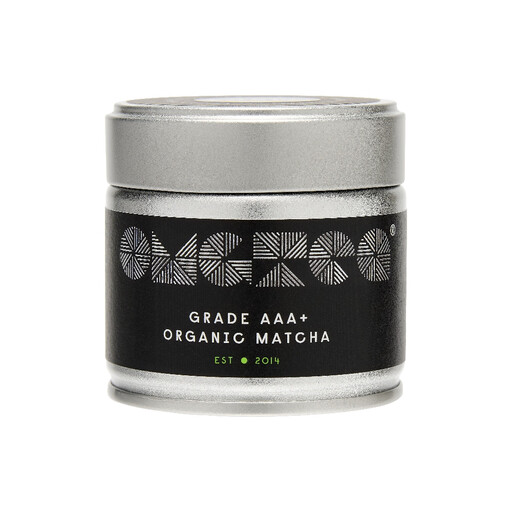 Image unavailable
OMGTea Organic Matcha AAA+ 30g
For a plain whisked cup, the listing describes 100% organic matcha in a 30g airtight tin and gives a 1g serving. It states approximately 34mg caffeine per 1g and instructs you to sift the powder, then refrigerate the airtight tin after opening.
View on Joybuy
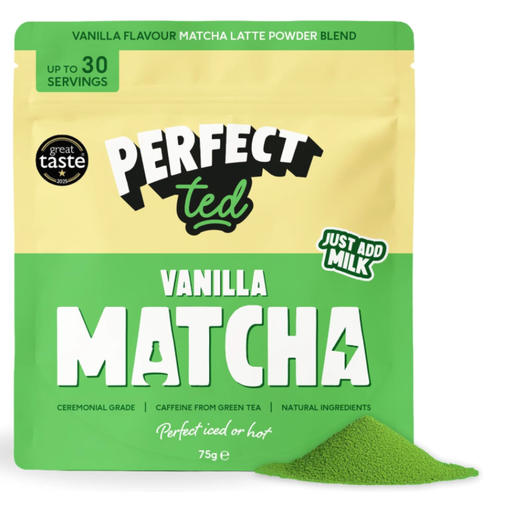 Image unavailable
PerfectTed Vanilla Matcha Powder 75g
For a sweet vanilla drink mixed with milk or water, this 75g tin is listed as a blend containing coconut sugar, coconut milk and natural flavour. The listing gives 1.1g sugars per 2.5g serving. If matcha proportion or caffeine per serving matters to you, check the current pack for those figures; do not apply figures from a different PerfectTed product.
View on Joybuy
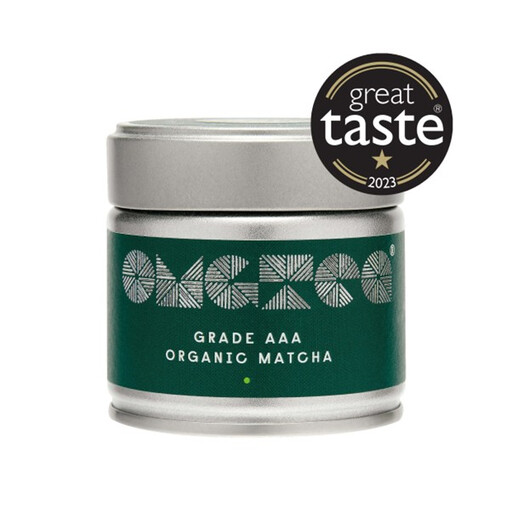 Image unavailable
OMGTea AAA High Grade Organic Matcha 30g
For someone seeking a plain powder, the ingredients are listed as 100% organic matcha in a 30g pack. Check the grade on the pack if it affects your choice: the product descriptions differ between premium and ceremonial. Follow the pack’s serving and caffeine information rather than borrowing a dose from another matcha.
View on Joybuy
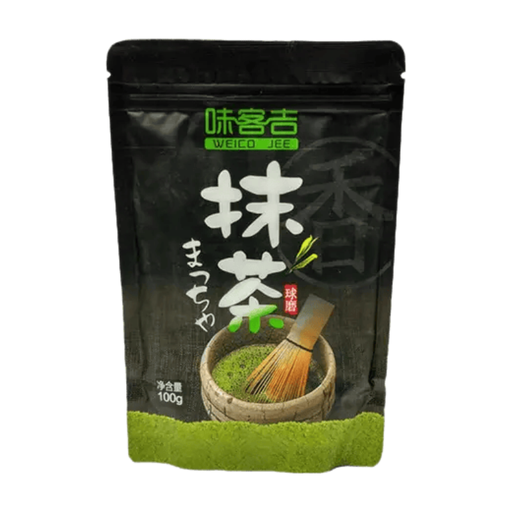 Image unavailable
WKJ Matcha Powder 100g
For lattes or recipes, the product description identifies this as culinary-grade powder in a 100g tin. Check the pack’s ingredients and serving instructions if its formulation or the amount used per drink affects your choice.
View on Joybuy
Questions about choosing matcha
Should I choose ceremonial or premium matcha for a morning drink?
If you mostly whisk matcha with water, a ceremonial product may suit the plain-cup style described by Clearspring and JING Tea, though their flavour descriptions are their own assessments. Clearspring positions its premium powder for both drinking and baking, making that product worth considering if you also use matcha in recipes.
Is vanilla matcha powder the same as plain matcha?
Not necessarily. Waitrose lists PerfectTed Vanilla Bean Matcha as a blend containing coconut sugar, natural flavourings and 30% ceremonial-grade matcha, whereas Clearspring lists matcha as the only ingredient in its plain powders. Check the exact product label, since different vanilla products need not share the same formulation.
How much powder should I use for a cup?
Follow the instructions for your particular powder rather than using one dose for every matcha. Clearspring gives 1g with 30ml hot water for its premium powder; JING Tea specifies 1.5g for a 160ml cup with 70°C water. The PerfectTed Vanilla Bean Matcha listed by Waitrose is directed towards a drink made with 200ml milk.
How should I store an opened tin?
Use the directions on the exact tin. The OMGTea Organic Matcha AAA+ listing instructs you to refrigerate its airtight tin after opening, while Waitrose says to keep its listed PerfectTed Vanilla Bean Matcha sealed in a cool, dry place. Those are product-specific instructions, not a single rule for all matcha.
Does matcha count towards caffeine intake during pregnancy?
Yes. The NHS advises no more than 200mg of caffeine a day during pregnancy from all sources, so include matcha alongside coffee, tea, cola, chocolate and relevant supplements. Check the amount for your exact product and serving: Clearspring estimates approximately 32mg per 1g of its matcha, while Waitrose lists 43mg per 5g serving for PerfectTed Vanilla Bean Matcha.


