Bedtime drinkers avoiding caffeine
If you want a hot drink near bedtime without matcha’s caffeine, look for a herbal infusion explicitly labelled caffeine-free. NHS Borders advises avoiding caffeinated drinks before bed.


If avoiding caffeine close to bedtime matters most, choose a caffeine-free herbal pyramid bag rather than matcha: matcha contains caffeine, and NHS Borders advises avoiding caffeinated drinks before bed. Choose matcha powder or a matcha-and-green-tea bag when you want matcha flavour and can have it earlier; check the ingredients, because a pyramid shape says nothing about caffeine content.
The deciding question is whether your bedtime drink needs to avoid caffeine or retain matcha flavour.
If you want a hot drink near bedtime without matcha’s caffeine, look for a herbal infusion explicitly labelled caffeine-free. NHS Borders advises avoiding caffeinated drinks before bed.
If you want a bag instead of whisked powder, check whether it contains mainly matcha or is a green-tea blend. A convenient bag does not remove the need to consider caffeine or when you drink it.
If the bag format matters more to you than matcha flavour, whole-leaf or herbal pyramid bags are worth comparing. Check the tea type separately: pyramid bags can contain caffeinated tea or caffeine-free herbs.
Settle the caffeine question first, then compare what is inside the bag and how you want to prepare the drink.
Choose when: You want the pyramid-bag format for a drink close to bedtime while avoiding caffeine.
Trade-off: A herbal infusion will not give you matcha flavour.
Choose when: You want an infused green tea containing matcha and can drink it earlier.
Trade-off: It is not the same as whisked matcha powder, and a matcha label does not establish a pyramid format.
Choose when: You specifically want a drink made from matcha powder rather than an infused tea bag.
Trade-off: It needs different preparation, is not a pyramid bag and contains caffeine.
| Priority | What to check | Your needs |
|---|---|---|
| Caffeine near bedtime | Look for an explicit caffeine-free statement and check the ingredients. Matcha and green tea contain caffeine; NHS Borders advises avoiding caffeinated drinks before bed. | I want a hot drink close to bedtime without choosing matcha or another caffeinated tea. |
| Matcha content | Compare ingredient proportions and preparation methods. Waitrose lists Clearspring Matcha Sencha as 97.5% sencha leaves and 2.5% matcha powder; Clearspring lists its Matcha Shot as 100% matcha powder. | Matcha flavour matters to me, but I want to know whether I am buying a green-tea infusion or powder to whisk. |
| Bag format | Confirm that the pack specifies pyramid bags or Tea Temples and check what they contain. JING describes whole-leaf pyramid bags, while Teapigs identifies its Tea Temples as pyramid bags. | I would rather prepare a bagged infusion than whisk a powder, and I will check its ingredients separately from its shape. |
| Daily caffeine intake | Check serving size and caffeine information across drinks. NHS guidance says to have no more than 200mg of caffeine a day during pregnancy and recommends no more than 200mg a day while breastfeeding. | If I am pregnant or breastfeeding, I need to count caffeine from matcha alongside my other sources, not treat tea as exempt. |
Matcha contains caffeine. Clearspring gives an approximate figure of 32mg per 1g of dry powder for its Matcha Shot, so even a measured serving adds caffeine.
For a drink close to bed, choose a caffeine-free herbal infusion if avoiding caffeine is the priority. If you choose matcha, check the serving and have it earlier.
Waitrose lists Clearspring Matcha Sencha as 97.5% sencha leaves and 2.5% matcha powder. That ingredient mix is different from Clearspring’s 100% matcha powder.
Read the ingredient proportions before choosing between an infused green-tea bag and a drink made from matcha powder.
JING’s pyramid-bag range includes different tea types as well as herbal options. The shape describes the bag, not whether its contents contain caffeine.
Check both the ingredients and any caffeine-free statement, even when the pyramid format is the reason the bag caught your eye.
Ingredients and recipes can change. Waitrose advises checking physical packaging for current allergen and nutrition information.
Check the pack’s ingredients, allergen statement and preparation directions, particularly when serving someone with an allergy.
These examples show why a matcha product, a pyramid bag and a caffeine-free bedtime infusion should not be treated as the same thing.
Clearspring offers distinct matcha powder and matcha-and-green-tea bag formats.
JING describes a range of whole-leaf pyramid bags, including herbal options.
Teapigs calls its pyramid bags Tea Temples and offers herbal as well as tea-based varieties.
Waitrose’s Clearspring Matcha Sencha listing provides an example of an ingredient-labelled matcha blend.
Tesco groups chamomile and other herbal bags in its sleep and night-time tea category.
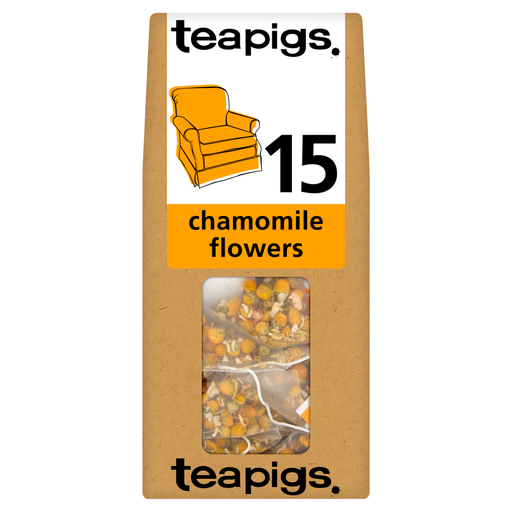
This chamomile tea-bag option is for shoppers considering a herbal drink instead of matcha at bedtime. Check its current pack if avoiding caffeine is essential to your choice.
 No image available
A chamomile tea-bag choice rather than a matcha drink. The product title specifies 15 tea bags and 180g; check the current pack’s ingredients and caffeine information before choosing it for bedtime.
Choose a caffeine-free herbal bag instead if avoiding caffeine close to bedtime is your priority. JING confirms that matcha contains caffeine, and NHS Borders advises avoiding caffeinated drinks before bed; check a bag’s ingredients rather than assuming its shape changes that.
No: the ingredients and preparation can differ. Waitrose lists Clearspring Matcha Sencha bags as 97.5% sencha leaves and 2.5% matcha powder, whereas Clearspring lists its Matcha Shot as 100% matcha powder. Check the particular pack before comparing servings.
Not necessarily. A pyramid describes the bag format, while its contents determine whether it contains tea such as green or black tea, or a herbal infusion. Check the ingredients and any explicit caffeine-free statement.
Check that the product is described as a pyramid bag or Tea Temple and explicitly labelled caffeine-free, then read its ingredients. Teapigs, for example, identifies its chamomile-and-manuka-honey Tea Temple as naturally caffeine-free.
Yes. Matcha contains caffeine, so include it alongside other caffeine sources when checking your daily total. NHS guidance says to have no more than 200mg of caffeine a day during pregnancy and recommends no more than 200mg a day while breastfeeding.