For a hot latte with a pronounced matcha taste, start with a pure powder intended for milk drinks, such as Clearspring Premium Grade. If you whisk matcha with water and want savoury depth instead, JING describes its ceremonial Okumidori matcha as having deep vegetal umami. Instant matcha-milk blends offer a quicker route to a hot drink, but check their ingredients: they are not the same as pure matcha.
Who might choose each type?
Latte drinkers who want to taste the tea
If you add dairy or plant milk, look for a powder described for lattes or recipes. Clearspring positions its Premium Grade for drinking and lattes, while JING Tea describes culinary matcha as more robust against milk or sugar.
Plain-matcha drinkers seeking savoury depth
If you whisk matcha with water, tasting notes may be more useful than a grade name alone. JING Tea describes its single-cultivar ceremonial matcha as having deep vegetal umami.
Drinkers who favour a quick hot drink
Instant matcha-milk blends reduce the preparation needed for a hot drink. Check the matcha proportion, sugar and milk ingredients if those details affect your choice.
What should you check?
Decide whether you will drink the matcha with milk or water, then compare the ingredients and preparation guidance for that serving style.
| Priority | What to check | Your needs |
|---|
| Flavour in a latte |
Look for stated latte or culinary use and read the maker’s flavour description. Clearspring describes its Premium Grade as concentrated and suitable for lattes; JING Tea describes culinary matcha as robust against milk or sugar. |
I add milk but still want the matcha taste to be noticeable. |
| Plain-cup flavour |
Read tasting notes and the suggested dose rather than assuming a grade indicates intensity. JING Tea describes deep vegetal umami in its Okumidori matcha and suggests 1.5 g per 160 ml of water at 70°C. |
For a water-whisked cup, savoury flavour matters more to me than sweetness from a latte mix. |
| Powder and caffeine |
Check the dose in grams before making a more concentrated drink. Clearspring cites Japanese food-composition data estimating approximately 32 mg of caffeine per 1 g of dry matcha; that is not a measurement of every product. |
I want to keep track of how much matcha powder I use, particularly when making more than one drink. |
| Blend ingredients |
Compare the ingredient list, matcha proportion where stated, sugars per 100 g and allergen declaration. Joybuy’s Ma Yu Shan Matcha Milk listing states 11% matcha powder, 45% milk powder and 50 g sugars per 100 g of powder. |
A quick drink appeals to me, but I need to know whether I am buying pure tea powder or a sweetened milk blend. |
Common buying mistakes
-
Assuming ceremonial grade means a stronger latte
JING Tea describes ceremonial matcha as intended for whisking with water and culinary matcha as more robust against milk or sugar. A smoother plain-cup profile may not deliver the latte flavour you want.
Choose by serving style: check for latte or multi-use guidance if you add milk, and use tasting notes when choosing a powder to whisk with water.
-
Mistaking a matcha-milk blend for pure matcha
An instant blend can contain sugar and milk ingredients as well as matcha. Joybuy lists milk ingredients in its TSUJIRI and Ma Yu Shan blends; the Ma Yu Shan listing states 11% matcha powder.
Read the full ingredient and allergen statements. Choose a product labelled as 100% matcha if you want to add your own milk or sweetener.
-
Adding several scoops to make the drink stronger
Using more powder also increases the amount of caffeine in the drink. Clearspring cites an estimate of approximately 32 mg per 1 g of dry matcha, based on Japanese food-composition data.
Start with the maker’s stated dose and adjust gradually for taste, keeping track of the powder you use.
Brand references
Clearspring
Clearspring offers Japanese matcha powders positioned for different serving styles, including Premium Grade for lattes and Ceremonial Grade for a water-whisked drink.
- The brand describes its Premium Grade as concentrated in flavour and suitable for drinking or recipes.
- Its Ceremonial Grade is described by Clearspring as intense yet smooth; that description does not establish how strongly it will taste through milk.
JING Tea
JING Tea positions its single-cultivar Okumidori ceremonial matcha for whisking with water and describes its flavour as deep vegetal umami.
- Its product guidance specifies 1.5 g per 160 ml of water at 70°C.
- JING Tea’s ceremonial-versus-culinary guidance describes intended uses; a grade name is not a universal measure of flavour strength.
PerfectTed
PerfectTed appears in UK supermarket listings with ceremonial matcha and single-serve matcha sticks.
- Waitrose & Partners lists an original matcha stick as a 1.5 g serving, with milk suggested for preparation.
- The flavoured sticks listed by Waitrose & Partners contain coconut sugar and flavourings, so compare their ingredients separately from the original stick and from pure matcha powder.
Matcha options on Joybuy
These options cover ceremonial-style powders for a hot cup and portioned vanilla latte sachets. Choose according to whether you plan to whisk matcha with water or make a milk-style drink; the grade name alone does not establish flavour intensity.
 No image available
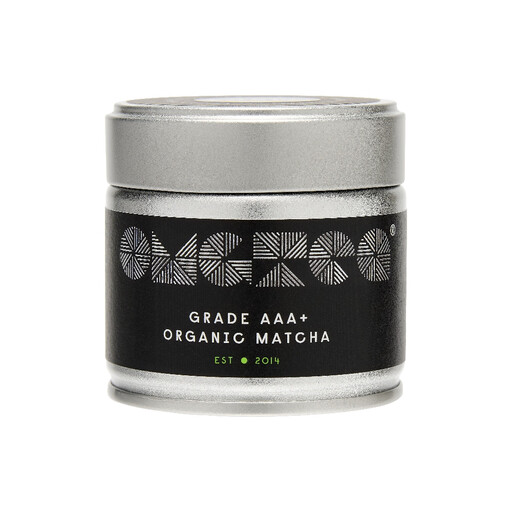
OMGTea Organic Matcha AAA+ 30 g
Consider this powder for a water-whisked hot drink if savoury tasting notes appeal to you. The pack is 30 g; the AAA+ name alone does not establish how strong it will taste.
View on Joybuy
 No image available
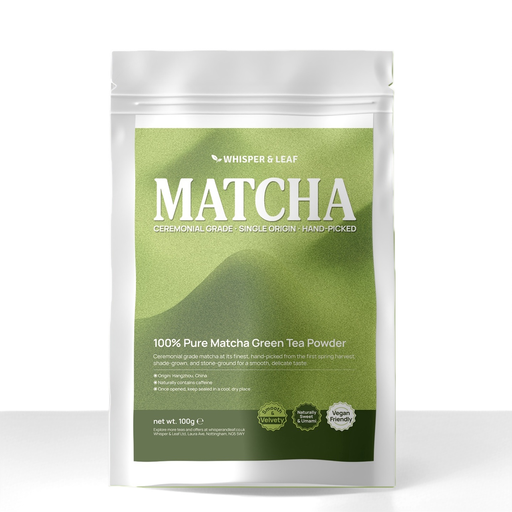
Whisper and Leaf Ceremonial Grade Matcha Powder, 100 g bag
This 100 g bag is an option if you prefer to prepare a hot drink from matcha powder. If you plan to add plenty of milk, check whether its described flavour suits the latte you want; ceremonial grade does not answer that question by itself.
View on Joybuy
 No image available
OMGTea Vanilla Matcha Latte Sachets, 6 × 12 g
Choose the portioned sachet format if a vanilla matcha latte suits your hot-drink routine. This is a latte product rather than a plain matcha powder; check its current ingredients and allergen declaration before buying.
View on Joybuy
 No image available
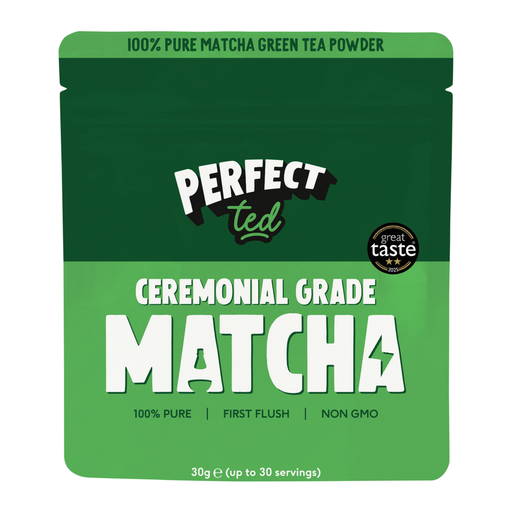
PerfectTed Ceremonial Grade Matcha 30 g
This 30 g matcha powder is an option for preparing a hot cup at home. Check the pack’s preparation guidance and flavour description if you specifically want a pronounced or savoury taste.
View on Joybuy
Frequently asked questions
Does ceremonial grade mean a stronger-tasting matcha?
Not necessarily. JING Tea describes ceremonial matcha as generally smoother for drinking with water and culinary matcha as more robust against milk or sugar. Choose by your serving style and the product’s flavour description, not the grade name alone.
How can I prepare a pronounced hot matcha without adding several scoops?
Begin with the maker’s dose and water guidance, then adjust for taste. JING Tea specifies 1.5 g per 160 ml at 70°C for its ceremonial matcha; Clearspring suggests starting its Ceremonial Grade with 1 g in 30 ml of hot water.
Is an instant matcha latte mix the same as pure matcha?
No. Instant blends can contain milk ingredients and sugar alongside matcha. Joybuy’s Ma Yu Shan Matcha Milk listing states 11% matcha powder and 45% milk powder, so compare the full ingredients rather than the word “matcha” on the front.
What should I check if I need to avoid milk?
Read the current ingredient and allergen statements for the exact product. Joybuy’s TSUJIRI Matcha Milk Strong Type listing declares milk, and its Ma Yu Shan Matcha Milk listing includes milk powder; do not assume an instant matcha drink is dairy-free.
Does using more matcha powder affect caffeine intake?
Yes: more dry matcha powder means more of the powder’s caffeine in the drink. Clearspring cites Japanese food-composition data estimating approximately 32 mg per 1 g of dry matcha; treat that as an estimate, not a measured value for every brand or serving.


