What should you check before choosing?
Start with how you intend to prepare the drink, then check the exact product’s ingredients and format. Pack quantity and caffeine information matter for different reasons and should be checked separately.
| Priority | What to check | Your needs |
|---|
| Ingredients |
Read the percentages on the exact pack. Clearspring lists 97.5% sencha and 2.5% matcha in Matcha Sencha, but 100% matcha powder in Matcha Shot. |
I want to know whether I am buying green tea with some matcha or powder to mix into the drink. |
| Bag format |
Look for an explicit pyramid-bag description on the individual product. A listing that says only ‘tea bag’ or ‘sachet’ does not establish its shape. |
The pyramid shape matters to me, so I need confirmation for the matcha product itself. |
| Pack contents |
Compare the stated net weight, bag or sachet count, and amount in each portion where given. Check whether the contents are intended for steeping or mixing. |
For a regular brewed cup, I need enough bags for my routine; individual powder portions suit a different preparation. |
| Caffeine |
Check for product-specific caffeine information if you need to account for your intake. The NHS advises a limit of 200 mg a day from all sources during pregnancy. |
If I am limiting caffeine, I need information for the serving I will use, alongside what I consume from other sources. |
Joybuy options for bags and powder
These options cover a matcha-infused pyramid-bag tea and individually portioned matcha powder. Check their ingredients and preparation details as separate formats rather than treating the sachets as tea bags.
 No image available
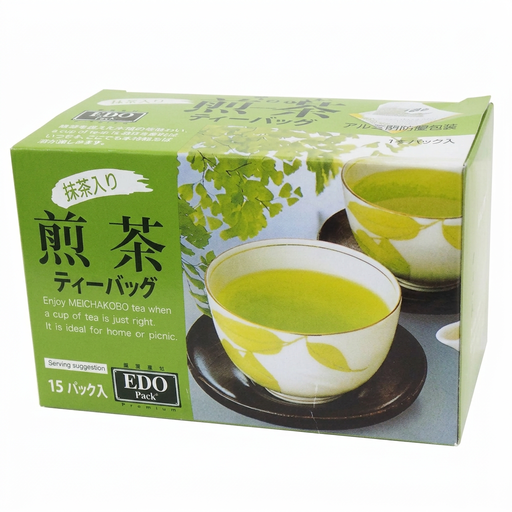
Cooling Hydration EDO Matcha-Infused Sencha Pyramid Tea Bags, 30 g
For a brewed tea where the pyramid-bag shape is part of the choice. The EDO listing describes matcha-infused sencha and lists 98% green tea and 2% green tea powder; it is not a portion of pure matcha powder. Check the current pack for caffeine information if you need it.
View on Joybuy
 No image available
Perfectted Matcha Powder Sachets, 7 × 1.5 g
An individually portioned powder alternative if you want to make a drink without steeping a tea bag. The pack is described as seven 1.5 g sachets, not pyramid bags. Check the current ingredients, preparation directions and caffeine information for the serving you intend to use.
View on Joybuy
Questions about matcha bags and powder
Are matcha pyramid bags the same as whisked matcha?
No: a tea bag is steeped and removed, whereas powder mixed into a drink remains in it. Check the ingredients as well as the format. Clearspring, for example, lists 97.5% sencha and 2.5% matcha in its Matcha Sencha bags, compared with 100% matcha powder in Matcha Shot.
Is every matcha tea bag pyramid-shaped?
No. ‘Tea bag’ or ‘sachet’ does not confirm a pyramid shape. Look for that description on the exact product: the EDO Matcha-Infused Sencha listing identifies pyramid tea bags, while the Clearspring Matcha Sencha descriptions do not establish that shape.
Should I check caffeine when choosing matcha bags?
Yes, if you need to account for caffeine. The NHS advises no more than 200 mg a day from all sources during pregnancy. Ingredient percentages cannot tell you the caffeine amount in your serving, so check the current pack or ask the manufacturer for product-specific information.
What should I check if I have an allergy or intolerance?
Read the current pack’s ingredients and allergen information before use. A matcha product name tells you neither its full composition nor whether its formulation has changed.


