Who this suits

Homes with an established smart-home platform

If you already use Alexa, Apple Home or Google Home, look for a new light, plug, sensor or speaker that can join the controls you already share. Check the exact platform badge, account requirement, hub or controller, and whether a wanted feature still relies on the manufacturer app.

Multi-platform households

Where different people use different phones or smart-home ecosystems, Matter multi-admin can allow a supported device to be controlled in more than one app. The Connectivity Standards Alliance describes this as simultaneous local control across supported ecosystems, but the device type, controllers and available features still need checking for each setup.

Privacy- and security-conscious buyers

This is relevant if you want automation or remote control while understanding account creation, cloud access, app permissions, data-management choices and the manufacturer’s stated period for security updates.

Buying priorities

Stay with an existing ecosystem

Choose this when: Your household values fewer setup steps, shared control and the full feature set of its current platform or brand.

Trade-off: You may remain dependent on that platform’s account, app and cloud services, and some features can stay in the manufacturer app.

Use Matter for verified multi-platform control

Choose this when: More than one household member uses different ecosystems and you want one supported device in multiple Matter-certified apps.

Trade-off: Matter support varies by device category and platform, while manufacturer-specific functions may not appear everywhere.

Add a bridge or compatible hub

Choose this when: You are adding older ecosystem devices, Thread accessories or lighting features that need a bridge-based setup.

Trade-off: A hub needs power, maintenance and compatibility checks, but can consolidate accessories and unlock functions unavailable in a direct setup.

Priority What to check Your needs
Ecosystem compatibility Check the exact platform badge, supported Matter device category and whether the product can be added to each intended app. Confirm whether multi-admin sharing is supported for the device and controllers in your home. I want a new device to appear in the controls my household already uses, without adding separate products for different ecosystems.
Network, hub and account setup Identify whether the device uses Wi-Fi or Thread. Check the required account, mobile app, Matter controller, home hub and Thread border router before ordering. I need everyone who should control the device to be able to set it up, share access and use it with the home network already in place.
Features, privacy and support List the functions that matter, such as energy data, dynamic lighting, schedules or automations, and confirm where they work. Review app permissions, account settings and the manufacturer’s stated security-update period. I want to understand what data, cloud services and ongoing support are involved before a device becomes part of daily routines.

Common buying pitfalls

  • Assuming Matter compatibility means every feature is shared

    Matter can provide core interoperability, but available features can differ by device and app. TP-Link states that energy monitoring on the Tapo P110M is not currently available through Matter, while Philips Hue says its Bridge setup retains advanced Hue functions.

    Write down the actions you expect to use, such as energy data, dynamic lighting, automations or shared control, then confirm which app provides each one before purchase.

    You may need to keep the manufacturer app or use a bridge or hub for functions that are not exposed in your chosen ecosystem.

  • Buying a Thread device without a compatible border router

    Thread Matter accessories have different network requirements from Wi-Fi Matter devices. Google Home and Apple support materials both specify Thread-border-router requirements for relevant Thread setups.

    Check whether the device is Wi-Fi or Thread, then confirm that your exact speaker, display, hub or router can provide the required controller and Thread border-router role.

    A compatible home hub or Thread border router may be needed alongside the new accessory.

  • Assuming every household account has the same access

    Adding and sharing accessories can depend on the account that owns the home and the platform account used during setup. Google Home requires a Google Account, while Apple Home ties management to the Apple Account used to set up the home.

    Decide which account owns the home, who needs control and whether everyone is comfortable using the required platform app before choosing a device.

  • Overlooking the stated security-update period

    The UK consumer connectable product security regime has applied since 29 April 2024. The National Cyber Security Centre notes that manufacturers of covered products must state the minimum period for important security updates.

    Keep the stated update period and support contact with your receipt, and choose a support commitment that is acceptable for the device’s role in your home.

    Once the declared security support ends, a connected device may need replacing sooner or may no longer be suitable for connected use.

Relevant smart-home platforms and brands

Google Home

A platform route for households already using Google Home, Nest devices or a Google Account and adding supported Matter devices, speakers, displays, lights, plugs or sensors.

  • Google Home and Nest Help states that supported Matter devices can be controlled in Google Home and may also be controlled in other Matter-certified apps.
  • Google states that setup requires a Google Account, home Wi-Fi and a Matter-enabled hub; Thread devices also need a Thread border router.

Apple Home

A platform route for homes using iPhone, iPad, HomePod or Apple TV and wanting shared Home app and Siri control of compatible HomeKit or Matter accessories.

  • A home hub can enable away-from-home control, sharing and automations for compatible Apple Home setups.
  • Apple Support states that a home hub is needed to add Matter accessories, while Thread Matter accessories need a Thread-enabled home hub or supported third-party border router.

Philips Hue

A smart-lighting ecosystem for homes deciding between a direct Matter setup and a Hue Bridge-based setup for bulbs, lights and accessories.

  • Philips Hue says a Hue Bridge supports all Hue products, including older non-Matter bulbs, and retains features such as gradient lighting, dynamic scenes and entertainment sync.
  • Direct Matter setup is positioned by Philips Hue for newer Matter-enabled bulbs and simpler connections; check the exact bulb and setup method for feature availability.

Tapo

A TP-Link smart-home range relevant to simpler additions such as Matter plugs, bulbs and switches for homes using Alexa, Apple Home, Google Home or SmartThings.

  • TP-Link states that its Matter devices can be set up through Tapo or Kasa, or directly through a compatible third-party Matter app.
  • On the UK Tapo P110M, TP-Link states that energy monitoring is currently viewed in the Tapo app rather than through Matter.

Aqara

A hub-and-sensor-focused smart-home brand for households considering sensors, lighting or plugs alongside an Aqara app and existing setup.

  • Aqara’s UK support material describes a range including sensors, smart lighting and smart plugs.
  • Check the exact hub, accessory and UK compatibility list before purchase, especially where cross-platform control or specific features matter.

Joybuy product options

Joybuy product options for adding a Matter-compatible plug-in device where ecosystem support, Thread setup and feature availability have been checked for the household.
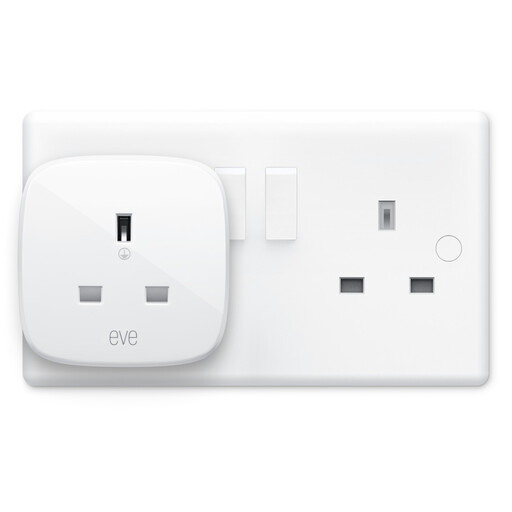
Eve Energy Matter Smart Plug with Power Meter, Thread, UK Type G

Eve Energy Matter Smart Plug with Power Meter, Thread, UK Type G

For controlling a compatible indoor plug-in appliance in a household that has a suitable Matter controller and Thread border router.

Stated features include Matter over Thread, remote on/off control, schedules, automations and integrated energy monitoring.

Stated maximum load: 13A / 2900W. Indoor use only. Check whether energy-monitoring data is available in each intended smart-home app and confirm the manufacturer’s security-update period for this model.

Joybuy

Frequently asked questions

Does a Matter logo guarantee that every feature will work in my current smart-home app?

No. Matter is designed for interoperability and multi-platform control, but support for Matter device categories and features can differ between platforms. Check the exact model, device type and current platform support information, and confirm whether wanted functions remain in the manufacturer app; TP-Link says energy monitoring on the Tapo P110M is not currently supported through Matter.

Can I control one new Matter device from Apple Home, Google Home and Alexa?

Potentially, if the exact device and each platform support the relevant Matter device category and you have the necessary controller or hub for each ecosystem. The Connectivity Standards Alliance describes Matter multi-admin as allowing a device to connect to multiple apps and ecosystems simultaneously, but setup requirements still apply.

Do I need a hub before buying a Matter device?

Often, but the answer depends on the platform and connection type. Google Home lists a Matter-enabled hub as a requirement and requires a Thread border router for Thread devices; Apple states that a home hub is required to add Matter accessories and that Thread Matter accessories need a Thread-enabled home hub or supported third-party border router.

Will a Hue Bridge reduce app fragmentation if I already have Philips Hue lights?

It can be a suitable route if you already use Hue or want Hue’s advanced functions. Philips Hue says its Bridge setup supports all Hue products, including older non-Matter bulbs, while providing Matter and partner-ecosystem control; direct Matter setup is aimed at newer Matter-enabled bulbs and simpler setups.

What privacy checks should I make before connecting a new device?

Read the product privacy notice and app permissions, identify whether an account is required, review household-sharing and data-management controls, and decide whether you are comfortable with any manufacturer app or cloud service needed for your preferred features. The Information Commissioner’s Office explains that UK data-protection law and PECR apply to personal-information processing in consumer IoT products.