
24/7 Customer Support

Free returns

Same-day & Next-day Delivery

Quality Guaranteed

Unlock Your Welcome Offers: FREE Delivery | Up to 80% OFF | Free 30-day JoyPlus trial
Download the APP
A mattress vacuum cleaner can help lift dust, hair and loose debris from fabric surfaces that are difficult to clean with a standard floor vacuum. However, not every model marketed as a dust mite vacuum cleaner or UV mattress cleaner is suitable for every UK household.
Before buying, consider how often you will use the machine, whether you need dry or wet cleaning and how much maintenance you are prepared to do. A device designed for mattresses may not remove drink spills from a sofa, while a portable carpet cleaner may not offer the vibration or heated airflow used by an anti-mite vacuum.
A specification such as 15kPa suction indicates the pressure available to lift particles, but it does not describe the entire cleaning result. Brush design, airflow, filter condition and the speed at which you move the machine also matter.
A high-powered bed vacuum cleaner may still perform poorly if its dust cup clogs quickly or its filter is difficult to wash. Look for clear dust capacity, accessible filters and instructions for maintaining suction over time.
UV-C lamps and hot-air systems are commonly promoted as ways to deal with mites and bacteria. Their practical operation depends on contact time, distance, surface coverage and whether the lamp remains in contact with the fabric.
UV-C light should never be viewed directly or used towards people or pets. A safety sensor that switches the light off when the machine is lifted is a useful feature. Heated airflow can help reduce surface moisture, but it does not replace laundering removable bedding or following the care instructions for the mattress.
Dry mattress vacuums generally collect dust, hair and loose particles. They are not designed to extract liquid spills in the same way as a carpet and sofa spot cleaner.
If your main concern is muddy paw prints, food spills or marks on upholstery, choose a machine with separate clean- and dirty-water tanks. A portable carpet cleaner is usually more appropriate for targeted wet cleaning than a dry anti-mite vacuum.
For routine mattress care, check the suction figure alongside the agitation system. The Lubluelu model listed here provides 15kPa suction and ultrasonic vibration, while the ochama model specifies 12kPa suction and tapping at 72,000 times per minute.
Vibration can help loosen particles held among fabric fibres before suction collects them. A wider cleaning port can also reduce the number of passes across a king-size mattress. The ochama model has a 240mm suction port, which may suit larger beds and pet resting areas.
A hot air mattress vacuum can direct warm airflow across the cleaned surface. The Lubluelu model lists 55°C hot air, while the ochama model lists 65°C hot air. These figures describe the stated air temperature, not a guaranteed result against mites or bacteria.
Do not leave heated airflow stationary on delicate synthetic or silk fabrics. Always follow the mattress manufacturer’s care instructions and allow surfaces to dry fully before replacing bedding.
Dust cups of 300ml to 650ml are suitable for household sessions, but a larger capacity means fewer interruptions when cleaning several beds. A washable filter can reduce replacement costs, provided it is fully dry before refitting.
Noise also affects regular use. The Lubluelu model lists a working noise level of ≤72dB, so consider when you plan to clean, particularly in flats or homes with young children.
For wet cleaning, check tank capacity and tool care. The Bissell SpotClean Stain Lift has a 1.1-litre clean-water tank, a 0.8-litre dirty-water tank and a 4.6-metre cord, making its design more suitable for spills and upholstery than dry dust removal.
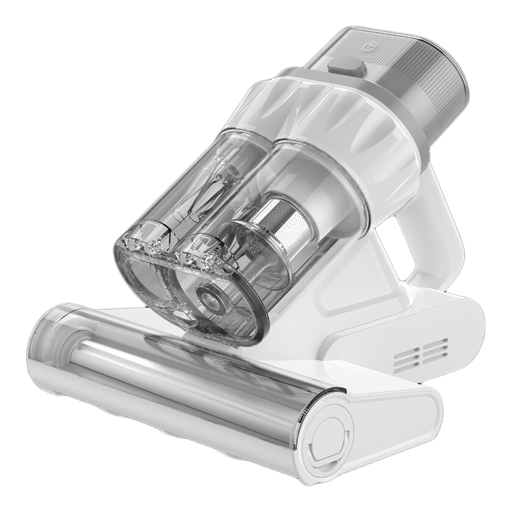
Why This Fits Their Persona: A practical dry-cleaning option for households wanting one machine for mattresses, bedding, rugs and pet lounging areas without moving to a larger wet cleaner.
Its separate 300ml dust and mite compartments are designed to help organise collected debris, while the UV-C lamp is paired with a safety sensor that switches it off when lifted.
12kPa suction, 240mm cleaning width, 5-metre cord and stated 65°C hot-air function.
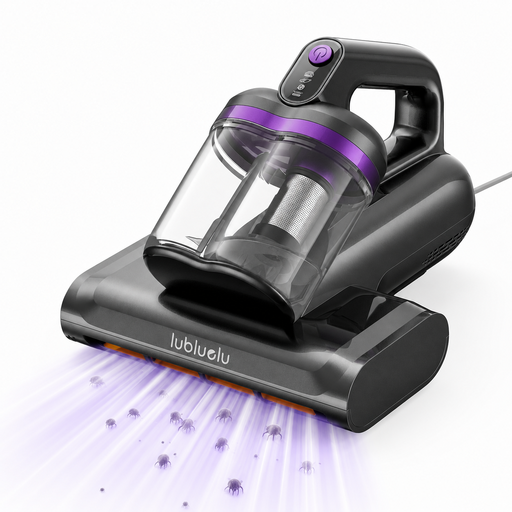
Why This Fits Their Persona: Suitable for users who want a dedicated mattress and upholstery vacuum with a larger dust cup and a combination of suction, vibration and warm airflow.
The stated 650ml dust cup reduces emptying during multi-room sessions, while the listed 4-metre cord supports use without frequent socket changes.
15kPa suction, 500W rated power, ultrasonic vibration and 55°C warm airflow.
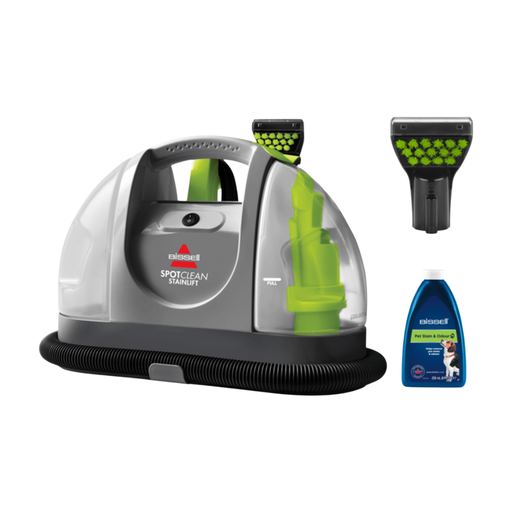
Why This Fits Their Persona: A strong match for families, pet owners and households dealing with regular spills on sofas, stairs, car interiors, carpets or mattresses.
It is not positioned as a dry dust mite vacuum cleaner; its dual-tank layout is specifically intended for applying water and collecting dirty liquid separately.
330W power, 1.1-litre clean-water tank, 0.8-litre dirty-water tank and included stain and rinse tools.
We have compiled a complete, real-time list of products that fully satisfy these strict selection criteria and UK safety regulations.
It can be useful if you regularly clean mattresses, fabric headboards, sofas or pet bedding and want a dedicated tool for dry dust and hair removal. It is less suitable as a replacement for washing bedding or treating liquid stains.
Many households may choose to vacuum mattresses every few weeks, with additional cleaning after illness, decorating or heavy pet use. The appropriate frequency depends on the fabric, household conditions and the mattress manufacturer’s care instructions.
Running cost depends on wattage and session length. For example, the listed models specify 300W and 500W rated power, while the portable spot cleaner specifies 330W. A short, targeted session generally uses less electricity than leaving a machine running continuously, so switch it off between areas and avoid stationary operation.