“Mature” is used for cheddar in NHS guidance, while UK skimmed-milk listings distinguish formats such as fresh, filtered and UHT. For curry night, choose fresh milk if you will use it soon, UHT for an unopened cupboard backup, or consider filtered milk if a particular product’s stated taste appeals. None of those descriptions establishes how the milk will behave in your sauce.
Who is this for?
Cooks choosing skimmed cow’s milk
If you want to use skimmed milk in a curry, compare the pack size and storage instructions with when you plan to cook. The NHS identifies skimmed milk as a lower-fat milk option; that does not tell you how a particular sauce will turn out.
Shoppers looking for a “mature” flavour
Check what the recipe means by “mature” before buying milk. The NHS uses the term for cheddar, whereas the skimmed-milk listings from Tesco and Waitrose describe milk formats rather than a mature variety.
Occasional curry-night cooks
If milk is not usually in your fridge, an unopened UHT carton offers a cupboard-backup option. Once opened, it needs the refrigeration and use period stated on its own pack.
What should you check?
Start with what “mature” means in your recipe, then choose a milk format and quantity that fit when you will cook and what will remain afterwards.
| Priority | What to check | Your needs |
|---|
| Recipe wording |
Check whether “mature” refers to cheese or a flavour you want from the finished dish. The NHS uses “mature” for cheddar; Tesco and Waitrose skimmed-milk listings use format descriptions instead. |
If my recipe calls for mature cheese, skimmed milk is not a like-for-like interpretation of that ingredient. |
| Milk format |
Compare fresh milk for near-term use with UHT milk for storage before opening. Check the exact pack’s date and after-opening instructions. |
I’m cooking soon and can keep fresh milk refrigerated, or I’d rather have an unopened carton ready in the cupboard. |
| Nutrition label |
Compare values on the same per-100 ml basis where possible. Sainsbury’s lists 0.3% fat and 3.6 g protein per 100 ml for its British skimmed milk; other products need their own labels checked. |
Skimmed cow’s milk is the ingredient I want, and I need to compare the products I might actually buy. |
| Taste expectations |
Check the description of a specific filtered milk. Waitrose carries Arla B.O.B, which is marketed as tasting like semi-skimmed milk; that is a product claim, not a curry-sauce result. |
I’m interested in that stated taste, but I won’t assume it predicts the flavour or texture of my curry. |
| Guests and leftovers |
Check the milk allergen on the current label and the quantity in the pack. The Food Standards Agency identifies milk as an allergen; opened-carton instructions vary between products. |
Someone eating the curry may need a milk-free ingredient, or I may have milk left to store after the meal. |
Mistakes to avoid
-
Treating “mature” as a skimmed-milk variety
The term may point you towards the wrong dairy ingredient. NHS guidance uses “mature” for cheddar, while the milk listings describe formats such as filtered and UHT.
Read the recipe or clarify the intended ingredient before choosing milk on the strength of that word.
-
Leaving UHT milk in the cupboard after opening
UHT describes the unopened storage option, not how to store a partly used carton. Waitrose Essential UHT Skimmed Milk instructs refrigeration below 5°C and use within five days of opening.
Note when you open the carton and follow its own storage instructions.
-
Using another bottle’s date instructions
For example, Sainsbury’s British Skimmed Milk and Duchy Organic Skimmed Milk instruct use within three days of opening. GOV.UK distinguishes use-by dates, which concern safety, from best-before dates, which concern quality.
Check the date wording, refrigeration temperature and after-opening period on the bottle you buy.
-
Forgetting milk is an ingredient in the shared meal
The Food Standards Agency identifies milk as an allergen that can pose a risk to people with a milk allergy or intolerance.
Check with guests and read ingredient labels before cooking; where milk must be avoided, choose an appropriate milk-free ingredient instead.
Brand and range references
These examples illustrate differences between listed skimmed-milk products and ranges; a brand name alone does not establish how its milk will perform in a curry.
Tesco
Tesco Groceries lists British and filtered skimmed milk, including different pack sizes.
- Its skimmed-milk listing includes Tesco British Skimmed Milk in a 2.272 L pack and Tesco Filtered Skimmed Milk in a 2 L pack.
- The listing does not establish a “mature” milk variety or a curry-specific result.
Sainsbury’s
Sainsbury’s lists British pasteurised skimmed milk in a 2.272 L, four-pint format.
- Its product information states 0.3% fat and 3.6 g protein per 100 ml.
- The listed bottle needs refrigeration below 5°C and use within three days of opening; those instructions do not establish suitability for a particular sauce.
Arla B.O.B
Arla B.O.B is a filtered, protein-enriched skimmed milk marketed as tasting like semi-skimmed milk.
- The product information carried by Waitrose lists 0.4 g fat and 4.5 g protein per 100 ml.
- Its taste description is a brand claim, not an established result for cooking curry.
Waitrose / Duchy Organic
Waitrose lists Essential UHT skimmed milk and Duchy Organic fresh skimmed milk as distinct formats.
- The UHT product offers an unopened cupboard-backup format; Duchy Organic is described as pasteurised skimmed milk from free-range cows.
- After opening, the listed UHT product requires refrigeration below 5°C and use within five days; the listed Duchy product specifies three days. Neither description establishes a “mature” variety.
M&S
M&S lists skimmed milk in a 568 ml pack.
- Its product information lists 0.3 g fat and 3.6 g protein per 100 g.
- The listed milk requires refrigeration at 0°C to +5°C and is described as best consumed within three days of opening; no curry-specific performance is established.
UHT skimmed milk options on Joybuy
These Morrisons UHT skimmed-milk options suit a shopper considering an unopened cupboard backup for curry night. Choose between a single 1-litre carton and a six-carton pack according to how much milk you expect to use; neither pack name describes a “mature” variety.
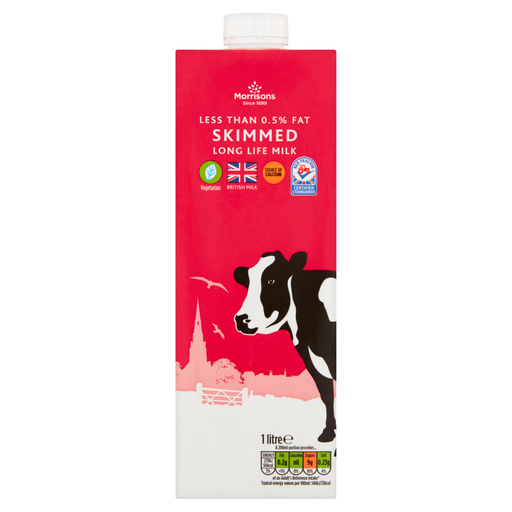 Image unavailable
Morrisons British UHT Skimmed Milk, 1 litre
A single UHT carton is an option if you want skimmed milk on hand for one planned curry night. Check the carton’s instructions for refrigeration and use after opening, and check the milk allergen if cooking for others. The product name does not establish a particular result in a curry sauce.
View on Joybuy
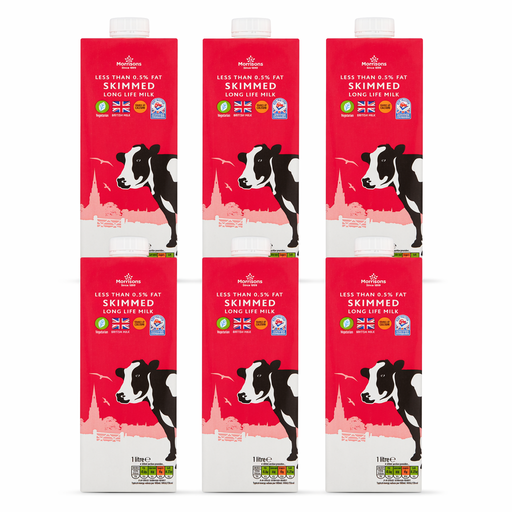 Image unavailable
Morrisons British UHT Skimmed Milk, six 1-litre cartons
This six-carton pack is worth considering if you expect to use several cartons, rather than buying solely for one meal. Check the storage instructions for each carton once opened and allow for the full pack quantity. The pack name does not establish a “mature” milk or a particular curry-sauce result.
View on Joybuy
Common questions
Is “mature skimmed milk” a type of milk?
“Mature” is not a skimmed-milk format identified in the Tesco and Waitrose listings discussed here; they use descriptions such as filtered and UHT. NHS guidance uses “mature” for cheddar. If a recipe uses the word, check which dairy ingredient it calls for rather than assuming it means skimmed milk.
How should I store skimmed milk after opening it?
Follow the instructions on the exact pack. Sainsbury’s British Skimmed Milk and Duchy Organic Skimmed Milk specify refrigeration below 5°C and use within three days of opening, while Waitrose Essential UHT Skimmed Milk specifies refrigeration below 5°C and use within five days. GOV.UK explains that use-by dates concern safety and best-before dates concern quality.
Can I use skimmed dairy milk when a guest needs to avoid milk?
Do not assume skimmed dairy milk is suitable. The Food Standards Agency identifies milk as an allergen that can pose a risk to people with a milk allergy or intolerance. Check the current product label and choose an appropriate milk-free ingredient where milk needs to be avoided.


