
24/7 Customer Support

Free returns

Same-day & Next-day Delivery

Quality Guaranteed

Unlock Your Welcome Offers: FREE Delivery | Up to 80% OFF | Free 30-day JoyPlus trial
Download the APP
Preparing your meals in advance is a smart way to manage your time, diet and budget. But the success of your efforts often comes down to one crucial element: your choice of meal prep containers. A poor choice can lead to soggy salads, stained containers and a disorganised fridge. As the Joybuy Product Recommendation Officer, my role is to help you navigate the market and find a solution that genuinely works for your lifestyle.
Before you buy, be aware of these common pitfalls that can turn a good intention into a frustrating experience:
To avoid these issues, focus on a few key parameters. Understanding these will empower you to choose containers that are durable, practical and safe for your food.
The material of your container dictates its use cases, durability and maintenance.
A truly leak proof lunch containers depends on two components working in harmony: the locking mechanism and the gasket. Look for containers with four-sided locking clips that provide firm, even pressure on the lid. This should be paired with a substantial silicone gasket (the rubbery ring inside the lid). A well-designed gasket creates a robust, airtight seal that keeps food fresh and prevents liquids from escaping. Removable gaskets are also a plus, as they allow for thorough cleaning to prevent mould growth.
An organised kitchen is an efficient kitchen. Look for a food storage container set where the containers are designed to be stackable food containers. This means the base of one container fits securely onto the lid of another, creating a stable tower in your fridge or cupboard. Sets that offer a range of sizes are also more practical, giving you the right-sized container for everything from a main course to a small snack or sauce pot.
Based on these practical criteria, here are a few options matched to different user needs.
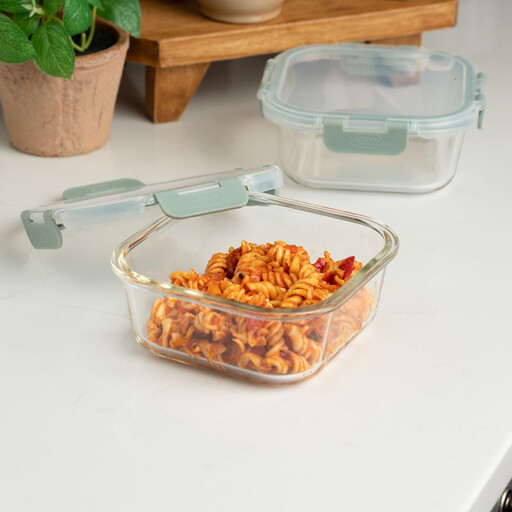
Why This Fits Their Persona: This set is ideal for families who prepare larger portions. The 800ml capacity is perfect for main meals, and the glass construction allows for cooking, storing and reheating in a single dish, reducing washing up.
Made from borosilicate glass, it resists staining and thermal shock, making it a durable, long-term investment. It is one of the reliable oven safe glass containers when used correctly.
Features a robust clip-lock lid with a silicone gasket for a reliable airtight seal. The stackable design helps organise the fridge efficiently.
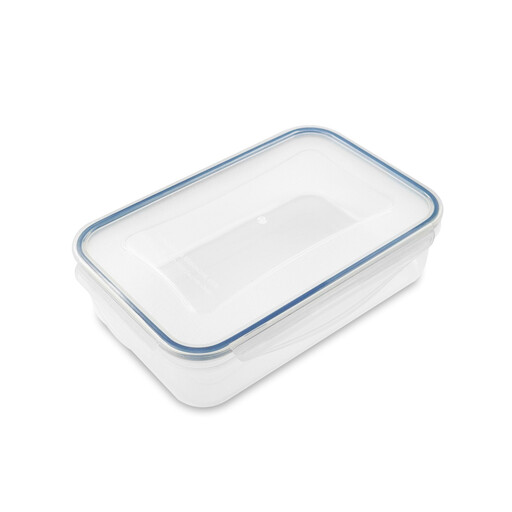
Why This Fits Their Persona: This single container is a workhorse for daily lunches. Its lightweight BPA-free plastic construction won't weigh down a work bag, and the 900ml size is ample for a satisfying meal.
It directly addresses the leaky lunch problem with a secure clip-lock lid and a durable sealing gasket, designed to be genuinely leak-resistant for transport.
Durable and practical for everyday use. It's freezer, microwave (lid open) and dishwasher safe, covering all the bases for a busy professional.
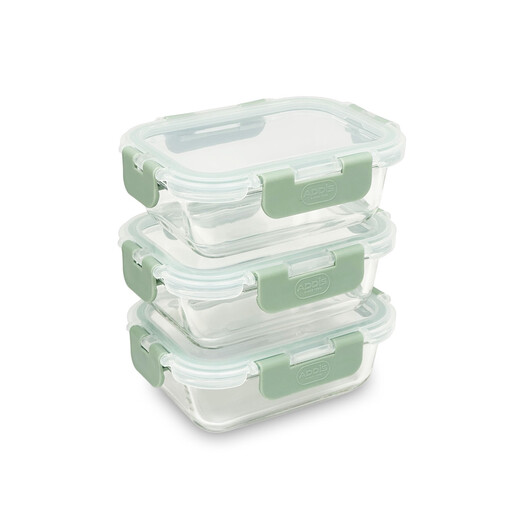
Why This Fits Their Persona: Perfect for those who prep snacks, side dishes, or smaller meals like overnight oats. This set of three compact containers allows for easy portion control and organisation.
This set is designed to be stackable, solving the problem of cupboard clutter. The consistent design ensures they fit together neatly, maximising storage space.
Like the larger Addis glass models, these are made from durable borosilicate glass, making them safe for the oven (lid removed), microwave and freezer.
We have compiled a complete, real-time list of products that fully satisfy these strict selection criteria and UK safety regulations.
Neither is definitively "better"; they simply serve different needs. Glass is excellent for its non-staining properties, heat resistance (especially borosilicate glass) and longevity. It's ideal for home storage and reheating. Plastic is lighter, more portable and less likely to break if dropped, making it a great choice for commuting, travel and children's lunches. A combination of both is often the most practical solution for a modern kitchen.
For plastic containers, the best prevention is to avoid microwaving oily or tomato-based foods in them, as the heat can cause the plastic to become porous and absorb the colour. Rinsing the container immediately after use also helps. If a stain does occur, creating a paste of baking soda and water and letting it sit in the container for a few hours can sometimes help lift it. With borosilicate glass containers, staining is not an issue.
It is generally advisable to let very hot food cool down slightly before sealing it in any airtight container. For glass, the main concern is thermal shock. While borosilicate glass is highly resistant, it's still wise to avoid extreme temperature changes, such as pouring boiling liquid into a container straight from the freezer. Always refer to the manufacturer's specific temperature guidelines for safe use.