
24/7 Customer Support

Free returns

Same-day & Next-day Delivery

Quality Guaranteed

Unlock Your Welcome Offers: FREE Delivery | Up to 80% OFF | Free 30-day JoyPlus trial
Download the APP
Meal replacement shakes can make breakfast, lunch or a post-workout snack easier to manage, but the product descriptions do not always tell the full story. A powder designed for calorie control is not automatically suitable as a protein shake, while a sweetened milk drink may be convenient without offering the same nutritional profile as a complete meal replacement.
Before buying, UK shoppers should look beyond flavour names and promotional wording. The most useful comparison points are the preparation method, nutrition per serving, protein and fibre content, ingredients, allergens and whether the product is intended to replace a meal or simply supplement your diet.
A high-protein shake can be useful after exercise or between meals, but it may not contain the fibre, vitamins and minerals expected from meal replacement products. For example, a whey protein powder may provide around 20–24g of protein per serving while offering relatively little fibre or micronutrient variety.
Check the label for the product’s intended use. A post-workout protein or whey protein powder is generally different from a calorie-controlled meal shake containing added vitamins and minerals.
Powder nutrition is often listed per 100g, per scoop or per prepared serving. The final calorie count may change depending on whether you use water, skimmed milk or another drink.
One SlimFast strawberry serving provides 230 calories when prepared with 250ml of skimmed milk, alongside 15g of protein and 4g of fibre. A powder mixed with water may have a different calorie and nutrient total. Always compare products using the same serving method.
Ready-to-drink nutritional drinks are convenient, but some contain notable amounts of sugar. Dunn’s River Nurishment banana flavour, for example, provides approximately 316 calories and 52.8g of sugars per 400g bottle. That may suit someone seeking an energy-dense milk drink, but it is a different choice from a low-calorie meal replacement.
For weight management shakes, check the energy per prepared serving, not only the powder’s calories per 100g. Also confirm how many servings the pack contains. The SlimFast strawberry 365g tub uses 36.5g of powder per serving, giving approximately 10 servings.
For a ready-to-drink meal replacement, the serving size is easier to interpret. The SlimFast vanilla pack contains six 325ml bottles, with 204 calories and 15g of protein per bottle.
Protein can help make a shake more filling and is relevant to people looking for muscle maintenance or post-workout protein. Fibre is another useful comparison point, particularly when a shake is replacing breakfast or lunch.
The SlimFast banana powder lists 15g of protein and 4.2g of fibre per prepared serving. By comparison, Vilgain strawberry whey provides 24g of protein per 30g serving, but only 118 calories and no stated meal-replacement formulation. It is more naturally suited to protein supplementation than replacing a balanced meal.
Milk, whey and soya are common in meal replacement shakes and protein powders. Read the full ingredients list if you have an allergy or intolerance. Some products may also contain sweeteners, stabilisers, cocoa, green tea extract or other added ingredients.
Products in this guide are intended for adults unless the label states otherwise. Several are unsuitable for children, pregnant or breastfeeding women and people with relevant medical conditions. If you take regular medication or have an underlying condition, seek suitable healthcare advice before using dietary supplements or replacing meals.
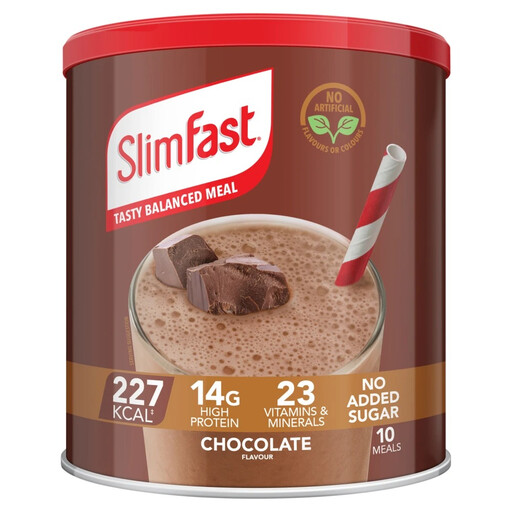
Why This Fits Their Persona: A practical starting point for adults wanting a familiar chocolate flavour and a powder format for home preparation.
The label gives per-serving figures, including approximately 227 calories, 14g protein and 5.1g fibre when prepared as directed.
Chocolate flavour, milk protein, dietary fibre and a blend of listed vitamins and minerals.
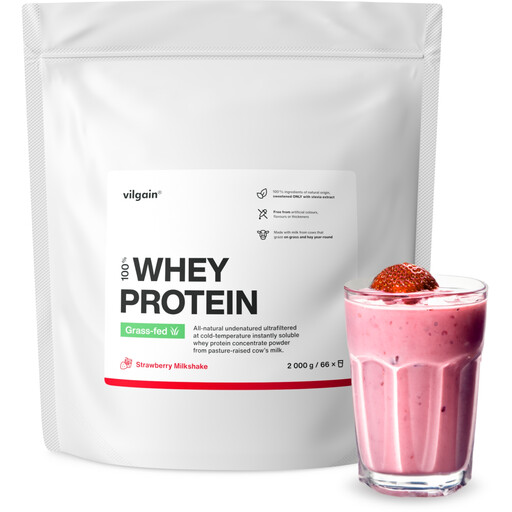
Why This Fits Their Persona: Suitable for fitness-focused adults who prioritise protein concentration, a large pack size and strawberry milkshake flavour.
Its nutrition panel clearly identifies 24g protein per 30g serving, helping shoppers distinguish it from a full meal replacement.
2000g pack, 80g protein per 100g and a stated 118 calories per 30g serving.
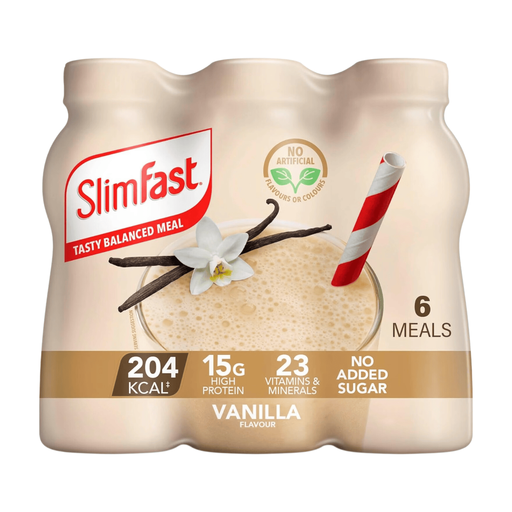
Why This Fits Their Persona: The ready-to-drink format suits desk drawers, commutes and days when there is no shaker or measuring scoop available.
The bottle provides a defined 325ml serving, so there is no uncertainty about powder quantity or added milk calories.
204 calories, 15g protein, 4.9g fibre and listed vitamins and minerals per bottle.
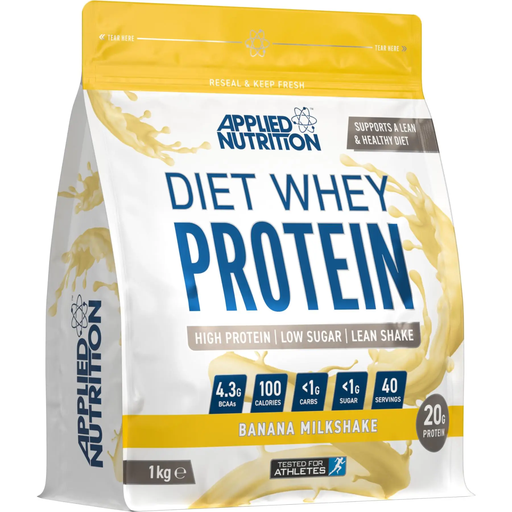
Why This Fits Their Persona: Designed for users who want a banana protein shake for between-meal use or after exercise while monitoring calories.
The product information states that it is best used as a high-protein snack or post-workout supplement, rather than assuming it replaces a complete meal.
20g protein and 90 calories per 25g serving, with CLA, L-carnitine and green tea extract listed in the formula.
We have compiled a complete, real-time list of products that fully satisfy these strict selection criteria and UK safety regulations.
Some can, but the nutrition may differ from the stated prepared serving. If the instructions specify skimmed milk, using water can reduce calories, protein and minerals. Follow the product label and compare the resulting nutrition before changing the preparation method.
This depends on serving size and frequency. A 365g tub using 36.5g per serving provides approximately 10 servings. Some labels recommend no more than two meal-replacement servings per day, so check the directions rather than estimating from the container size alone.
Some meal replacement shakes contain useful protein, but a whey protein powder may be more focused on post-workout protein. Choose according to your purpose: compare fibre, vitamins and minerals for a meal replacement, or protein per serving and mixability for muscle recovery nutrition. Always keep shakes within a varied, balanced diet and follow the stated dosage.