Choose ready-to-heat tinned pasta when the recipient needs the fewest preparation steps. If someone can cook and portion pasta, a no-added-sugar sauce offers a different way to assemble the meal; tinned tomatoes give the cook more control over the recipe but require preparation. Whichever format you choose, check the sugars, salt, total carbohydrate, portion, allergens and any stated dietary requirements rather than relying on a sugar claim alone.
Who is this for?
People who need straightforward reheating
For someone who finds meal preparation difficult, a ready-to-heat pasta component can reduce the steps needed before eating. The Department of Health in Northern Ireland describes meals on wheels as serving people who are unable, or find it difficult, to prepare a meal.
Carers working around a lower-sugar preference
A carer choosing sauce or tinned pasta may need to compare the sugar claim with the nutrition panel, portion size, ingredients and salt before planning the meal.
People planning around carbohydrate
Where a recipient’s diabetes-care plan involves carbohydrate counting, Diabetes UK advises checking total carbohydrate, not just sugars, for the portion that will actually be served.
What matters when choosing?
Start with who will prepare the meal, then compare the label and the portion that person will eat.
Ready-to-heat tinned pasta
Choose it when: A pasta component needs only reheating, with instructions the recipient or carer can follow.
Allow for: Less control over the prepared recipe; check the can’s portion and nutrition panel even if it carries a reduced-sugar claim.
No-added-sugar sauce
Choose it when: Someone can cook pasta and assemble a meal using a sauce labelled no added sugar.
Allow for: Cooking and portioning the pasta separately; the sauce label does not describe the nutrition of the finished meal.
Tinned-tomato base
Choose it when: The cook wants to decide what goes into a prepared tomato sauce.
Allow for: More preparation than reheating a tin or using a ready-made sauce.
| Concern |
What to check |
Who this matters to |
| Sugar claims and labels |
Compare the claim with sugars per 100g and per intended portion; also read salt and ingredients. |
If I am choosing a lower-sugar option, I want to know what the label says about the food I will serve, not just what the front of the pack promises. About 40% of consumers put that label check first. |
| Carbohydrate and portion |
Check total carbohydrate and calculate it for the amount actually served, including separately cooked pasta. |
When a meal plan calls for carbohydrate counting, the size of my serving matters as much as the sauce I pick. Total carbohydrate is the primary concern for about 30% of consumers. |
| Preparation and service fit |
Check heating equipment, help available, texture requirements and storage directions after opening. |
If preparing a meal is difficult, I need a format that the recipient or carer can heat and serve as required. That practical fit comes first for about 30% of consumers. |
What should you avoid overlooking?
-
Reading “no added sugar” as “sugar-free”
A tomato-based sauce can still contain sugars even when it is labelled no added sugar.
Read the sugars value per 100g and for the portion you intend to serve.
-
Checking sugars but not total carbohydrate
Diabetes UK explains that total carbohydrate includes carbohydrates from starchy foods as well as sugars. The distinction matters when a recipient’s plan requires carbohydrate counting.
Use the total carbohydrate figure for the whole intended serving and follow the recipient’s individual care plan.
-
Choosing a convenient tin without checking its instructions
A tin may simplify preparation, but the recipient still needs suitable heating arrangements. A partly used tin or jar also needs to be stored according to its label.
Check the heating method, decide how much will be served and follow the pack’s directions for leftovers.
-
Substituting a retail product for a tailored meal
A sugar claim alone cannot establish whether a standard pasta product meets an allergy-related, texture-modified or other stated requirement. An Age UK Wiltshire-linked service lists low-sugar and texture-modified meals among the requirements it can support.
Confirm the recipient’s requirements and the local provider’s options before changing a tailored meal arrangement.
Brands to consider
Tesco
Tesco lists a no-added-sugar bolognese sauce and reduced-sugar-and-salt tinned spaghetti letters, offering two different preparation formats.
- The sauce listing provides per-100g nutrition; the tinned spaghetti listing includes reheating instructions.
- Check the current pack details and availability for the particular product before relying on either option.
Dolmio
Dolmio UK describes a no-added-sugar tomato-and-basil sauce for a meal for two.
- It provides a ready-made sauce route when someone can cook the pasta separately.
- Compare the nutrition and portion information on the specific jar rather than treating the claim as a comparison with other sauces.
M&S
M&S offers tinned tomatoes and passata as ingredients for a sauce prepared by the cook.
- M&S says no added sugar is necessary in its tinned-tomato range.
- This is an ingredient-based route, not a ready-to-heat pasta meal; check the individual pack and anything added during cooking.
Barilla
Barilla UK lists red sauces for meals made with separately prepared pasta.
- Its range offers a ready-made sauce format rather than a tinned pasta component.
- Check the selected jar’s sugar claim and nutrition panel if reduced sugar is the reason for buying.
Joybuy pasta-sauce selection
This sauce is for a pasta bake prepared with cooked pasta, rather than a ready-to-heat tinned pasta meal. Check whether the required cooking steps suit the person preparing the meal.
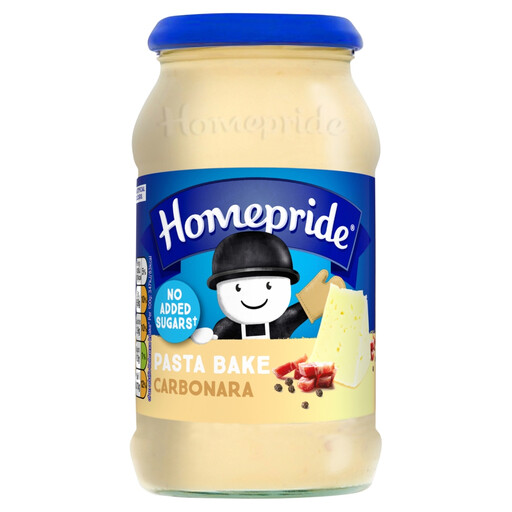 Image unavailable
Homepride No Added Sugar Carbonara Pasta Bake 485g
For a meal planner who can cook pasta and bake the assembled dish. The pack is labelled no added sugar and contains 485g of sauce; the finished meal also depends on the pasta and any other ingredients used. Check the intended serving and the pack’s allergen declaration, particularly if milk, barley, celery or egg must be avoided.
View on Joybuy
Questions about choosing pasta
Does “no added sugar” mean a pasta sauce contains no sugar?
No. A tomato-based sauce labelled no added sugar can still contain naturally occurring sugars. Check “of which sugars” on the nutrition panel for the product and portion you plan to use.
Is reduced-sugar tinned pasta automatically suitable for someone with diabetes?
No. Diabetes UK advises checking total carbohydrate as well as sugars and using the portion actually intended for the meal. Anyone whose care plan involves carbohydrate counting should follow that individual plan.
Can a meals-on-wheels provider accommodate a lower-sugar or texture-modified meal?
Some providers can, but the options depend on the service. An Age UK Wiltshire-linked service lists low-sugar and texture-modified requirements among those it can support; ask the recipient’s local provider about its menu before ordering.
How should I store leftover sauce or tinned pasta?
Follow the storage directions on the particular pack after opening. Check whether leftovers need transferring to another container and refrigerating, and use the stated time limit for that product.


