
24/7 Customer Support

Free returns

Same-day & Next-day Delivery

Quality Guaranteed

Unlock Your Welcome Offers: FREE Delivery | Up to 80% OFF | Free 30-day JoyPlus trial
Download the APP
Buying measuring jugs and cups seems straightforward until unclear markings, awkward pouring or unsuitable materials make a kitchen tool frustrating to use. A small jug may be convenient for dressings but impractical for batch cooking, while a large cup can be difficult to read accurately when measuring a small quantity.
For UK households, the right choice depends on more than capacity. Before adding a glass measuring jug, plastic measuring jug or measuring cup set to your basket, check the measurement scale, temperature guidance, handle design and cleaning requirements.
A 250ml measuring jug is useful for small quantities of milk, stock, oil or sauces, but it will not replace a 1 litre or 2 litre jug for soup, pancake batter or batch drinks. Conversely, a 2 litre jug takes up more cupboard space and may be less comfortable when handling a small volume.
Think about your usual tasks:
Clear glass can look similar across products, but ordinary glass and borosilicate glass have different properties. A borosilicate glass measuring cup is designed to offer greater resistance to temperature changes than many standard glass products. However, users should still follow the product’s care instructions and avoid sudden thermal shock, such as moving a hot jug directly into iced water.
Plastic can be more practical when weight, impact resistance and easy handling are priorities. Check whether the product is labelled as microwave safe, freezer safe and dishwasher safe rather than relying on appearance alone.
A scale that is too faint, crowded or positioned only on one side can lead to avoidable errors. Look for a graduated measuring cup with clearly visible millilitre markings. Imperial fluid-ounce measurements may also be useful for UK recipes and older cookbooks.
Printed markings may require more care during washing. Embossed or moulded markings are designed to remain readable, but the manufacturer’s cleaning guidance should still be followed.
Select a capacity that leaves enough room for stirring and pouring without making small amounts difficult to read. A jug filled close to its rim is more likely to spill, particularly when transferring hot liquids.
For general kitchen use, a 500ml measuring cup or 1 litre measuring jug offers a useful middle ground. Bakers who prepare several recipes at once may prefer a measuring cup set containing 250ml, 500ml and 1000ml sizes.
Glass measuring jugs offer a clear view of the contents and are generally non-porous, which can help with cleaning after using oils, sauces or strongly coloured ingredients. Borosilicate glass is a practical option where recipes involve warm liquids, provided the product instructions permit the intended use.
A plastic measuring jug is typically lighter and less likely to break if dropped. BPA-free, food-safe plastic is a sensible specification to look for, but microwave, freezer and dishwasher suitability varies between products.
A measuring jug with handle is easier to control than a handle-free cup when carrying liquids. A defined spout can help reduce drips, particularly when pouring into narrow bottles, saucepans or mixing bowls.
For cocktail makers, a dedicated jigger offers more suitable small-volume measures than a full-sized kitchen jug. A dual-sided 25ml and 50ml design can cover single and double measures, while also being useful for syrups and oils.
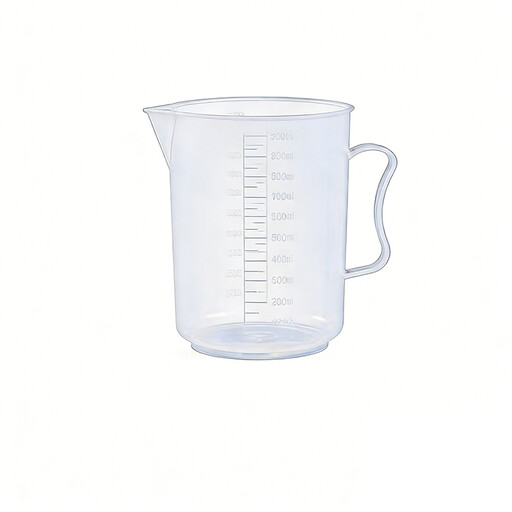
Why This Fits Their Persona: A 1 litre format suits everyday cooking, drinks and meal preparation without taking up the space of a larger jug.
The plastic construction avoids the breakage concern associated with glass. Check the listing for the exact scale and care instructions before use.
1 litre capacity; lightweight plastic format for routine kitchen measuring.
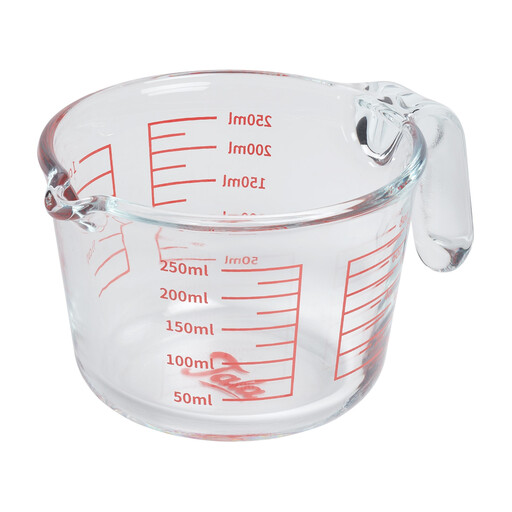
Why This Fits Their Persona: Its compact format suits bakers and cooks who value clear measurements, controlled pouring and a glass vessel for smaller tasks.
Bold millilitre and fluid-ounce markings address the problem of hard-to-read scales, while the spout supports more controlled pouring.
Borosilicate glass; 250ml capacity; handle and pouring lip; oven, fridge and freezer safe according to the supplied product information.
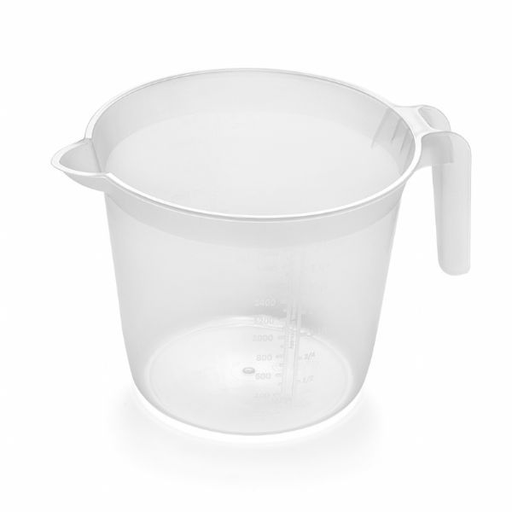
Why This Fits Their Persona: The 2 litre capacity is suited to batch cooking, larger mixtures and general household measuring where a robust, lightweight jug is useful.
Embossed metric and imperial markings are designed not to fade like printed alternatives, helping maintain legibility after repeated washing.
BPA-free plastic; handle and pouring spout; dishwasher, microwave and freezer safe according to the supplied information.
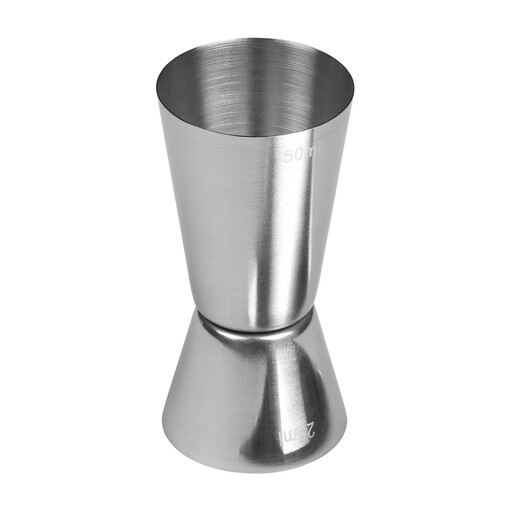
Why This Fits Their Persona: Cocktail makers need smaller, purpose-built measures rather than a large kitchen jug for spirits, syrups and mixers.
The dedicated 25ml and 50ml sides remove the need to estimate small quantities with an oversized cup.
Stainless steel construction; dual 25ml/50ml measure; engraved capacities; dishwasher safe according to the supplied product information.
We have compiled a complete, real-time list of products that fully satisfy these strict selection criteria and UK safety regulations.
Accuracy depends mainly on the quality and readability of the graduation marks, not simply on the material. Both glass and plastic measuring jugs can be suitable when the scale is clear and the jug is placed level before reading. Glass may offer better visibility of the contents, while plastic is lighter and less vulnerable to breakage.
Lifespan depends on frequency of use, material, cleaning and storage. A jug should be replaced if markings become unreadable, the handle loosens, the spout cracks or the vessel becomes damaged. Embossed markings may remain legible for longer than printed scales, but all products should be cleaned according to their instructions.
A measuring cup set is useful when you regularly prepare different quantities or bake several recipes. A single 1 litre or 2 litre jug may be more practical for general cooking and batch preparation. Cocktail makers and bakers may benefit from combining a larger kitchen measuring jug with smaller baking measuring tools or a dedicated jigger.