
24/7 Customer Support

Free returns

Same-day & Next-day Delivery

Quality Guaranteed

Unlock Your Welcome Offers: FREE Delivery | Up to 80% OFF | Free 30-day JoyPlus trial
Download the APP
A quality meat cleaver is a formidable tool in any kitchen, but choosing the right one can be a challenge. The market is filled with options, from the heavy-duty bone chopper knife designed for butchery to the more nimble vegetable cleaver suited for precise dicing. It’s easy to feel overwhelmed by specifications like steel types, hardness ratings and handle construction.
This guide is designed to cut through the clutter. As a Joybuy Product Recommendation Officer, my role is to provide clear, practical advice to help you find a kitchen cleaver knife that truly meets the demands of your cooking, whether you're a professional chef or a serious home cook. We'll look at key features to consider and highlight a couple of standout options available this year.
Before diving into specific products, let's cover the essential features that separate a great cleaver from a simple, heavy knife. Understanding these will help you make a more informed decision.
The blade's material is its most critical attribute. You'll often see cleavers categorised by their steel origin, typically German or Japanese, which reflects different approaches to knife making.
When you're wielding a tool with the weight and power of a cleaver, stability is paramount. Look for a full tang cleaver. This means the steel from the blade runs in one solid piece all the way through the handle. A full tang provides superior balance, strength and longevity, ensuring the blade won't loosen or separate from the handle under pressure. It's a hallmark of a well-made, professional cleaver.
Not all cleavers are created equal. A thick, heavy blade is essential for a bone chopper knife, as the weight does much of the work for you. Conversely, a thinner, lighter blade is characteristic of a vegetable cleaver (also known as a Chinese chef's knife), offering the agility needed for rapid, precise chopping. The right choice depends entirely on your primary use case. A well-balanced cleaver should feel comfortable in your hand, not unwieldy, allowing for control and reducing fatigue during extended use.
Based on our analysis of product features, materials and user-focused design, here are two recommendations that cater to different kitchen needs.
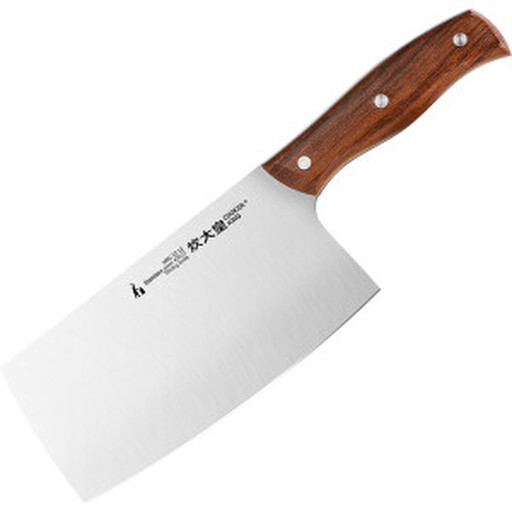
Why It Stands Out
This 7-inch cleaver from COOKER KING embodies the versatility of the Japanese style. It’s forged from 7Cr17MoV high-carbon stainless steel, giving it a notable hardness of HRC 58±2. This high hardness rating means it can achieve and maintain a very sharp 15° double-bevel edge, allowing for clean, effortless cuts. The full-tang, triple-rivet construction ensures excellent balance and durability, while the imported pakkawood handle is designed to be waterproof and provide a secure, comfortable grip. Its slightly curved edge and wide face make it a multi-purpose tool for chopping, dicing and even scooping ingredients from the board.
Pros
full tang cleaver construction for superior balance and control.Who is it for? This is for the home cook or professional who wants a single, highly versatile cleaver. If your work involves more slicing and precise chopping than heavy-duty bone breaking and you appreciate a razor-sharp edge, this is an excellent candidate.
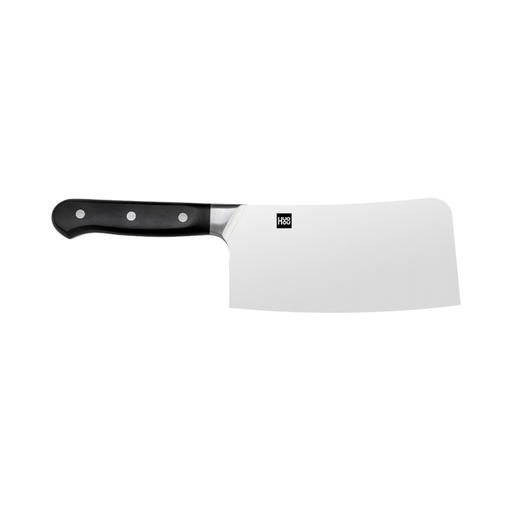
Why It Stands Out
Built for power and resilience, the Huohou cleaver is a classic example of German engineering principles. It is crafted from German-standard 1.4116 stainless steel, an alloy containing chromium, molybdenum and vanadium for enhanced toughness and rust resistance. With a Rockwell hardness of HRC 53–58, the blade is tough enough to resist chipping when chopping through meat and poultry bones. The design prioritises stability, featuring a heavy-duty ABS handle secured with three rivets and a seamless weld between the blade and handle. This modern construction prevents food residue from getting trapped, making it hygienic and easy to clean.
Pros
German steel cleaver material.Who is it for? This cleaver is aimed at cooks who need a reliable and powerful bone chopper knife. If your primary tasks involve breaking down poultry, portioning large cuts of meat and other jobs that require force and durability, this is a strong contender.
The handle is a crucial point of contact, and personal preference plays a big role. If you favour the sleek, hygienic and modern feel of an all-metal design, you may find other options more suitable.
Explore our broader collection of knives with a stainless steel handle for more durable and professional choices.
1. Can you use a meat cleaver on vegetables? Yes, absolutely. However, the type of cleaver matters. A lighter, thinner vegetable cleaver is specifically designed for this and excels at it. A heavy duty cleaver can be used for large, hard vegetables like butternut squash, but its weight and thickness make it less ideal for delicate work like mincing herbs.
2. What is the difference between a meat cleaver and a butcher knife? A meat cleaver features a tall, rectangular blade and is designed for chopping with downward force, using its weight to cut through bone, cartilage and dense meat. A butcher knife typically has a long, curved blade used for slicing, trimming fat and separating meat from the bone with slicing motions rather than chopping.
3. How should I care for a high carbon stainless steel knife? To maintain its performance and appearance, always hand wash your cleaver with warm, soapy water and a soft sponge. Dry it immediately and thoroughly after washing to prevent water spots or potential corrosion. Never put a quality cleaver in a dishwasher, as the high heat and harsh detergents can damage both the blade's edge and the handle. Store it safely in a knife block, on a magnetic strip or with a blade guard.