
24/7 Customer Support

Free returns

Same-day & Next-day Delivery

Quality Guaranteed

Unlock Your Welcome Offers: FREE Delivery | Up to 80% OFF | Free 30-day JoyPlus trial
Download the APP
A proper meat cleaver is a formidable tool in any kitchen, capable of tackling tasks that would defeat a standard chef's knife. Yet, choosing the right one can be a minefield. Many shoppers in the UK find themselves with a tool that either fails to perform or, worse, is a hazard to use. Before you invest, it's crucial to understand the common pitfalls that lead to a disappointing purchase.
As a Joybuy Product Recommendation Officer, my role is to help you see past the marketing noise and focus on what truly matters. Here are the key issues to watch out for:
To avoid these traps, focus on a few non-negotiable technical specifications. These details determine whether a cleaver is a reliable workhorse or a short-lived disappointment.
The material of the blade is paramount. Most kitchen cleavers are made from stainless steel, which is a good starting point for its corrosion resistance. However, for a true bone chopping knife, you should look for blades made from high-carbon stainless steel. This alloy offers a superior balance of hardness (for edge retention) and toughness (to resist chipping under impact).
Equally important is the tang. The tang is the part of the blade that extends into the handle. For a heavy-duty tool like a cleaver, a full tang is essential. This means a single, solid piece of steel runs from the tip of the blade to the end of the handle. This construction provides immense strength and excellent balance, preventing the blade from snapping under the force of a heavy chop.
The shape and weight of the blade dictate its function.
Analysing the blade's thickness and overall weight is a simple way to determine its intended purpose, ensuring you get the right tool for your kitchen tasks.
Based on these practical criteria, we've matched a few standout options to different types of users.
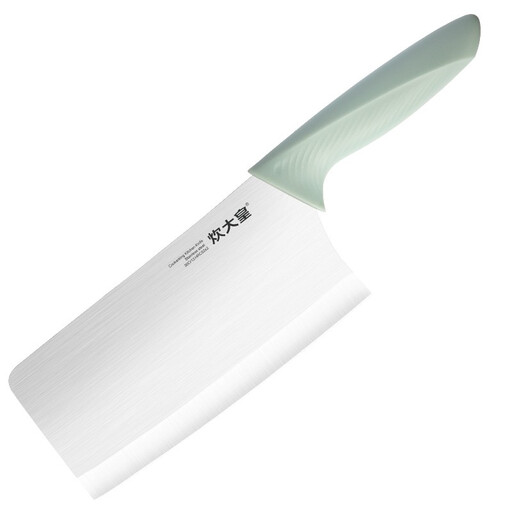
Why This Fits Their Persona: Ideal for the UK home cook who buys large cuts of meat from the butcher and needs a powerful tool for portioning, including breaking down joints and chopping through bone for stocks and stews.
This is explicitly a heavy-duty cleaver. Its forged construction provides the necessary toughness to handle impact, directly countering the "looks tough, acts fragile" pitfall.
The robust, forged stainless steel blade is designed for strength and edge retention during high-impact tasks. The contoured handle aids control and safety.
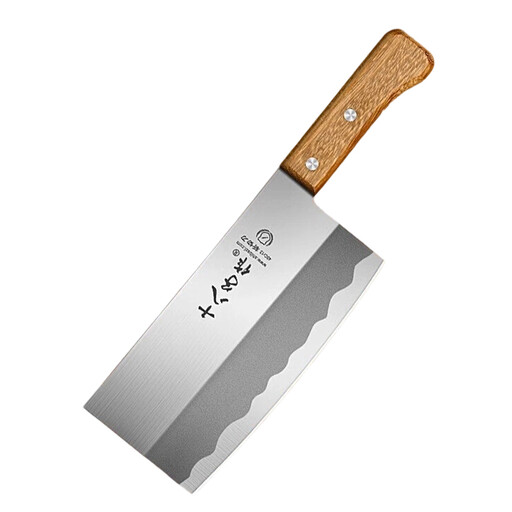
Why This Fits Their Persona: For the versatile cook who wants a single, high-quality kitchen cleaver for everything from finely dicing onions and herbs to chopping chicken for a stir-fry.
This is a classic Chinese chef knife design, which is well-balanced for both power and precision. It avoids the unwieldy, poorly balanced trap of heavier, single-purpose cleavers.
Its versatile blade is suitable for a wide range of tasks, from slicing to chopping. The SHI BA ZI ZUO brand is known for producing reliable kitchen cutlery.
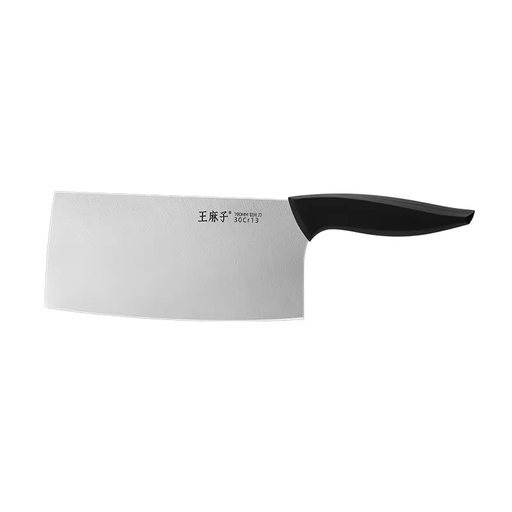
Why This Fits Their Persona: Perfect for someone seeking a reliable, no-fuss chopping knife for daily meal prep—slicing meat and dicing vegetables for family dinners—without a large financial commitment.
This is a purpose-built household cleaver, not a mislabelled slicing knife. It correctly identifies its role for meat and vegetable prep, avoiding the "wrong tool for the job" pitfall.
Forged from stainless steel for good durability and corrosion resistance. The comfortable handle offers a secure grip for safe, everyday use.
We have compiled a complete, real-time list of products that fully satisfy these strict selection criteria and UK safety regulations.
The main difference is their construction and intended use. A meat cleaver is a heavy, thick-bladed knife designed for chopping through bones, cartilage and thick cuts of meat. A Chinese chef knife is thinner, lighter and more of an all-purpose tool for slicing, dicing and mincing vegetables and boneless meats. Using a Chinese chef knife on hard bone will likely damage the blade.
To ensure a long lifespan, always hand wash your cleaver with warm, soapy water and dry it immediately. Never put it in the dishwasher, as the harsh detergents and high heat can damage both the blade and the handle. To maintain the edge, use a honing rod regularly. Depending on usage, it will need to be professionally sharpened or sharpened at home with a whetstone periodically.
Absolutely not. Using a cleaver—or any quality knife—on a hard surface like glass, granite or ceramic will dull the blade almost instantly and can cause it to chip. Always use a wooden or plastic cutting board, as these materials are soft enough to not damage the knife's edge.