
24/7 Customer Support

Free returns

Same-day & Next-day Delivery

Quality Guaranteed

Unlock Your Welcome Offers: FREE Delivery | Up to 80% OFF | Free 30-day JoyPlus trial
Download the APP
Mechanical gaming keyboards appeal to PC gamers, keyboard enthusiasts, content creators and home workers for different reasons. Some want quicker-feeling inputs, others prioritise comfortable typing, wireless flexibility or a compact desk setup. However, a long list of specifications does not automatically mean a keyboard suits your routine.
The practical choice depends on how you use your desk, which keys you need every day and whether the advertised features are useful rather than decorative.
A 60% gaming keyboard saves desk space but normally removes the function row, navigation cluster and number pad. These commands may be available through key combinations, but that is not always convenient for spreadsheets, editing software or office work.
A 75% mechanical keyboard usually retains the function row and navigation keys in a condensed arrangement. It can be a more adaptable option for gaming, writing and remote work. A full-size mechanical gaming keyboard includes the number pad, although it occupies more horizontal space.
Before buying, check the key count, layout and regional arrangement. Several products use a US ANSI layout, which may differ from the UK ISO layout in the shape and position of certain keys, including the Enter key and left Shift key.
Wireless models can use Bluetooth, 2.4GHz wireless or both. Bluetooth is useful for laptops and tablets, while 2.4GHz normally uses a dedicated receiver and may be preferable for gaming. A tri-mode mechanical keyboard combines Bluetooth, 2.4GHz and wired USB-C connections, giving you more options across devices.
Check whether the receiver is included, where it is stored and how the keyboard charges. For competitive gaming, a wired connection may be the simpler choice if you want to avoid battery management or possible wireless interference.
RGB lighting, screens, knobs and elaborate case finishes can add visual appeal, but they should not distract from the essentials. A hot-swappable keyboard is more relevant if you expect to change switches later. A gasket-mounted keyboard may appeal if you prefer a softer, more flexible typing feel, but mounting style does not replace the need to check switch type, stabilisers and keycap quality.
Similarly, a rapid trigger keyboard is designed around adjustable magnetic-switch actuation. This can be relevant to fast-paced games, but it may be unnecessary for general typing or slower-paced titles.
Traditional mechanical switches use physical contacts and are commonly described as linear, tactile or clicky. Linear switches provide a smooth press, tactile switches offer a noticeable bump, and clicky switches produce a distinct sound.
A hot-swappable PCB allows compatible switches to be changed without soldering. Check whether it supports 3-pin, 5-pin or both before purchasing replacement parts. You can browse the wider hot swappable switches range when planning a future custom mechanical keyboard build.
Magnetic switches work differently and may support adjustable actuation and rapid trigger functions. Confirm software compatibility and operating-system support before relying on these settings.
For wireless mechanical keyboards, compare connection modes, battery capacity and charging arrangements. A larger battery may support longer use between charges, but actual runtime depends on lighting, connection mode and software settings.
For construction, look for clearly stated details such as PBT keycaps, foam layers, aluminium cases and mounting systems. These features describe materials or design approaches, but they do not guarantee that every user will prefer the sound or feel. Also check cleaning instructions, liquid warnings, included accessories and the seller’s UK delivery and return information.
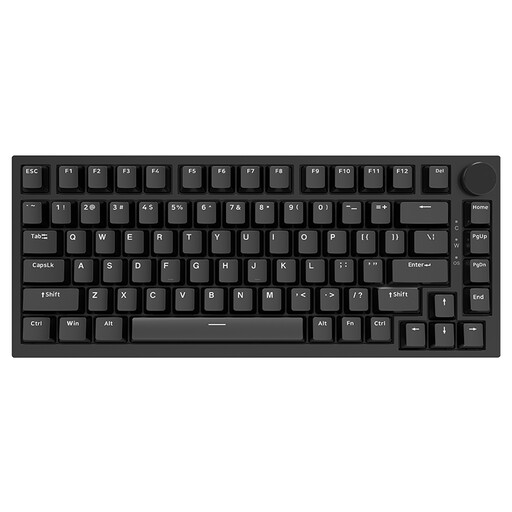
Why This Fits Their Persona: A wired 75% format gives new buyers a compact layout without requiring battery charging or a wireless setup, making it suitable for gaming, study and home-office use in the UK.
The 82-key layout retains more functions than a 60% board, while the wired Type-C connection avoids wireless battery concerns.
Hot-swappable support, PBT keycaps, RGB lighting, a volume knob and N-key rollover are listed features.
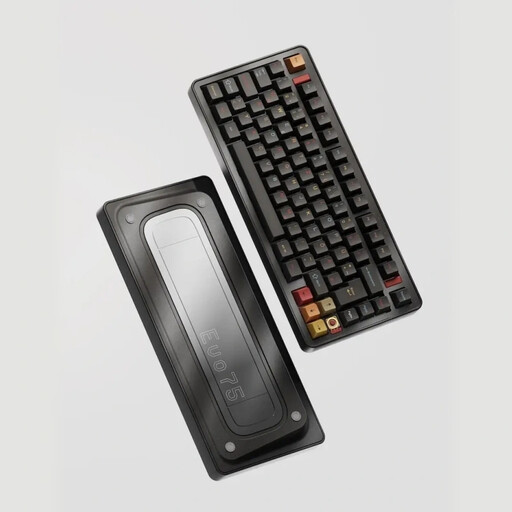
Why This Fits Their Persona: Suitable for enthusiasts who want a custom mechanical keyboard with flexible connectivity, an aluminium case and a more configurable typing setup.
Bluetooth, 2.4GHz and USB-C modes reduce reliance on one connection type, while hot-swap support makes later switch changes possible.
The listed specification includes a full aluminium build, leaf spring mount, 8000mAh battery, VIA compatibility and per-key RGB.
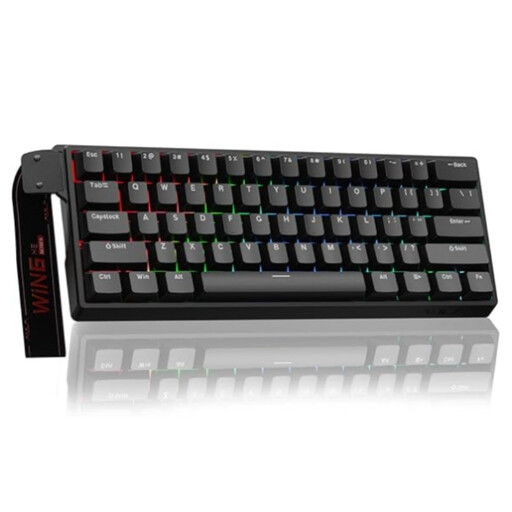
Why This Fits Their Persona: Designed for players who prioritise compact dimensions and adjustable input behaviour over a number pad or wireless convenience.
The wired design avoids charging interruptions, while magnetic switches provide adjustable actuation and rapid trigger mode.
The product listing specifies an 8000Hz polling rate, hot-swappable magnetic switches, RGB and a 60% layout.
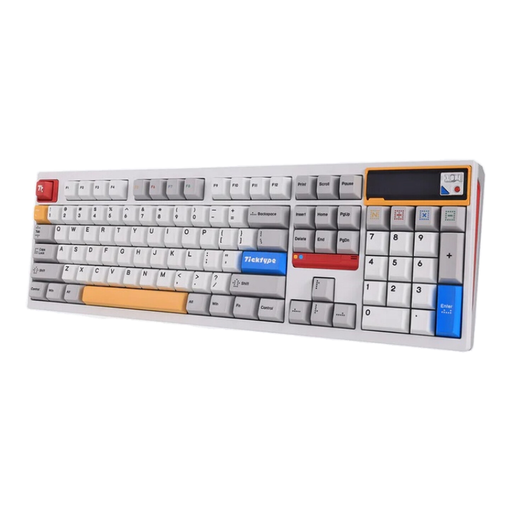
Why This Fits Their Persona: A full-size arrangement suits users who regularly enter figures, edit documents or switch between office work and gaming at one main desk.
The 108-key layout avoids the productivity compromise of smaller boards, while tri-mode connectivity supports different devices.
The listed features include a full aluminium case, hot-swappable layout, leaf spring mount, pixel screen, RGB and an 8000mAh battery.
We have compiled a complete, real-time list of products that fully satisfy these strict selection criteria and UK safety regulations.
Yes, provided the layout, noise level and switch type suit your environment. Linear and tactile switches are often more practical for shared rooms than loud clicky switches. A 75% board can retain useful navigation keys while leaving more desk space for a mouse and notebook.
Lifespan depends on switch construction, usage, dust, moisture and physical handling. Hot-swappable designs can extend practical ownership because compatible switches can be replaced without soldering. Keycaps and stabilisers may also show wear before the main electronics.