Editors sharing a quiet home office
If typing can be heard during calls or elsewhere at home, consider the particular switch and keyboard construction. A mechanical keyboard is not necessarily quiet simply because its switches are non-clicky.


For editing a short biography at home, compare UK-ISO 75% and tenkeyless keyboards first: both can retain arrow and function keys, but you should check the exact positions of the navigation keys you use. Consider a full-size board if you regularly need a number pad, and choose switch feel, sound and connection features around your desk and the people nearby rather than assuming one configuration suits everyone.
If typing can be heard during calls or elsewhere at home, consider the particular switch and keyboard construction. A mechanical keyboard is not necessarily quiet simply because its switches are non-clicky.
If you repeatedly move through text with arrow, function and navigation keys, inspect their positions on the exact layout. Familiar UK punctuation and the option to remap keys may also matter to your editing routine.
If you are unsure about tactile, linear or low-profile switches, focus on the selected switch variant rather than the keyboard family name. Hot-swap capability may be useful if you intend to change compatible switches later.
Start with the layout and keys you use to revise text, then consider sound and feel; connection and customisation features matter most when they fit a specific desk routine.
| Concern | What to check | Who this matters to |
|---|---|---|
| Typing sound and feel | Check the selected switch variant and any stated damping features. Do not assume a tactile switch will be quieter than every linear switch. | If typing may disturb someone at home, I want a key feel I can use comfortably without choosing an intentionally clicky sound. Around 36% of consumers put sound and feel first. |
| Editing keys and UK layout | Inspect the exact UK-ISO configuration and the positions of arrows, Delete, Home, End and the function row; a 75% label alone does not establish their arrangement. | When I revise sentences with keyboard shortcuts, unfamiliar navigation or punctuation positions would interrupt my work. For about 29% of consumers, key access and layout are the primary concern. |
| Device and switch flexibility | Confirm the connection modes, remapping requirements and hot-swap socket compatibility of the chosen version. | If I move between devices or want to change switches later, those options need to work with my setup. Roughly 21% of consumers prioritise that flexibility. |
| Slim or simple desk setup | Compare a low-profile board’s height and switch feel with your current setup, or consider wired operation if you prefer not to manage pairing and charging. | At a fixed desk, I may prefer a slim keyboard or a straightforward cable connection over extra modes. Around 14% of consumers make that their first consideration. |
Compact keyboards can move navigation keys, while UK-ISO and US layouts differ around punctuation and other key positions. That can disrupt familiar editing commands even when a board retains arrow keys.
Inspect images or a keymap for the exact configuration, locating Delete, Home, End, Page Up, Page Down and the function row before ordering.
An unfamiliar arrangement may also take time to relearn.
Clicky switches are designed to be audible. The switch is not the only factor in typing sound: the case, keycaps, desk and typing force can matter too.
If noise affects others at home, check the specified switch and damping features, and consider whether the retailer’s return terms give you a practical way to assess the sound yourself.
Wireless modes bring pairing and charging tasks; hot-swap is useful only if you intend to change switches that fit the board’s sockets.
For one fixed computer, compare a wired option. If you plan to change switches, verify the exact socket and pin compatibility before selecting replacements.
Lighting and gaming controls do not establish whether a keyboard has the navigation layout, switch feel or sound profile you want for revising prose.
Settle the layout and switch variant first, then decide whether any additional controls serve a task you actually perform.
The K8 Max is a reference point for editors considering a UK-ISO tenkeyless layout and several connection modes.
The K65 Plus Wireless Tactile UK model offers a compact 75% route with tactile switches.
The wired G915 X is relevant if you specifically prefer a low-profile keyboard.
The BlackWidow V4 75% is a compact option for buyers interested in changing switches.
These choices focus on compact or customisable mechanical keyboards, plus a full-size option for editors who also use a number pad. Check the exact key layout before choosing one for UK punctuation or familiar editing shortcuts.
 Image unavailable
Consider this full-size board if number-pad access matters alongside biography editing. Its listed configuration has 108 keys, a US layout, tri-mode connectivity and hot-swap capability; the Silent Tactile switch name does not establish how it will sound at your desk. Choose it only if the US key arrangement works for you.
 Image unavailable
Consider this wireless 75 model if desk width matters but you still need editing keys. Confirm the exact key arrangement and whether the selected version is UK-ISO; if typing noise affects others, assess its switch feel and sound rather than relying on the layout name.
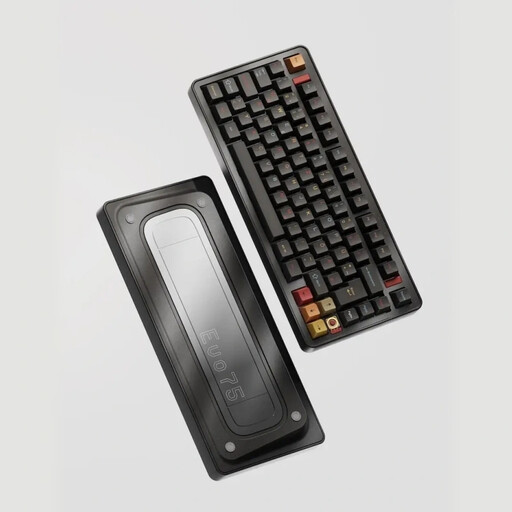 Image unavailable
This 75% option is worth considering if you want a compact board with the possibility of changing switches. The listed variant specifies a US layout, tri-mode connectivity and hot-swap capability. Check its navigation-key positions and whether its US punctuation arrangement suits your writing.
 Image unavailable
Consider the 75% format if a smaller footprint takes priority over a conventional navigation cluster. This listed US-layout variant specifies wired, Bluetooth and 2.4G modes and PBT keycaps. Check the selected switches, editing-key positions and sound for your home office.
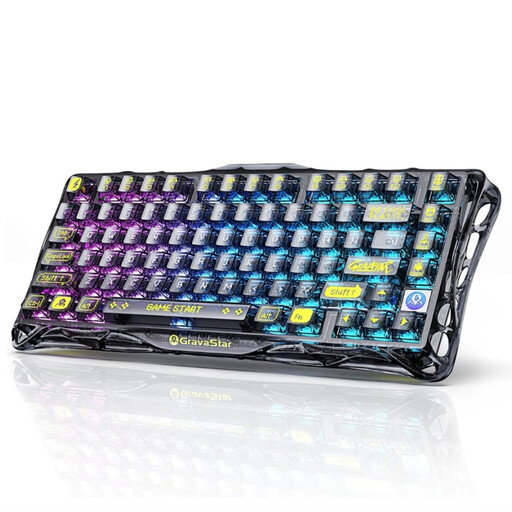 Image unavailable
This 75% model may suit a compact desk if you accept its US key arrangement. Its title specifies Bluetooth 5.0, 2.4G and USB-C modes alongside hot-swap capability. Confirm the included switches and navigation-key positions before relying on it for frequent text revisions.
Start with a non-clicky tactile or linear option if other people may hear you type. Tactile switches provide a bump, while linear switches do not; Razer describes its Orange tactile switches as quieter than its clicky Green switches, but the sound you hear also depends on the particular keyboard and desk setup.
Not necessarily: a 75% layout generally retains arrow and function keys while using less desk width. Inspect its exact navigation-key positions; a tenkeyless board may suit you better if you want a more conventional arrangement, while a full-size board makes sense if you regularly use a number pad.
UK-ISO identifies the physical key arrangement and legends you may expect for familiar UK punctuation positions. Product families can have different layouts, so inspect the selected configuration and its images rather than assuming that a UK name confirms every key position.
For a standard UK online sales contract, the Consumer Contracts Regulations 2013 normally provide a cancellation period ending 14 days after you or your nominated person takes physical possession of the goods, subject to applicable exceptions. Check the seller’s return instructions separately; a change-of-mind cancellation is distinct from remedies for faulty or misdescribed goods.
Contact the retailer with the order details and a description of the fault. The Consumer Rights Act 2015 provides remedies where goods do not conform; the available remedy depends on the circumstances and timing, and a manufacturer warranty does not replace statutory rights.