For editing a travel memoir mainly at one desk, start with a familiar UK layout and the editing keys you use regularly; a full-size board offers a different balance of keys and space from a compact one. A low-profile wireless keyboard is worth considering if you change work locations, while a split design suits writers willing to learn a different layout. In every case, check the exact switch and make room for a comfortable workstation setup.
Who these choices suit
Desk-based memoir editors
If you revise chapters at a fixed desk, check the physical UK layout, access to punctuation and navigation keys, and how the keyboard fits your working position. The Health and Safety Executive advises placing a keyboard just below elbow height, with space in front to rest your hands when you are not typing.
Quiet-space writers
In a shared room, the installed switch deserves attention. CHERRY describes MX Silent Red as a damped linear switch and MX Brown as a tactile switch; neither description establishes how loud a complete keyboard will sound.
Writers changing work locations
If you move between writing spaces or devices, consider a thinner board or a choice of wired and wireless connections. Confirm the selected variant’s layout as well as its connection options before ordering.
What matters when choosing
Full-size UK-layout board
Consider it: If you edit mainly at one desk and want a conventional full-size set of keys. Keychron lists UK ISO versions of its Q6 Max.
Trade-off: A full-size board occupies more desk and carrying space than a compact one.
Low-profile wireless board
Consider it: If a thinner keyboard and flexible connections matter when you change writing locations; Logitech G describes the G915 X LIGHTSPEED as a low-profile, tri-mode model.
Trade-off: Low-profile switches feel different from standard-height ones, and the selected variant’s physical layout still needs checking.
Split mechanical board
Consider it: If adjusting the position of each keyboard half is a priority. Kinesis describes the Advantage360 as split and contoured, with adjustable tenting.
Trade-off: A different key arrangement takes practice; PCMag UK notes that developing typing muscle memory can take weeks.
| Concern | What to check | Who this matters to |
|---|
| Long-session setup |
Check that the keyboard can sit centrally, just below elbow height, with room in front for your hands; assess the learning curve of a split layout. |
If long editing sessions make my hand position the deciding factor, I need a board that fits my desk arrangement. Around 20% of consumers put long-session setup first. |
| UK layout and editing keys |
Confirm the exact UK ISO variant and how the chosen size provides punctuation, navigation and shortcut keys. |
When revising punctuation-heavy chapters, I want familiar key placement and ready access to my editing commands. Roughly 33% of consumers prioritise that layout and workflow need. |
| Sound and switch feel |
Identify the installed switch and whether a sound description applies to that precise keyboard configuration. |
Working near other people, I want to limit typing disturbance without guessing from a switch colour. Around 27% of consumers place quiet-space use first. |
| Moving between devices |
Check the selected board’s connection modes, device compatibility and physical layout. |
If I carry my writing setup between locations, I need connections and a form factor that suit that routine. Roughly 20% of consumers make mobility their primary concern. |
Mistakes to avoid
-
Assuming an English-language listing means UK ISO
A keyboard can be offered to UK customers with a different physical key arrangement. Keychron lists UK ISO versions separately, so the variant matters.
Check that the exact configuration specifies UK ISO or UK layout, then compare its pictured keys with the arrangement you expect.
-
Judging sound by another switch variant
CHERRY describes different feedback and damping for MX Brown and MX Silent Red. A review of one switch or keyboard construction cannot establish the sound of another configuration.
Identify the switch installed in the keyboard you would buy, and check sound and feel information for that variant.
-
Expecting a split keyboard to fix the whole workstation
The Health and Safety Executive’s positioning guidance applies to the desk setup, not just the keyboard. PCMag UK also notes that an unfamiliar ergonomic layout can take weeks to learn.
Check chair, screen, keyboard and mouse placement, then decide whether the split layout’s adjustment options justify its learning curve for your writing routine.
Brands to consider for these keyboard styles
Keychron
A reference point for writers seeking UK ISO options in conventional and customisable keyboard lines.
- Keychron describes the Q6 Max ISO as full-size, with QMK/VIA customisation and 2.4 GHz, Bluetooth 5.1 and USB-C connection options.
- Its full-size, metal construction may be less convenient to carry; check the switch and layout of the selected version.
Logitech G
A reference point for a slim wireless mechanical keyboard rather than a heavily customisable board.
- Logitech G presents the G915 X LIGHTSPEED as a low-profile, tri-mode keyboard with a choice of switch styles.
- Its gaming features do not establish writing comfort; check the chosen layout and switch style for memoir editing.
Kinesis
A specialist reference for writers considering a split, contoured arrangement.
- Kinesis describes the Advantage360 with separate, adjustable modules and tenting.
- The unfamiliar layout requires adaptation; confirm the intended version’s key layout and seller terms.
Joybuy keyboard choices
These keyboards offer compact and full-size options for editing at a desk or changing work locations. Check each model’s physical layout and switch configuration against your own writing routine; these choices do not include a split design.
 No image available
HyperX Alloy Rise 75 Wireless Keyboard UK
Consider this 75% wireless keyboard if you want a smaller board for moving between writing spaces. The UK label in its name does not by itself establish the physical ISO layout, so confirm the key arrangement and installed switch before buying.
View on Joybuy
 No image available
AULA F75 PRO 75% Wireless Keyboard, US Layout
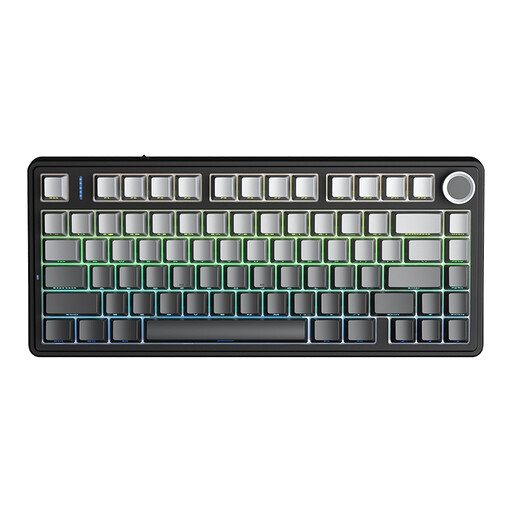
This compact option suits a writer considering Bluetooth, 2.4G and wired connections across workspaces. Its named variant has a QWERTY US layout rather than UK ISO; check that key arrangement and the installed switch before choosing it for extended editing.
View on Joybuy
 No image available
AULA S75 Pro 75% Wireless Keyboard with TFT Display and Knob
The 75% format and tri-mode design make this a compact option to consider when your editing setup changes location. Its name also identifies hot-swappable Star Vektor switches; check the physical key layout and whether that switch configuration suits your preferred sound and feel.
View on Joybuy
 No image available
ASUS ROG Falchion Ace HFX 65, UK Layout
This UK-layout, 65% keyboard is worth considering if desk space matters more to you than a full-size key set. Before using it for manuscript editing, check how you access the function and navigation commands you rely on.
View on Joybuy
 No image available
Ticktype DP104 Gecha Gray, US Layout, Silent Tactile Switches
This full-size 108-key option may suit editing at a fixed desk when you prefer a larger key set. Its named variant specifies a US layout and silent tactile switches, but the switch description does not establish the sound of the complete keyboard; check both the key placement and sound for your writing space.
View on Joybuy
Questions about writing keyboards
Should I choose a tactile or a quiet linear switch for memoir editing?
Choose according to the feedback you prefer and the noise your writing space can accommodate. CHERRY describes MX Brown as tactile and MX Silent Red as a damped linear switch; check which switch is installed in the exact keyboard, rather than applying either description to other variants.
Can a split mechanical keyboard resolve wrist or shoulder discomfort by itself?
No keyboard replaces a suitable workstation arrangement. The Health and Safety Executive advises positioning the keyboard just below elbow height and leaving space to rest hands and wrists when not typing; if you choose a split layout, allow time to learn its key arrangement as well.


