Small-desk manuscript formatter
You want more room beside the keyboard but regularly use arrows, function keys and shortcuts to adjust line breaks, stanza spacing and page layout.


A 75% mechanical keyboard is a useful starting point for formatting a poetry collection on a small desk: it can reduce the keyboard’s footprint while retaining the arrows and function row used for manuscript navigation. Choose a slimmer model if keyboard profile matters most, or consider a standard-profile model if switch choice and shortcut remapping matter more. Check the exact physical layout, switch variant and access to your usual commands before buying.
You want more room beside the keyboard but regularly use arrows, function keys and shortcuts to adjust line breaks, stanza spacing and page layout.
You draft or proofread near other people and want to choose key feel and sound deliberately, rather than assuming all mechanical switches behave alike.
You revise on more than one device, making connection switching and configurable shortcuts potentially more useful than a number pad.
Start with the keys your formatting work requires, then choose the switch feel and physical layout that fit where and how you write.
| Concern | What to check | Who this matters to |
|---|---|---|
| Desk space and editing keys | Check the keyboard’s dimensions and whether arrows and function keys have dedicated positions; a smaller layout may put commands behind an Fn layer. | If I move through lines and adjust stanza breaks frequently, I want those controls within reach without crowding my desk. Around 38% of consumers put compact formatting controls first. |
| Key feel and sound | Choose the exact tactile, linear or clicky switch variant, and check whether that version supports switch changes if you plan to make them. | When I proofread for long stretches near others, the feel of repeated keystrokes and the sound they make matter more to me than extra features. Roughly 31% of consumers prioritise typing feel and sound. |
| Layout and workflow | Confirm the selected variant’s UK-ISO layout if required, then check its device-switching and shortcut-remapping options. | If I edit across devices or rely on familiar punctuation and shortcuts, I need the physical keys and connections to fit that routine. Around 31% of consumers place layout and workflow first. |
The selected physical layout determines key placement and legends. Keychron identifies UK-ISO options for its K3 Version 3 and Q1 Max, but a UK product page alone does not establish the layout of every configuration.
Choose a variant explicitly labelled UK-ISO or UK layout, and inspect its configuration and product images before ordering.
A smaller keyboard can free desk space while moving frequently used commands to an Fn layer. Razer states that its BlackWidow V4 75% retains both a function row and arrow keys.
List the navigation, selection and formatting commands you use regularly, then check their positions on the exact keyboard layout.
Switch options differ in feel and sound. Logitech offers Tactile Quiet, Clicky and Linear variants of the MX Mechanical Mini; those labels do not establish how a particular keyboard will sound in your room.
Select the switch variant as carefully as the keyboard model. If you expect to change switches later, check whether that exact version is hot-swappable and which switches fit it.
Consider Keychron if an explicitly identified UK-ISO option and compact 75% layout are priorities. Its K3 Version 3 and Q1 Max represent different keyboard profiles and configuration choices.
The compact, low-profile MX Mechanical Mini is relevant if switching between devices matters to your editing routine.
The BlackWidow V4 75% is a compact, customisation-focused option to examine if you want arrows and a function row alongside switch flexibility.
These compact mechanical keyboards offer different approaches to saving desk space. A 75% label alone does not confirm the key positions, UK-ISO layout or switch sound you need for poetry formatting, so assess each variant against your usual commands.
 No image available
Consider this 75% wireless model if you want a compact keyboard for manuscript editing. Check that the exact UK variant has your preferred physical key layout and that its selected switches suit a shared room.
 No image available
This 75% option suits a small desk if its US QWERTY key placement works for your punctuation and shortcuts. Its title specifies wired, Bluetooth and 2.4 GHz modes; inspect the exact arrow and function-key arrangement before relying on it for formatting.
 No image available
Consider this 65% keyboard if a smaller layout and UK key placement take priority. Check how you would access function-key commands for formatting; its analog gaming features do not by themselves establish a benefit for manuscript work.
 No image available
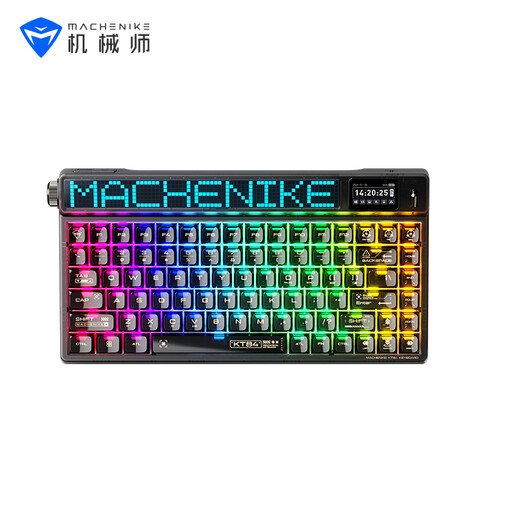
This 75% model is relevant if you want a compact board with connection choices. Its title specifies tri-mode operation and Gateron White switches; check the editing-key positions, and make sure the stated US QWERTY layout suits your writing.
 No image available
Consider this compact 75% model if switch-changing flexibility matters to you. Its title specifies hot-swappable Star Vektor switches and tri-mode connectivity; confirm its physical layout and access to editing keys before choosing it for poetry formatting.
Not necessarily, but a 75% layout is worth considering if you regularly use arrows and function keys. Razer states that its BlackWidow V4 75% retains both; on a smaller board, check the exact key positions and any Fn-layer commands before buying.
Start with the exact switch variant rather than assuming a mechanical keyboard will be quiet. Logitech offers Tactile Quiet, Clicky and Linear MX Mechanical Mini variants, while Razer describes its Orange Tactile switch option as quieter; these manufacturer descriptions are not a measurement of how a keyboard will sound in your room.
No. Check the selected configuration’s physical layout and key legends. Keychron explicitly identifies UK-ISO options for the K3 Version 3 and Q1 Max, but a UK storefront does not establish the layout of every keyboard variant it displays.
Only if the exact keyboard version supports it and the replacement switches are compatible. Keychron specifies compatible low-profile MX mechanical switches for its hot-swappable K3 version, while Razer states that the BlackWidow V4 75% accepts compatible 3- or 5-pin switches; check the chosen variant before ordering replacements.