Noise-conscious shared-desk writers
If someone writes or works beside you, switch sound matters as well as key feel. Compare the exact linear or tactile-quiet variant rather than assuming every version of a keyboard sounds alike.


For short-story writing at a shared desk, choose a non-clicky switch option and a layout that leaves enough room for both writers. Linear switches suit those who prefer a smooth keystroke and want to limit disturbance; a tactile-quiet option is worth considering if key feedback matters more. Check the sound of the exact configuration and make sure a smaller layout retains the keys you use for editing.
If someone writes or works beside you, switch sound matters as well as key feel. Compare the exact linear or tactile-quiet variant rather than assuming every version of a keyboard sounds alike.
For sustained drafting and revision, decide whether you prefer a smooth linear keystroke or more noticeable tactile feedback. Your desk setup and wrist position matter alongside the keyboard itself, as Health and Safety Executive workstation guidance explains.
A compact layout may leave room for paper or another person’s equipment. If you also move between devices, check the chosen keyboard’s connection options and whether its reduced key layout suits your editing habits.
Start with the switch option and the space available, then compare the keys and connections you will actually use. A switch labelled linear or quiet does not, by itself, establish how loud the complete keyboard will be beside another person.
| Concern | What to check | Who this matters to |
|---|---|---|
| Typing noise | Confirm the fitted switch variant and, where possible, listen to that configuration in a quiet setting. Check construction details without treating damping claims as a sound measurement. | I want to draft beside someone without repeatedly distracting them, but still enjoy a mechanical keystroke. Around 45% of consumers put shared-desk noise control first. |
| Typing feel and desk setup | Compare linear and tactile feel, keyboard height and the space available in front of the keys for resting your hands when not typing. | During a long drafting and editing session, I need a key feel I can use comfortably rather than extra gaming features. For around 36% of consumers, typing feel and workstation comfort come first. |
| Desk space and key access | Check the exact UK-ISO or US layout, omitted keys and connection modes against the devices you use. | My keyboard needs to leave room on a shared desk, while still giving me workable access to editing keys or another device. Desk space and device flexibility lead the choice for around 19% of consumers. |
According to Logitech’s switch guidance, linear switches tend to be quieter than tactile ones, but the complete keyboard and the way you type also affect what a neighbour hears.
Confirm the selected switch, not just the model name. If possible, listen to the configuration in a quiet room while you can still decide whether to keep it.
A compact board can free desk space, but losing a numpad or dedicated navigation keys may interrupt the way you revise text.
Compare its key diagram with your current keyboard and work out how you will reach the navigation and function keys you use.
Keyboard height is only one part of a comfortable workstation. The Health and Safety Executive advises leaving space in front of the keyboard to rest hands and wrists when not typing and keeping wrists straight while keying.
Check the keyboard’s position alongside your chair and screen setup, particularly if you regularly work at the desk.
Keychron offers the K1 Max in several regional ISO variants. An ISO label alone does not tell you which legends and symbols are on the keys.
Check that the selected configuration and order summary specify the layout you want.
The MX Mechanical Mini is a compact, low-profile option to examine if you want a named Tactile Quiet switch variant and device switching.
Keychron offers UK-ISO layout choices, including the low-profile K1 Max TKL, for writers comparing key layout and connection options.
Razer’s Reclusa line is relevant if changing switches interests you, though its 65% gaming layout needs careful consideration for writing.
These compact keyboards offer different layouts and switch configurations for writing at a shared desk. Before choosing one, compare its key layout with your editing habits and check whether the sound of the exact configuration suits the person beside you.
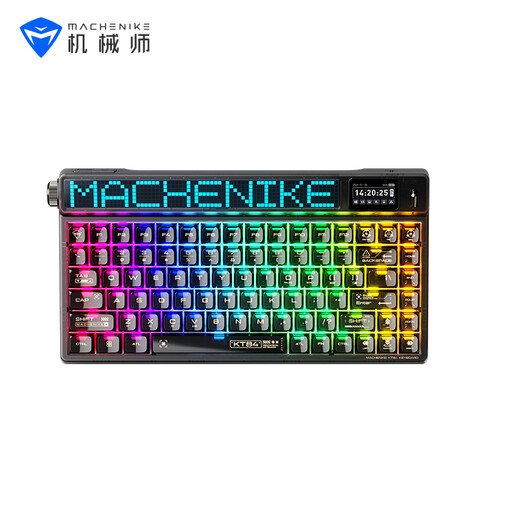 No image available
The 75% layout is worth considering when you need space for writing materials at a shared desk.
The product name specifies tri-mode connectivity, Gateron White switches and a US QWERTY layout. Check the symbol positions and the sound of this configuration before buying.
 No image available
Consider this 80% layout if you want a smaller board but need to compare its key access with your editing routine.
The product name specifies tri-mode connectivity, gasket mounting and US QWERTY. Confirm the symbol positions and whether the chosen configuration sounds acceptable at your shared desk.
 No image available
Its 75% format may suit a drafting space where a full-size keyboard would take up too much room.
The product name identifies a wireless UK-labelled variant. Confirm its exact key legends and switch configuration, and check its sound if another person will work nearby.
 No image available
The 68-key format is a choice to examine when desk space matters more than having every dedicated key.
The product name specifies a US QWERTY layout, Bluetooth 5.1 and wired connectivity. Check how you would reach editing keys and whether this configuration’s sound suits the desk.
 No image available
This compact layout may fit a shared workspace if its key arrangement supports the shortcuts you use when revising a story.
The product name specifies wired, Bluetooth and 2.4G modes, PBT keycaps and US QWERTY. Confirm the fitted switch option and its sound rather than relying on the product name’s sound description.
Clicky switches are a poor starting point if your main aim is to avoid disturbing someone nearby. Logitech distinguishes them from its linear and Tactile Quiet options, so check which switch variant is fitted to the keyboard you intend to buy.
Choose compact or TKL when desk space is tight and you can work without the omitted dedicated keys; keep a larger layout in consideration if a numpad or navigation keys are central to your editing. Check the actual key arrangement rather than relying on the size label alone.
Leave room in front of the keyboard to rest your hands when you are not typing, and consider the chair and screen position too. The Health and Safety Executive advises keeping wrists straight while keying; a keyboard choice alone does not settle the workstation setup.