For drafting a magazine pitch beside someone else, start with a non-clicky switch option, then choose the smallest layout that retains the editing keys you use. A 75% keyboard can leave more room for notes and reference material, but a TKL or full-size layout may suit you better if you need dedicated navigation keys or a number pad. Check the selected switch, key layout and device connections rather than relying on the model name alone.
Who is this for?
Shared-desk pitch writers
If a colleague sits nearby while you draft, switch choice matters as much as the keyboard’s size. Look at non-clicky variants and any stated sound-damping features, while remembering that neither alone establishes how loud a particular keyboard will sound on your desk.
Editors with limited desk space
A laptop, notebook and reference material can compete for the same surface. A 75% layout is worth considering if you want a compact board with arrows, provided its arrangement still gives you practical access to the editing commands you use.
Writers using more than one device
If you move a pitch between computers or other devices, check how the keyboard switches between them. The connection method, operating-system support and selected key layout all need to suit the devices you actually use.
What matters when choosing?
Decide which compromise would interrupt your writing most: an audible switch, missing dedicated keys, awkward device switching or an unfamiliar key layout. Then check the exact configuration, because switches and layouts can differ within a model range.
| Concern |
What to check |
Who this matters to |
| Typing sound |
Confirm the selected switch variant; look for a specifically quiet, linear or damped configuration rather than assuming all versions sound alike. |
I need to finish a draft without an audible click repeatedly distracting the person beside me. Around 33% of consumers put considerate typing sound first. |
| Space and editing keys |
Compare the layout image and access to arrows, Home, End and other commands you use; consider TKL or full-size if dedicated keys are essential. |
My notes and laptop share the desk, but I still need to revise text without hunting for shortcuts. Desk space and usable editing keys come first for roughly 27% of consumers. |
| Device connections |
Check the supported wired and wireless modes, operating-system compatibility and any restrictions on work devices. |
I move the pitch between devices and want a connection method each one permits. Approximately 20% of consumers make that flexibility their primary concern. |
| Layout and shortcuts |
Confirm the selected UK-ISO or other intended layout; if you plan to remap keys, check that the exact model supports it. |
Familiar symbol positions and accessible writing shortcuts matter more to me than a smaller footprint. For around 20% of consumers, layout and shortcut control take priority. |
Buying pitfalls
-
Choosing a clicky version of a suitable model
Corsair describes clicky switches as producing an audible click. A keyboard’s compact size or connection options will not remove that characteristic from a clicky variant.
Check the switch selected on the product page and in the basket. If nearby noise is the deciding factor, compare non-clicky options rather than judging by the keyboard’s name alone.
-
Assuming a compact board keeps every editing key
Smaller layouts make room on the desk by changing or omitting dedicated keys. That can be inconvenient if you frequently use navigation commands while revising a pitch.
Inspect the layout image and function-layer instructions for Home, End, Page Up, Page Down, Delete and function keys. Choose a larger layout if you need those controls dedicated.
-
Confusing UK availability with a UK layout
Key shape, legends and symbol positions may differ between layout variants, even within a range offered to UK shoppers.
Select a variant explicitly identified as UK-ISO or UK layout if that is what you expect, and check the chosen configuration before ordering.
-
Assuming wireless means workplace-compatible
Bluetooth, a wireless receiver and wired USB are different ways to connect. A managed work computer may restrict one or more of them.
Check the keyboard’s modes, what cable or receiver you would need, operating-system support and your workplace’s device policy.
Brands to consider
Logitech
The MX Mechanical range is relevant if you want low-profile keys and a choice of switch types for writing across devices.
- Logitech lists Tactile Quiet, Clicky and Linear options for MX Mechanical, plus switching between up to three devices.
- The MX Mechanical Mini saves space, but check its key arrangement before choosing it for editing shortcuts. Sound and feel depend on the selected switch.
Keychron
Keychron has UK-ISO options across compact and larger mechanical-keyboard layouts, including configurable models.
- Keychron lists the K3 Max as a 75% model with wired, Bluetooth and 2.4 GHz connection options and QMK/VIA remapping.
- Choose the intended layout and switch variant explicitly; specifications for one Keychron model do not apply to every configuration.
Corsair
The K65 Plus is a compact option to examine if its gaming-oriented features also suit your writing setup.
- Corsair specifies a 75% layout, MLX Red v2 linear switches, three connection modes and two integrated sound-damping layers for the K65 Plus.
- Those construction details do not establish how quiet it will be in your shared workspace; decide whether its other features are useful to you.
Joybuy keyboard choices
These mechanical keyboards cover compact layouts and a full-size alternative for shared-desk writing. Compare their selected switches and key layouts carefully: a compact format or padding in a product name is not a measured typing-noise result.
 No image available
Ticktype DP104 Gecha Gray, Silent Tactile switches
Consider this if you want the named Silent Tactile switch variant and a full-size key set rather than a compact board.
The product name specifies 108 keys, a US layout, tri-mode connectivity and hot-swappable switches. Check whether the wider board fits your shared desk and whether its US key positions suit your writing.
View on Joybuy
 No image available
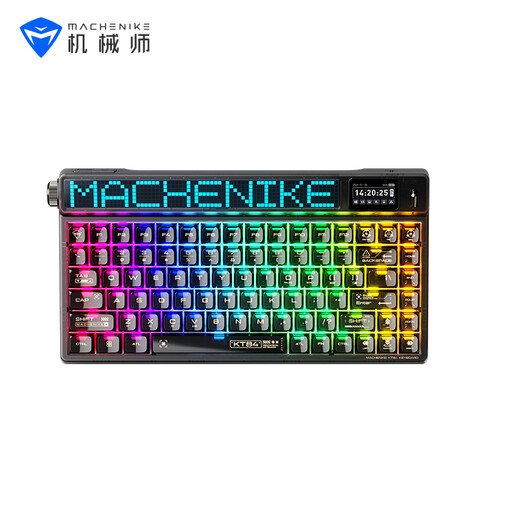
MACHENIKE KT84-B84W 75%, Black, Gateron White switches
Its 75% format is worth examining when notes and other materials need space beside your keyboard.
The product name specifies tri-mode connectivity and a QWERTY US layout. Check its key map for the navigation commands you use, and confirm that the selected switches and US key positions meet your needs.
View on Joybuy
 No image available
MACHENIKE KG87 80%, Latte Switch-Pink
This 80% model gives you another compact-layout option for a desk shared with writing materials.
Its product name specifies tri-mode connectivity, a gasket mount and a QWERTY US layout. Inspect the exact navigation-key arrangement and check whether the key positions suit your usual shortcuts.
View on Joybuy
 No image available
AULA S75 Pro 75%, Star Vektor switches
The compact layout and stated padding make this a model to compare if both desk space and keyboard construction matter to you.
The product name specifies five-layer padding, a gasket design, tri-mode connectivity and hot-swappable switches. Padding is not a measured typing-noise level; confirm the selected layout and switch variant before deciding.
View on Joybuy
 No image available
AULA F75 75%, QWERTY US layout
Consider this compact option if a 75% layout fits your writing workflow, but make the installed switch a deciding check when noise matters.
The product name specifies tri-mode connectivity, PBT keycaps and a QWERTY US layout. Confirm the switch variant and key positions rather than treating its sound-related wording as a typing-noise measurement.
View on Joybuy
Common questions
Are clicky switches suitable for a shared writing desk?
A clicky switch is a poor starting point if avoiding an audible click is your main concern. Corsair describes clicky switches as producing that click; check the exact variant of any keyboard you consider, since a model range may offer different switch types.
Should I choose 75%, TKL or full-size for pitch writing?
Choose by the keys you need dedicated, not by size alone. A 75% board can free desk space if its editing-key arrangement works for you; move to TKL or full-size if you regularly need a dedicated navigation cluster or number pad. Inspect the particular board’s key map before ordering.
Can I remap keys or change switches later?
Yes, if the exact model and variant support the change you want. Keychron lists VIA remapping and compatible low-profile switch hot-swapping for the K3 Max, while Corsair lists hot-swappable switches for the K65 Plus. Check switch compatibility and any configuration requirements for your chosen keyboard.
What should I check before ordering a keyboard online?
Check the selected switch and layout alongside the seller’s terms for returns and support. If you plan to change switches, check how modifications affect the applicable support terms; do not assume that one product’s conditions apply to another.


