Noise-conscious shared-office editors
If you type substantial passages near colleagues, the sound of the exact switch and keyboard matters as much as its mechanical feel.


For editing a short biography near colleagues, start with a keyboard offered in an explicitly quiet or silent switch variant rather than a clicky one, and check the exact variant before ordering. Choose a full-size layout if you rely on a number pad and separated keys; a 75% board takes less desk width, but its condensed navigation must suit the way you edit.
If you type substantial passages near colleagues, the sound of the exact switch and keyboard matters as much as its mechanical feel.
If you revise text on more than one device, check the keyboard’s connection modes, device switching and operating-system support alongside its typing feel.
A compact layout can leave more room on a shared desk, provided you can still reach the navigation keys and shortcuts you use when editing.
For a shared-office keyboard, settle the switch choice first, then check the editing keys and the space available on the desk. A quiet-sounding product description is not a sound measurement for the exact board you will receive.
| Concern | What to check | Who this matters to |
|---|---|---|
| Typing noise | Check the fitted switch variant for an explicit quiet or silent description, and whether the exact board has sound damping. | If my colleagues sit close by, I want mechanical keys without a pronounced click. Around 50% of consumers would put noise control first. |
| Editing keys | Inspect access to arrows, Delete, Home, End and function keys; decide whether you need a dedicated number pad. | When I repeatedly move through and revise a biography, familiar navigation matters more to me than a smaller board. Roughly 30% of consumers would prioritise their editing layout. |
| Desk space and devices | Compare the physical layout with your available desk space, then confirm the connection modes and device-switching controls you need. | With little room at my desk or documents on multiple devices, I can accept a more compact key arrangement for flexibility. About 20% of consumers would make that their primary concern. |
Switch variants within one family can sound and feel different. Razer describes its Green switch as producing a distinctive click, while Logitech offers a separate Tactile Quiet option for MX Mechanical.
Check the switch named for the exact variant in your basket, not just the keyboard family. An explicitly quiet or silent option is a more relevant starting point when colleagues sit nearby.
A 75% layout condenses the key arrangement. Remapping cannot make an unfamiliar physical layout automatically comfortable for your usual editing commands.
Inspect the positions of the arrows, Delete, Home, End, Page Up, Page Down and function keys before choosing the smaller layout.
Keyboard height is only one part of the desk setup. The Health and Safety Executive’s display-screen guidance addresses keyboard position in relation to the screen and elbows.
Keep the keyboard and screen central and position the keyboard just below elbow height. If you use the workstation regularly for work, raise setup concerns through your workplace’s display-screen equipment assessment process.
Hot-swap compatibility depends on the keyboard’s switch format. Keychron specifies compatible low-profile switches for the K3 Max, rather than promising that conventional full-height switches will fit.
Check the stated switch format and compatibility requirements before selecting replacements.
The Pro Type Ultra is a full-size productivity keyboard with a wrist rest and multiple connection modes.
MX Mechanical and MX Mechanical Mini offer low-profile mechanical keys and switching between up to three devices.
The K3 Max ISO offers a compact 75% layout, including a UK-ISO option, with wired, Bluetooth and 2.4 GHz connections.
The SM3 Slim Mechanical Backlit Bluetooth Keyboard is a full-size, low-profile option with wireless connection choices.
These keyboards offer full-size, near-full-size and compact layouts for editing at a shared desk. Check the stated US key layouts against your typing preferences, and treat quiet-typing descriptions as product claims rather than comparable sound measurements.
 No image available
Consider this if you want a full-size editing layout and an explicitly named silent tactile switch variant.
The title specifies 108 keys, a US layout, hot-swappable switches and an 8000mAh battery. Check whether the US key positions suit you and whether the typing sound works in your office.
 No image available
Consider this layout if you want number keys without committing to a conventional full-size arrangement; inspect the key positions against your editing habits.
The title specifies a US QWERTY layout and wired, Bluetooth and 2.4 GHz connection modes. It does not identify the fitted Reaper Switch as a silent variant, so check the sound if nearby colleagues are your main concern.
 No image available
The 80% arrangement may suit an editor who wants a smaller keyboard but prefers to inspect a less condensed layout than 75% before choosing.
The title specifies tri-mode connection, a gasket mount and a US QWERTY layout. Check the physical key positions and the sound of this switch variant for your shared workspace.
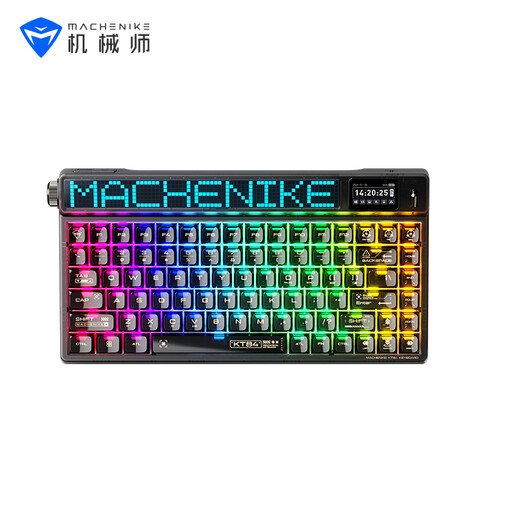 No image available
Consider this 75% board if desk width matters and you are willing to check how its condensed keys affect navigation while editing.
The title specifies tri-mode connection and a US QWERTY layout. Confirm that its key positions and typing sound suit your work before choosing the compact arrangement.
 No image available
This compact option is worth considering when desk space comes before a conventional editing-key arrangement.
The title specifies wired, Bluetooth and 2.4 GHz modes, PBT keycaps and a US QWERTY layout. Check the fitted switch, key positions and typing sound if quiet office use is essential.
If disturbing nearby colleagues is your main concern, start with an explicitly quiet or silent switch option rather than a clicky one. Logitech offers different switch choices within its MX Mechanical range, and Razer describes its Green switch as having a distinctive click, so check the variant fitted to the keyboard you order.
Choose full-size if you rely on a dedicated number pad and a more separated key arrangement; choose 75% if saving desk width matters more and its condensed navigation works for you. Inspect where your commonly used editing keys sit before deciding.
No keyboard profile alone addresses the whole workstation setup. The Health and Safety Executive advises keeping the screen and keyboard central and positioning the keyboard just below elbow height; raise ongoing work-related setup concerns through your workplace’s display-screen equipment assessment process.