
24/7 Customer Support

Free returns

Same-day & Next-day Delivery

Quality Guaranteed

Unlock Your Welcome Offers: FREE Delivery | Up to 80% OFF | Free 30-day JoyPlus trial
Download the APP
Mechanical keyboards appeal to PC gamers, programmers, content creators and home-office users because they offer distinct key feedback, customisation and a wide range of layouts. However, attractive specifications do not always translate into a suitable purchase. The right choice depends on how you type, your desk space, the devices you use and how much maintenance you are willing to handle.
This guide explains the practical details to check before buying, then matches several mechanical keyboards with different UK user profiles.
A compact mechanical keyboard may save valuable desk space, but smaller layouts can remove the number pad, function row or dedicated navigation keys. A 60% model is particularly space-efficient, while a 75% mechanical keyboard usually keeps the arrow keys and function row in a narrower footprint. A 96% or full-size model may be more suitable for spreadsheets, data entry and shortcut-heavy workflows.
Also check the key layout carefully. Several products use a US QWERTY layout, which has differences from UK ISO keyboards, including the position and shape of certain keys. If you regularly type £, €, quotation marks or other symbols, confirm that the physical layout and operating-system settings suit your needs.
A wireless mechanical keyboard may use Bluetooth, a 2.4GHz USB receiver, wired USB-C or a combination of these. Bluetooth is convenient for laptops, tablets and office devices, while 2.4GHz wireless is generally intended for a more direct connection to a desktop or gaming system. Wired mode can be useful when charging, troubleshooting or reducing reliance on a battery.
A tri-mode keyboard normally combines Bluetooth, 2.4GHz wireless and USB-C wired connectivity. Check whether the receiver is included, whether your computer has a suitable USB port and whether the advertised operating-system compatibility includes Windows, macOS or Chrome OS.
RGB lighting, a volume knob, a display and decorative keycaps can make a keyboard appealing, but they should not distract from essential specifications. Software support is more important if you need macros, remapping or saved profiles. Battery capacity also needs context: claimed runtime can vary depending on RGB brightness, wireless mode and usage.
For a simple productivity upgrade, a programmable keypad may provide more value than replacing your entire keyboard. Conversely, gamers and enthusiasts may benefit from hot-swappable switches and customisable lighting.
Mechanical switches commonly use linear, tactile or clicky mechanisms:
A hot-swappable keyboard allows compatible switches to be removed and replaced without soldering. Confirm whether the PCB accepts 3-pin, 5-pin or both switch types. Hot-swapping does not automatically mean every switch or keycap will fit, so check compatibility before buying replacements.
Compare the keyboard’s stated width and key count rather than relying only on labels such as “compact”. A 75% keyboard generally offers a practical balance between desk space and access to frequently used keys. A compact mechanical keyboard can be helpful for smaller UK desks, shared workspaces or users who need extra mouse room.
If you use a number pad for finance, coding shortcuts or data entry, consider a full-size model or a separate programmable keypad. Ergonomic requirements are different: an ergonomic wireless keyboard may use a split layout, negative tilt or a separate number pad rather than conventional mechanical switches.
For wireless models, check:
For UK buyers, also review the listing’s supplied charger or cable information, safety instructions, warranty details and responsible disposal guidance for batteries. Keep liquids away from electronic keyboards, and store loose switches, keycaps and batteries away from young children.
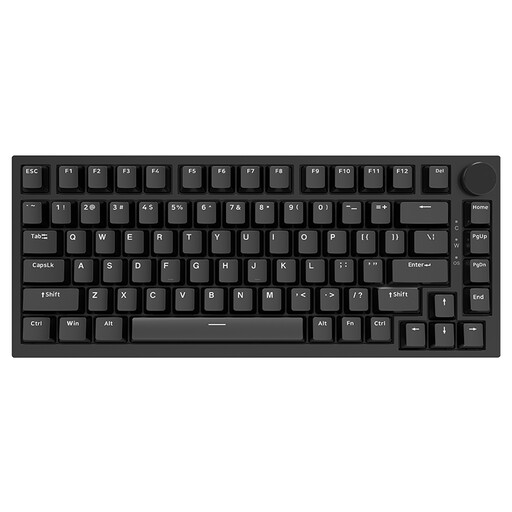
Why This Fits Their Persona: A wired 75% layout keeps the setup straightforward for users who want mechanical feel, RGB lighting and a volume knob without adding wireless charging concerns.
The wired Type-C connection avoids battery-runtime uncertainty, while hot-swappable support allows future switch changes without soldering.
75% layout, hot-swappable 3/5-pin support, PBT keycaps, RGB lighting and CNC volume knob.
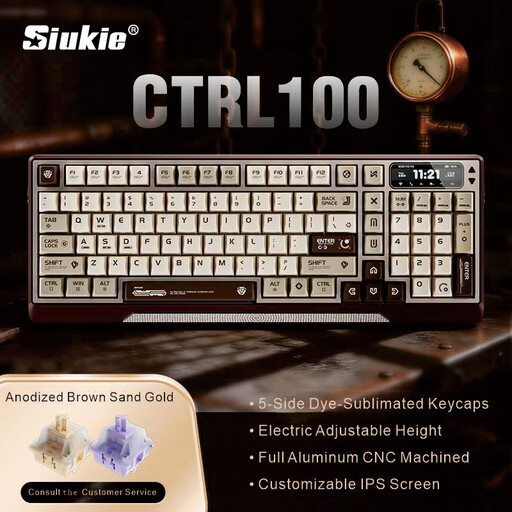
Why This Fits Their Persona: Suitable for enthusiasts and creators who value a distinctive desk setup, multiple connection options and a larger layout that retains more dedicated keys.
The specification clearly identifies Bluetooth, 2.4GHz and USB-C modes, rather than using “wireless” without explaining the connection options.
CNC aluminium body, 96% US QWERTY layout, gasket mount, HMX Cream Taro linear switches and customisable IPS screen.
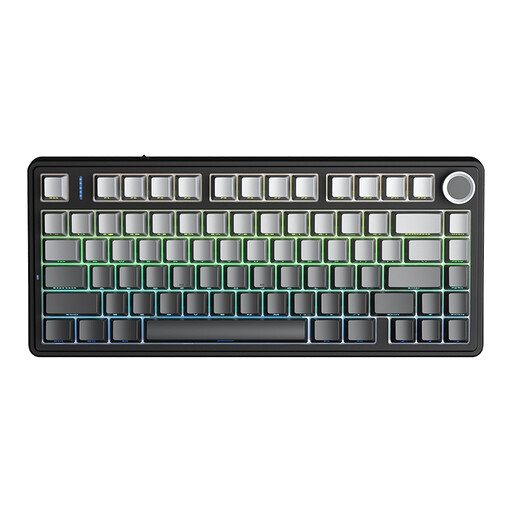
Why This Fits Their Persona: Designed around a compact gaming setup, it suits users moving between wireless play, Bluetooth devices and a wired desktop connection.
Its listed tri-mode design gives a wired fallback when the battery needs charging, while hot-swappable support leaves room for later switch changes.
75% layout, Bluetooth/2.4G/wired modes, RGB backlighting and hot-swappable design.
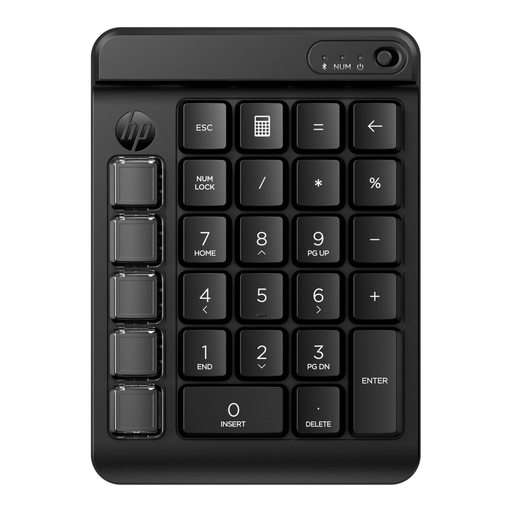
Why This Fits Their Persona: A practical add-on for programmers, editors and office users who need custom shortcuts without giving up their existing keyboard.
It does not require replacing a full keyboard. Nine programmable keys, swappable keycaps and Bluetooth connectivity target shortcut-based workflows directly.
Nine programmable mechanical keys, Bluetooth, Swift Pair support, spill-resistant construction and one AA battery.
We have compiled a complete, real-time list of products that fully satisfy these strict selection criteria and UK safety regulations.
Yes, but switch choice and noise matter. Linear or tactile switches are generally more suitable for shared spaces than clicky switches. Foam layers, gasket mounts and keycap material can also affect sound, although they do not make a keyboard silent. Check the product description and user reviews for acoustic details before ordering.
It can be, particularly when it offers a dedicated 2.4GHz receiver and a wired USB-C mode. Bluetooth is useful for general computing but may not be the preferred connection for competitive gaming. Check whether the receiver is supplied and whether the keyboard can be used while charging.
Lifespan depends on switch construction, usage, cleaning, liquid exposure and the quality of the PCB and stabilisers. A hot-swappable keyboard can be easier to maintain because individual switches may be replaced without soldering. Keep the board dry, disconnect it before cleaning and confirm replacement-part compatibility before making modifications.