Choose the keyboard layout around your desk space and the keys you use while drafting: a compact board leaves more room for a mouse and reference materials, while a full-size board gives frequent numpad users direct access to those keys. Check the exact UK layout and choose a switch feel and noise level that suit your workspace. Multi-device switching matters if you move between separate computers, tablets or phones—not simply because one computer has two monitors.
Who this choice affects
Long-form desk writer
If you spend extended sessions drafting and revising a travel article, consider the keys you repeatedly reach for as well as how the keyboard sits at your workstation. The Health and Safety Executive advises keeping the keyboard just below elbow height.
Space-conscious two-screen user
If your desk also holds a mouse, notes or travel references, a compact layout may leave more working room. Keychron UK identifies its V1 Max as a 75% layout; check whether its key arrangement still covers your editing habits.
Multi-device travel-workflow user
If you write on a computer and also use a separate tablet, phone or laptop, switching the keyboard between host devices may be useful. It offers no particular benefit for switching between two monitors attached to the same computer.
What to check before buying
Start with the space available and the keys you use most; then assess switch feel and whether you actually work across separate devices.
| Concern |
What to check |
Who this matters to |
| Typing feel and noise |
Try the selected switch if possible, particularly for a shared room. Check keyboard height and placement as well as key feel. |
During a long drafting session, I need a feel I can tolerate without distracting people nearby. Around 33% of consumers put typing comfort and manageable noise first. |
| Editing keys |
Compare your frequently used navigation keys, numpad and shortcuts with the exact layout diagram. |
When editing text and entering dates or figures, I want direct access to the keys I use repeatedly; around 27% of consumers make editing controls their primary concern. |
| Device switching |
Check supported host devices and connection modes only if you move between separate computers or mobile devices. |
If I alternate between a drafting computer and another device, changing the keyboard connection needs to fit that routine. Multi-device switching comes first for around 20% of consumers. |
| Desk space |
Allow room for mouse movement and notes; compare the footprint and missing keys of compact and full-size layouts. |
With two screens and travel references on my desk, I need enough clear space to work beside the keyboard. Preserving desk and mouse room is the main concern for around 20% of consumers. |
Common buying mistakes
-
Assuming a quiet switch fixes an awkward workstation
Switch noise and typing posture are different considerations. The Health and Safety Executive advises positioning the keyboard just below elbow height and keeping the screen and keyboard central, while Chelsea and Westminster Hospital NHS Foundation Trust advises straight wrists when typing.
Set up the desk and keyboard position before judging which switch feel suits a long writing session.
-
Choosing a compact layout without checking the keys
A 75% board leaves out the numpad and may change how you reach some editing keys. That can matter more than saved desk space if you use those keys throughout a draft.
List the navigation, formatting and numeric keys you use, then inspect the exact layout diagram for the variant you plan to buy.
-
Buying multi-device switching for two monitors
Two displays connected to one computer remain a single host-device setup. Switching features become relevant when you use the keyboard with separate computers, tablets or phones.
If you only use one computer, give layout, desk fit and switch choice priority over the number of devices the keyboard can pair with.
-
Assuming a keyboard has a UK layout
The physical arrangement of Enter, Shift and punctuation keys can vary between layouts and regional variants. Keychron UK distinguishes UK-ISO options within its keyboard range.
Check the selected variant and its layout image rather than relying on the model family or the country in which it is sold.
Brands to consider
Logitech
Logitech’s MX Mechanical range offers full-size and Mini formats for writers considering a lower-profile mechanical keyboard.
- Logitech identifies an integrated numpad on the full-size MX Mechanical and offers Tactile Quiet, Clicky and Linear switch choices.
- Choose the full-size or Mini variant deliberately; switching between devices is useful only if your workflow includes separate hosts.
Keychron
Keychron UK offers UK-ISO models in compact and full-size formats, including keyboards intended for configurable keymaps.
- Its V1 Max is a compact 75% option; the full-size Q6 Max offers QMK/VIA configuration and wired and wireless connection options, according to Keychron UK.
- Check the exact model and regional layout rather than assuming the same format or features across the range.
Razer
Razer’s BlackWidow V4 is relevant to writers whose work involves repeated shortcut sequences as well as drafting.
- Razer lists six dedicated macro keys and Green or Yellow switch options for the BlackWidow V4.
- Decide whether you will use the macro controls, and assess the chosen switch’s sound rather than assuming gaming-oriented features will improve prose writing.
Joybuy keyboards for this setup
These models offer compact or full-size layouts relevant to drafting at a two-screen desk. Check each variant’s key arrangement and the space available for your mouse before choosing.
 No image available
HyperX Alloy Rise 75 Wireless Keyboard UK
Consider this 75% wireless keyboard if desk width is a priority. Check the selected variant’s physical key layout: “UK” in the title does not by itself establish a UK-ISO arrangement.
View on Joybuy
 No image available
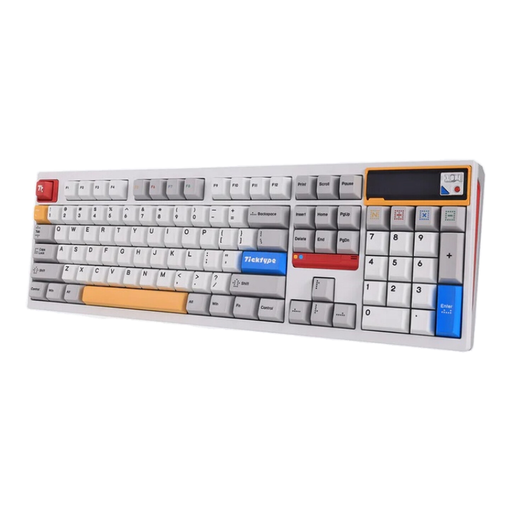
Ticktype DP104 108-key keyboard, Powder White, Silent Tactile switches, US layout
Consider this full-size model if dedicated keys matter more to you than a compact footprint. Its title specifies a 108-key US layout, tri-mode connectivity and Silent Tactile switches; check that the key arrangement suits your typing and that the board leaves enough mouse room. The switch name is not a measure of typing noise.
View on Joybuy
 No image available
AULA S75 Pro 75% Wireless Keyboard, Star Vektor switches
The 75% format suits a desk where you want more space beside the keyboard, while the listed hot-swappable switches may interest you if you plan to change switch feel. Check the selected key layout and assess the actual sound rather than relying on the title’s acoustic description.
View on Joybuy
 No image available
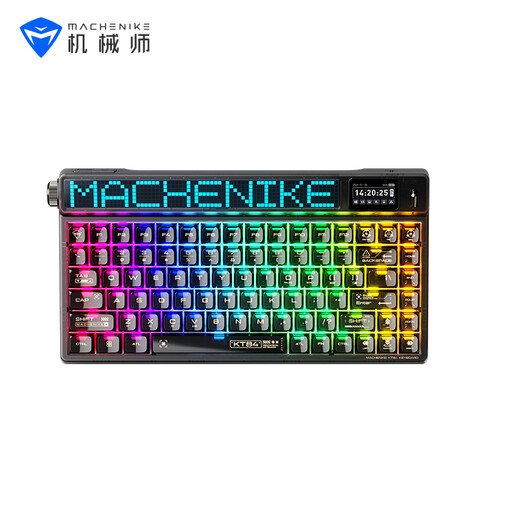
MACHENIKE KT84-B84W 75% Keyboard, Black, Gateron White switch, US layout
This 75% tri-mode model is worth considering if a compact keyboard fits your desk arrangement. Its title specifies a US layout and Gateron White switch; check whether that key arrangement and switch feel suit sustained UK typing.
View on Joybuy
 No image available
MACHENIKE KG87 80% Keyboard, Pink, Latte switch, US layout
Consider this 80% tri-mode model if you want a compact format but prefer to compare its exact key arrangement with a 75% board. The title specifies a US layout and Latte switch; check the layout, footprint and typing sound against your own workspace needs.
View on Joybuy
Frequently asked questions
Do two monitors mean I need a multi-device keyboard?
No: two monitors attached to one computer do not require keyboard switching between hosts. That feature becomes useful if you also use a separate laptop, tablet or phone; Logitech says its MX Mechanical can switch between up to three devices.
Should I choose a 75% or full-size keyboard for drafting?
Choose a 75% layout if room for your mouse and notes matters more than a numpad; choose full-size if you regularly use dedicated numeric or navigation keys. Compare the exact layout before buying: Keychron UK identifies the V1 Max as 75%, while Logitech’s full-size MX Mechanical includes a numpad.
Where should the keyboard sit at a two-screen desk?
Position the keyboard in line with the screen you use most, rather than twisting towards it. The Health and Safety Executive advises keeping the screen and keyboard central and placing the keyboard just below elbow height.
Should I rest my wrists while typing?
Avoid resting your wrists while actively typing. Chelsea and Westminster Hospital NHS Foundation Trust advises keeping wrists straight and letting your hands float above the keyboard while you type; a wrist rest does not replace suitable keyboard positioning.


