
24/7 全天候客户支持

免费退货

当日/次日达

品质保障

开启新人专享福利: 全场免邮 | 低至 2 折 | 免费试用 30 天 JoyPlus 会员
下载 Joybuy
Mechanical keyboards remain a practical upgrade for people who spend long hours gaming, typing, coding or creating content. Their individual mechanical switches provide a distinct key feel, while features such as RGB lighting, hot-swappable sockets and wireless connectivity allow you to tailor a setup around your desk and routine.
However, a higher price does not automatically mean a better fit. Layout, switch behaviour and connection type can matter more than decorative lighting or headline specifications. The following guide explains what to check before buying mechanical keyboards in the UK, followed by suitable options for different users.
A 60% or compact mechanical keyboard can save desk space, but it may omit the function row, navigation keys and number pad. This can slow down spreadsheet work, programming shortcuts or regular office tasks.
A 75% mechanical keyboard usually keeps the function row and arrow keys while reducing width. A 96% or 1800-style layout retains most of the number pad in a narrower frame. A full-size mechanical keyboard is more suitable if you frequently enter figures or rely on dedicated navigation keys.
Also check the language layout. A QWERTY US layout keyboard may place symbols differently from a UK ISO keyboard, particularly around the Enter, Shift and punctuation keys.
An RGB mechanical keyboard can improve visibility and personalise a desk, but it does not determine typing response, wireless stability or switch quality. Some products advertise millions of colours while providing limited software control or only preset effects.
Before paying extra, check whether the keyboard offers per-key controls, onboard profiles, brightness adjustment and compatibility with your operating system. For a quieter office, subdued white backlighting may be more useful than complex effects.
A wireless mechanical keyboard is convenient for a clean desk or multi-device setup, but it introduces battery management and another component: the wireless receiver. Bluetooth is useful for laptops, tablets and general typing, while 2.4GHz wireless is generally the more relevant connection for responsive gaming.
A wired mechanical keyboard avoids charging and pairing issues. For competitive play, also check polling rate, rollover and the cable connection rather than relying on phrases such as “gaming grade”.
Mechanical switches are commonly grouped by feel:
Noise also depends on keycap material, case construction, stabilisers and internal padding. A gasket mount keyboard can offer a more cushioned feel, but the term alone does not guarantee a particular sound or comfort level.
For a tri-mode keyboard, confirm that all three modes are clearly supported: USB wired, Bluetooth and 2.4GHz wireless. Check whether the receiver is included, how the keyboard charges and whether lighting affects battery duration.
USB-C is now common, although the included cable may terminate in USB-A. This matters if you are connecting to a modern laptop with limited ports. For a wireless keyboard with a rechargeable battery, avoid liquid exposure, heat and unauthorised disassembly. Dispose of batteries and electronic equipment through appropriate UK recycling channels.
PBT keycaps generally have a textured finish and are less prone to the glossy appearance associated with prolonged use of some ABS keycaps. Their quality still varies, so inspect the keycap profile and printing method.
A hot-swappable keyboard allows compatible switches to be changed without soldering. Check whether the sockets support 3-pin, 5-pin or both types. A volume knob is useful for meetings, music and editing, but verify whether it controls system volume or only software functions.
A Hall Effect keyboard uses magnetic sensing rather than conventional contact-based switches. Features such as adjustable actuation and rapid trigger can appeal to competitive gamers, but they may add cost and software requirements that are unnecessary for office typing.
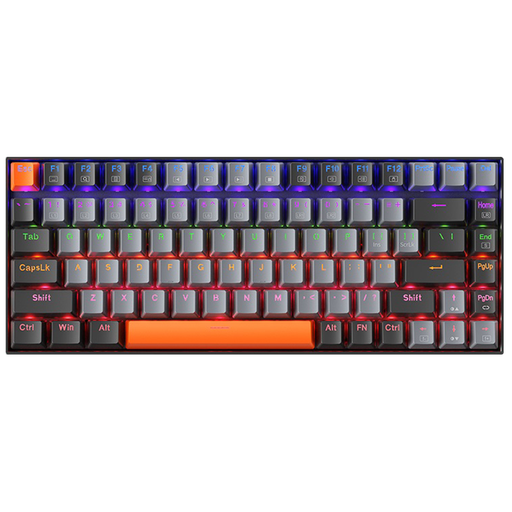
Why This Fits Their Persona: A straightforward wired option for students, first-time buyers and home-office users who want a compact layout without battery management.
The 84-key 75% format keeps arrow and function keys, while the USB connection removes wireless charging concerns.
Red linear switches, detachable USB-C cable, LED backlighting and stated QWERTY US layout.
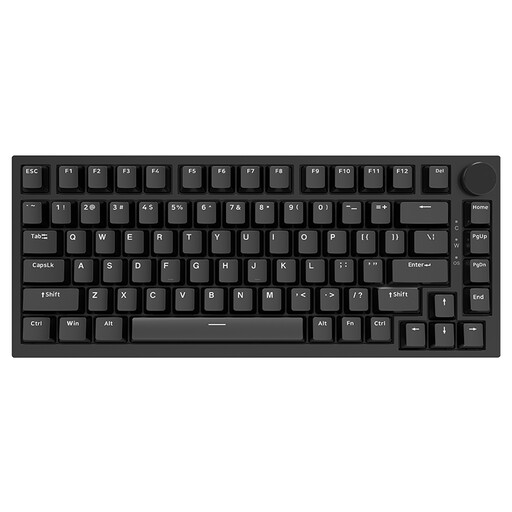
Why This Fits Their Persona: Suitable for programmers, keyboard enthusiasts and creators who want to adjust switches and use a dedicated volume control.
The product description specifies hot-swap support and a 75% layout, rather than relying on RGB as its main selling point.
PBT keycaps, gasket structure, five-layer noise-reduction padding and CNC volume knob.

Why This Fits Their Persona: A practical choice for users switching between a PC, laptop or tablet who still want a compact gaming mechanical keyboard.
Its tri-mode design lets you choose wired, Bluetooth or 2.4GHz operation instead of depending on one wireless standard.
4000mAh battery, full-key hot-swap sockets, RGB lighting, PBT keycaps and a multimedia knob.
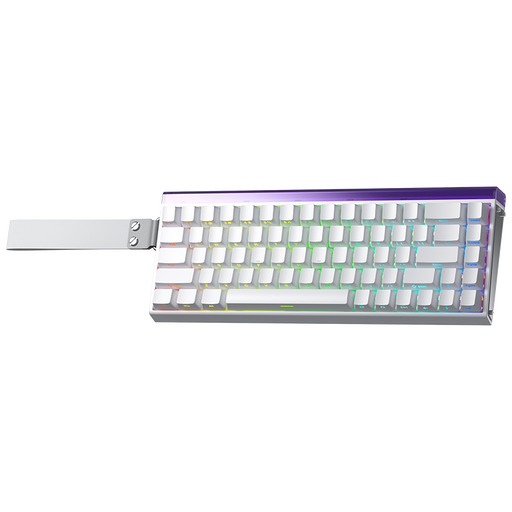
Why This Fits Their Persona: Designed around competitive gaming features for players who prefer a small footprint and adjustable key response.
The stated Hall Effect design and adjustable actuation are specific features to assess, unlike vague responsiveness claims.
68-key US layout, magnetic switches, stated 0.01mm adjustable actuation and 8K polling rate.
We have compiled a complete, real-time list of products that fully satisfy these strict selection criteria and UK safety regulations.
Wired models have no separate battery to charge and generally add little to a computer’s power use. Wireless models require occasional charging or battery replacement, with RGB lighting typically increasing power consumption. The practical running cost depends on charging frequency, battery size and how often the backlight is enabled.
Lifespan varies according to switch construction, stabiliser wear, keycap durability, cleaning and daily use. A hot-swappable keyboard can be easier to maintain because compatible switches may be replaced without soldering. This does not make every internal component replaceable, so check the socket and spare-parts information before purchasing.
Yes, provided the switch and sound profile suit the environment. Linear or tactile switches are usually less disruptive than clicky options, but case design and typing force also affect noise. For shared UK offices, consider a quieter switch, lower-volume keycaps and a keyboard with adjustable backlighting.