
24/7 Customer Support

Free returns

Same-day & Next-day Delivery

Quality Guaranteed

Unlock Your Welcome Offers: FREE Delivery | Up to 80% OFF | Free 30-day JoyPlus trial
Download the APP
Navigating the world of mechanics tool sets can feel overwhelming. With kits ranging from a few dozen pieces to several hundred, it's easy to get drawn in by impressive numbers and slick marketing. However, many buyers find their promising new set is let down by a few common, but critical, flaws.
As a Joybuy Product Recommendation Officer, my role is to help you see past the hype. Before you invest, be aware of these frequent pitfalls that can turn a useful purchase into a source of frustration:
complete socket set in the first place.To ensure you get a kit that performs reliably for years, focus on the core specifications, not just the piece count. Here are the non-negotiable factors to check.
The material of your tools is paramount. Look for sets made from Chrome Vanadium (Cr-V) steel. This alloy is heat-treated to give it the high hardness and tensile strength required to handle significant torque without deforming. It also provides a good level of corrosion resistance, especially when coated with a polished chrome finish. Cheaper carbon steel tools are prone to rounding off, which can damage both the tool and the nut or bolt you're working on, turning a simple job into a difficult one. A quality ratchet and socket set made from Cr-V is a foundational investment.
Sockets and ratchets come in different "drive" sizes, which correspond to the size of the square connector. The three main sizes are:
socket set for car maintenance.The ratchet itself is also important. Look for the tooth count. A 72-tooth ratchet requires only a 5-degree arc to turn a fastener, while a 90-tooth ratchet needs even less. This is a significant advantage when working in the cramped confines of an engine bay.
In the UK, you will almost certainly encounter both metric (mm) and imperial (SAE or AF) fasteners. Modern European and Japanese cars primarily use metric, while many classic British and American vehicles use imperial sizes. Even some modern equipment uses a mix. A good metric and imperial socket set saves you the frustration of discovering you don't have the right size halfway through a car repair tool kit job.
Based on these practical criteria, we've matched a few options from our catalogue to different user needs. These selections prioritise functional design and material quality over sheer piece count.
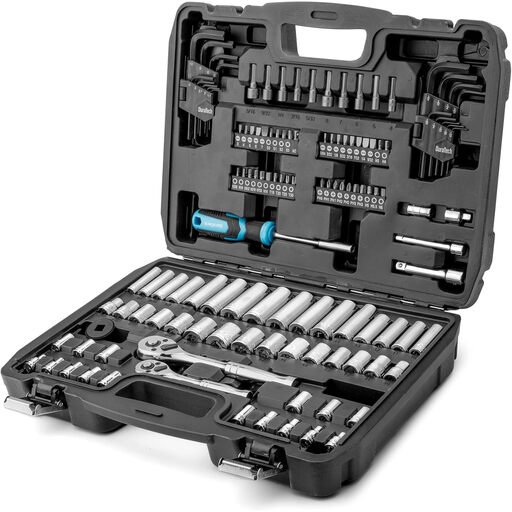
Why This Fits Their Persona: This set provides a fantastic balance for someone tackling occasional car maintenance or home repairs. It's comprehensive enough for most common jobs without the intimidating size and cost of a professional kit.
It avoids the "more is more" trap by focusing on genuinely useful tools. The sockets are Cr-V steel, and the sturdy case keeps everything organised, directly countering the common pitfalls of cheaper sets.
Includes both 1/4" and 3/8" drive ratchets and a versatile magnetic screwdriver with 40 bits, making it an excellent all-in-one DIY tool set.
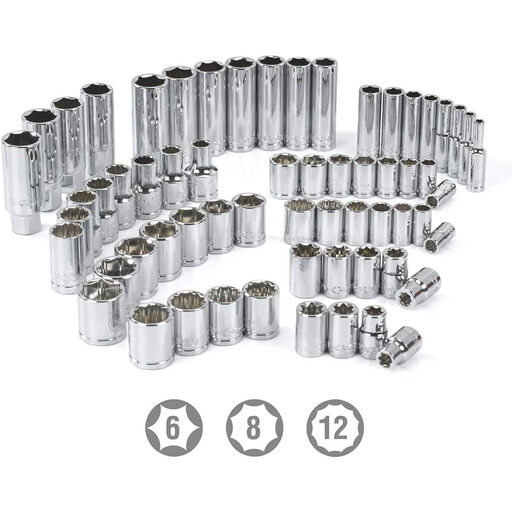
Why This Fits Their Persona: For the dedicated car enthusiast or semi-professional who wants a comprehensive professional tool kit. This set is designed to ensure you have the right tool for almost any mechanical job that comes your way.
While large, the piece count is justified by its breadth of useful tools, including three drive sizes. The well-designed 4-tray case prevents the chaos typical of large, cheap sets.
Features 1/4", 3/8" and 1/2" drives and a full range of metric and imperial socket set options, all made from corrosion-resistant, heat-treated Cr-V steel.
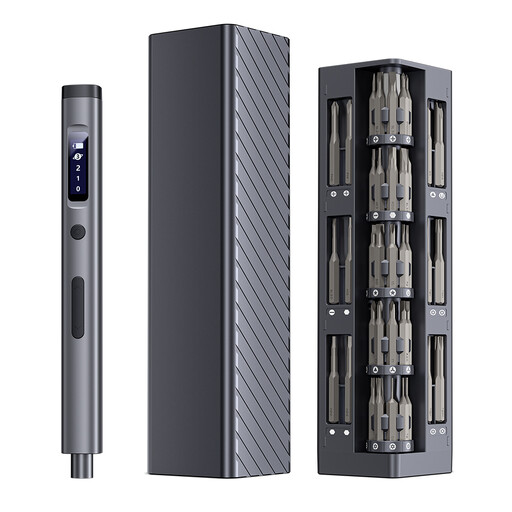
Why This Fits Their Persona: This is for the specialist who works on delicate electronics like laptops, drones or game consoles. A standard mechanics set is too large and powerful; this provides the necessary precision and control.
It sidesteps the "brute force" trap of standard tools. Its adjustable low-torque settings prevent stripping tiny, fragile screws—a common and costly mistake in electronics repair.
A purpose-built electric screwdriver set with 52 precision bits, adjustable electric torque (0.1-0.35 Nm) and a compact magnetic case for organised, specialist work.
The number refers to the teeth in the ratchet's internal gear. A higher tooth count means the ratchet needs to move a smaller distance to "click" and engage the next tooth. For example, a 72-tooth ratchet has a 5-degree swing arc, while a 90-tooth ratchet has a 4-degree arc. This makes higher-tooth-count ratchets much more effective in tight spaces where you have limited room to move the handle.
For anyone working on a range of vehicles or machinery, the answer is almost certainly yes. While most modern cars sold in the UK use metric fasteners, you will frequently encounter imperial sizes on classic cars, American vehicles, garden machinery and even some household items. Having a metric and imperial socket set from the start prevents getting stuck on a job for want of the correct size.
The first step is to choose tools made from corrosion-resistant material like Chrome Vanadium steel with a quality chrome plating. After use, especially in damp conditions, wipe your tools down with a dry cloth to remove moisture and grime. For long-term storage, keeping a silica gel packet in your toolbox can help absorb ambient moisture. A very light coating of a water-displacing spray or machine oil on ratcheting mechanisms can also prolong their life.