
24/7 Customer Support

Free returns

Same-day & Next-day Delivery

Quality Guaranteed

Unlock Your Welcome Offers: FREE Delivery | Up to 80% OFF | Free 30-day JoyPlus trial
Download the APP
Investing in a good mechanics tool set is a rite of passage for any DIY car enthusiast or home mechanic. A quality kit can save you hundreds of pounds in garage fees and provide the satisfaction of a job well done. However, the market is flooded with options, and it's easy to fall into common traps that leave you with a box of mismatched, low-quality tools.
As a Joybuy Product Recommendation Officer, my role is to help you see past the marketing clutter. Before you spend your hard-earned money, let's look at the three most common pitfalls that catch out UK buyers and how to sidestep them.
tool set with carrying case is essential for organisation and portability. Many manufacturers cut costs here. A case with weak clips or a brittle plastic shell will crack, leaving you with a disorganised jumble of sockets and spanners.To ensure you get a durable and effective automotive tool set, focus on these non-negotiable specifications.
The foundation of any good tool is the material it's made from. For a mechanics tool set, the minimum standard you should look for is Chrome Vanadium (Cr-V) steel. This alloy is heat-treated to provide the hardness needed to handle high torque without deforming. A polished chrome finish is not just for looks; it provides a crucial layer of resistance against rust and corrosion, which is essential in the damp UK climate. Some higher-end bits may use S2 steel, which offers even greater hardness and is ideal for screwdriver or hex bits that face intense rotational force.
The heart of any socket set is the ratchet. Look for a 72-tooth ratchet mechanism. This allows the handle to engage with a swing arc of just 5 degrees, which is a significant advantage when you're working in the tight confines of an engine bay.
You will also need to consider the drive size (the square peg the socket attaches to):
For anyone working on a range of vehicles in the UK, a metric and imperial socket set is highly advisable. While most modern cars are metric, classic British, American and some older vehicles still use imperial (SAE) fasteners.
Instead of a one-size-fits-all approach, we have matched some options to specific user needs.
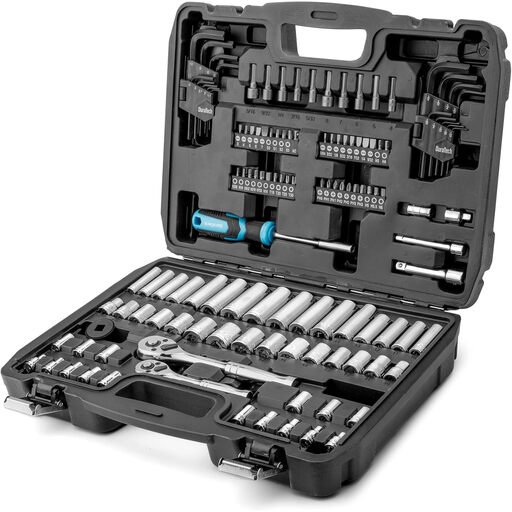
Why This Fits Their Persona: An excellent first car tool kit for apprentices or those starting their home garage. It provides the core tools needed for most basic maintenance tasks without an overwhelming price tag.
This set avoids the "filler" trap by focusing on genuinely useful components. It is constructed from heat-treated Cr-V steel, sidestepping the "mystery metal" issue and comes in a robust case.
Includes both 1/4" and 3/8" drive 72-tooth ratchets and a mix of metric and imperial sockets. The addition of a magnetic screwdriver with 40 bits adds significant versatility.
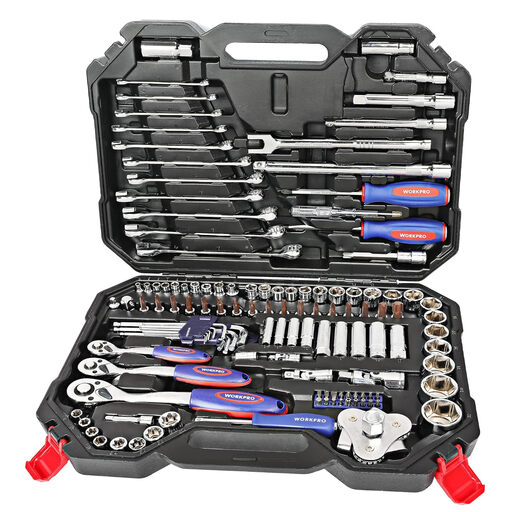
Why This Fits Their Persona: For the enthusiast who tackles everything from car repairs to home DIY. This kit's breadth makes it a true all-in-one solution for the garage and the house.
The tools feature a triple-chrome-plated finish over Cr-V steel for superior rust protection. The durable blow-moulded case is designed for workshop environments, solving the flimsy case issue.
Its main advantage is the inclusion of all three common drive sizes: 1/4", 3/8" and 1/2". This provides maximum versatility for almost any mechanical task you might encounter.
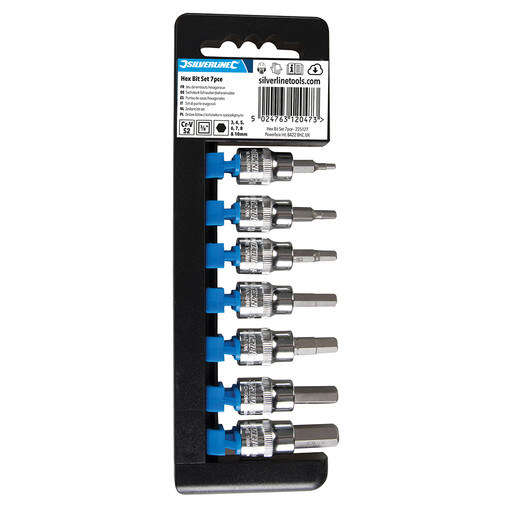
Why This Fits Their Persona: For the mechanic who already owns a basic ratchet and socket set but needs specific, high-strength bits for jobs like removing brake calliper bolts or transmission plugs.
This is the opposite of a "filler" product. It is a specialised set designed for a specific purpose, focusing on material quality (S2 steel) over quantity to ensure it performs under high stress.
The bits are made from hardened and tempered S2 steel, which is stronger than the Cr-V used for standard sockets, providing superior performance and durability for high-torque hex fasteners.
We have compiled a complete, real-time list of products that fully satisfy these strict selection criteria and UK safety regulations.
The "drive" size refers to the size of the square hole where the tool connects to the ratchet. A 1/4" drive is for smaller fasteners and delicate jobs. A 3/8" drive is the all-purpose standard for most car repairs. A 1/2" drive is for heavy-duty tasks requiring significant force, like suspension work or stubborn axle nuts. A good starter car tool kit will often focus on 1/4" and 3/8" drives.
The first step is to buy tools with a good chrome-plated finish. After use, wipe them down with a dry cloth to remove moisture and grease. For long-term storage, especially in a damp garage or shed, a light spray of a water-displacing lubricant (like WD-40) or a dedicated tool protectant can provide an extra layer of defence against corrosion.
You really need both. While almost all cars manufactured in the last 20-30 years use metric fasteners, you will frequently encounter imperial (SAE) sizes on classic British cars, American vehicles and even on some components of older European models. A comprehensive metric and imperial socket set ensures you are prepared for any job and is a much wiser investment.