
24/7 Customer Support

Free returns

Same-day & Next-day Delivery

Quality Guaranteed

Unlock Your Welcome Offers: FREE Delivery | Up to 80% OFF | Free 30-day JoyPlus trial
Download the APP
Buying one of the many mechanics tool sets available online can appear straightforward: choose the largest piece count, look for chrome plating and add it to your basket. However, a high number of components does not automatically mean the set suits your vehicle, workshop or repair routine.
For UK DIY enthusiasts, home mechanics and tradespeople, the more useful approach is to check drive sizes, fastener coverage, storage and torque control before comparing prices. This guide explains the main buying pitfalls and highlights suitable options for different types of user.
A 300- or 450-piece kit may include many duplicate screwdriver bits, adapters or small accessories while omitting the socket sizes you regularly need. A smaller socket set with a sensible range of metric sizes can be more practical for routine car servicing.
Check whether the set includes:
Terms such as “heavy duty” are not useful unless supported by material information. Chrome vanadium steel, often shown as Cr-V, is widely used for sockets, ratchet handles and spanners because it can be heat-treated for hardness and strength. A polished or plated surface can also make tools easier to clean and help resist corrosion, but it will not replace proper storage and maintenance.
Avoid kits that do not clearly state the material, finish or drive size. For demanding applications, also check whether bits are made from a separate hardened material such as S2 steel.
A ratchet spanner set is designed to speed up fastening and removal. It is not a substitute for a torque wrench. Wheel fasteners, brake components and engine parts may have torque specifications set by the vehicle manufacturer. Tightening by feel can lead to over-tightening, damaged threads or insufficient clamping.
A torque wrench or digital torque adapter should be selected according to the required torque range and drive size. Always follow the vehicle or component manufacturer’s instructions.
The most common drive sizes in general-purpose mechanics tool sets are 1/4-inch, 3/8-inch and 1/2-inch. A 1/4-inch drive is useful for smaller fasteners and confined spaces. A 3/8-inch drive provides a versatile middle ground for many car and motorcycle jobs, while 1/2-inch drive tools are suited to larger fasteners requiring more leverage.
A set containing more than one drive size is often more flexible than a single-drive kit. Check whether adapters are included, but do not use an adapter to exceed the rated capacity of the tool.
Metric sockets are generally essential for UK vehicle maintenance, but metric and imperial sockets can be useful if you own classic vehicles, imported cars, machinery or older household equipment. Look at the actual size list rather than relying on the product title.
For repeated workshop use, clear size markings are valuable. Different markings or recess designs for metric and SAE sockets can help reduce selection errors.
For bicycle and motorcycle repair tools, a low-range torque wrench may cover approximately 2–26 N·m. Automotive work often requires a higher range, while larger mechanical repairs may need a 1/2-inch drive tool with a substantially higher capacity.
A stated accuracy figure, such as ±3%, is useful information, but it should be considered alongside the operating range, direction of measurement and calibration guidance. Digital tools may provide audible and visual alerts, while click-type tools give a physical or audible release. Neither should be used beyond its specified range.
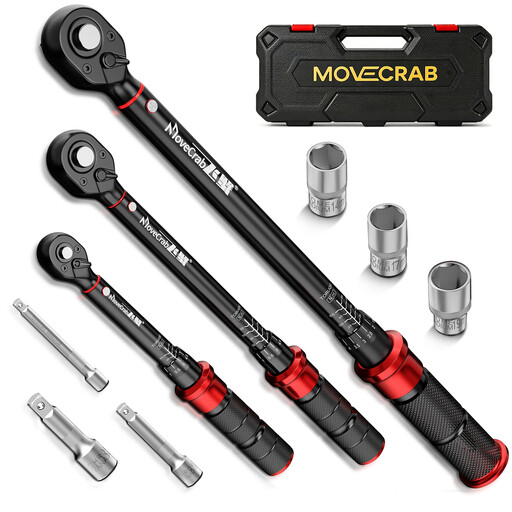
Why This Fits Their Persona: A compact starting point for occasional home maintenance, basic car jobs and simple motorcycle repairs where a large workshop inventory is unnecessary.
Its nine-piece format makes the scope clear, helping buyers avoid paying for a large collection of duplicates they may not use.
Nine-piece mechanical tool set; no installation required; suitable for basic maintenance and repair tasks.
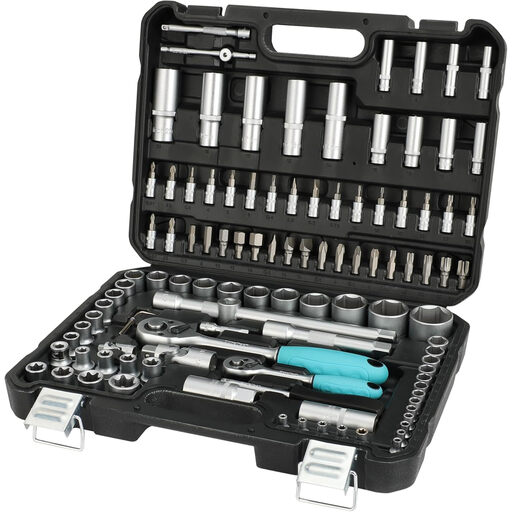
Why This Fits Their Persona: Suitable for a home garage or workshop user who wants a broad socket and accessory selection for regular car and motorcycle maintenance.
The listing specifies heat-treated Cr-V sockets, S2 bits, 1/4-inch and 1/2-inch ratchets, plus visible size markings.
108 pieces; 72-tooth quick-release ratchets; universal joints and extension bars for harder-to-reach fasteners.
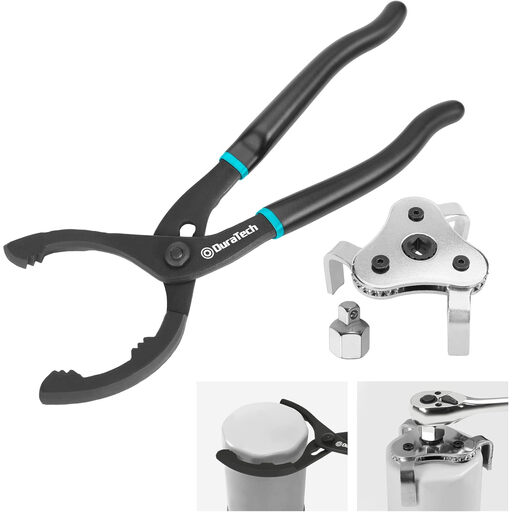
Why This Fits Their Persona: A practical choice for people carrying out frequent oil changes on cars, motorcycles, trucks or workshop equipment.
It uses two removal designs rather than relying on one grip style, with a 63–103 mm three-jaw tool and long-handled pliers.
Two-piece set; hardened steel construction; adapters for 3/8-inch and 1/2-inch drives.
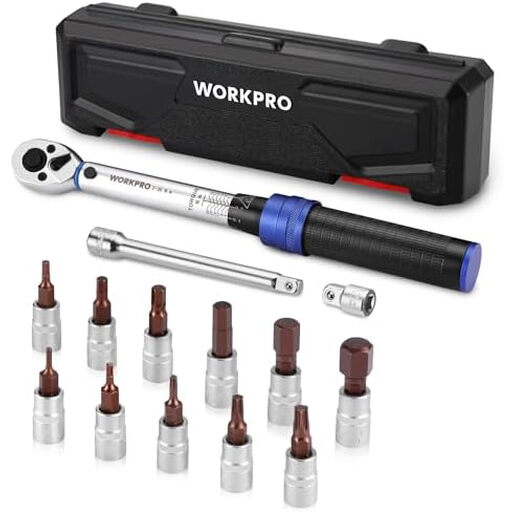
Why This Fits Their Persona: Designed for bicycle owners, motorcycle users and mechanics working on smaller fasteners where controlled tightening matters.
Its 2–26 N·m range is clearly stated, so buyers can compare it with the torque requirements of their specific components.
14-piece set; 1/4-inch drive; 72-tooth reversible mechanism; stated accuracy of ±3%.
We have compiled a complete, real-time list of products that fully satisfy these strict selection criteria and UK safety regulations.
Before use, inspect tools for cracks, deformation, damaged ratchet teeth or worn jaws. Wear suitable eye protection when working beneath a vehicle or near springs and pressurised components. Select the correct size and ensure the socket is fully seated before applying force.
Keep tools dry, wipe away oil and road salt, and store them in a case or roll. Lubricate ratchet mechanisms according to the manufacturer’s instructions. For torque tools, return an adjustable wrench to its lowest setting after use where instructed, remove batteries from electronic devices during long-term storage and follow any calibration guidance.
Many are suitable for routine tasks such as removing fasteners, replacing accessible components and carrying out general maintenance. Check the socket sizes, drive sizes and accessories against your vehicle before buying. Specialist work may require separate tools such as a brake line spanner, oil filter spanner or torque wrench.
Chrome vanadium is a common material for hand tools and can offer useful strength when correctly heat-treated. Suitability depends on the individual tool, rated capacity, finish, storage and intended application. Do not use hand tools beyond their stated limits or substitute them for impact-rated equipment.
A socket set handles the fitting and removal of fasteners, while a torque wrench controls tightening force. If your vehicle, bicycle or motorcycle manufacturer provides torque values for a component, a compatible torque tool is a sensible addition to your automotive hand tools. Always use the correct torque range and follow the relevant service instructions.