Growing workstation archive keepers
If recordings remain at one desk and the collection keeps growing, stated capacity and a dependable plan for additional copies matter more than portability.


Choose a desktop external hard disk drive (HDD) if meeting recordings will stay beside the home workstation and the archive is likely to grow substantially. A portable HDD suits an archive that needs to travel, while a portable solid-state drive (SSD) is worth considering when frequent transfers or portable handling matter more than the largest stated capacity. Whichever route you take, check the workstation connection, power requirements and how you will protect and keep separate copies of the recordings.
If recordings remain at one desk and the collection keeps growing, stated capacity and a dependable plan for additional copies matter more than portability.
A portable drive makes more sense when recordings move between home and other workplaces. Check the required cable and plan how access to the files will be controlled.
If you copy recordings often or regularly carry the drive, a portable SSD may fit the workflow. Check the exact model’s stated durability features and the workstation’s USB capability.
For a home-workstation archive, decide whether the drive will remain at the desk, travel between locations or be used for frequent transfers; then check the connection and protection arrangements for that choice.
Consider it when: The recording collection will grow at a fixed workstation. Seagate UK lists its Expansion Desktop range in capacities from 4 TB to 30 TB.
Trade-off: This is a desk-based, mains-powered arrangement; Seagate’s setup instructions require a live power outlet.
Consider it when: The archive needs to move between locations while retaining multi-terabyte capacity; Seagate and Western Digital list portable models for that purpose.
Trade-off: Connections and supplied cables vary by model, so portability alone does not establish that the drive will connect to your workstation.
Consider it when: Recordings are copied or carried frequently. Samsung UK lists USB 3.2 Gen 2 and stated drop, dust and water resistance for the specific T7 Shield 4 TB model.
Trade-off: The workstation and cable affect delivered transfer speed, while this 4 TB example does not offer the largest stated capacities listed for Seagate’s desktop range.
| Concern | What to check | Who this matters to |
|---|---|---|
| Archive capacity | Compare recordings already held and the planned retention period with stated capacity, leaving room for growth. Usable capacity may display differently from the decimal TB figure. | If my recordings will stay at one desk and keep accumulating, I need room to retain them without repeatedly moving the archive. Around 33% of consumers put capacity first. |
| Recording security | Identify who can access recordings containing personal information; check the exact drive’s encryption options or an appropriate operating-system method, and plan password recovery. | When I carry recordings containing identifiable voices or other personal information, controlling access is my main concern. For around 27% of consumers, that protection is the primary need. |
| Frequent transfers and handling | Check the exact SSD’s capacity, USB specification and stated durability features, alongside the workstation port and cable. | If I offload recordings often or regularly carry the drive, transfer workflow and handling matter more to me than maximum desk-based capacity. Around 27% of consumers place that need first. |
| Connection and power | Inspect the workstation’s ports and confirm the chosen model’s supplied cable, USB requirements and need for a power outlet. | I want to know the drive will connect at my desk without an unexpected cable or power requirement. That setup certainty is the first concern for around 13% of consumers. |
Failure, loss, theft or an incident at home could remove the only copy. A larger drive does not solve that single-copy risk.
The National Archives advises keeping several copies in different physical locations and, where practical, on different storage technologies. Periodically check that archived files remain readable.
Seagate’s Expansion Desktop needs a power outlet. Its One Touch Portable manual says a USB-C-to-USB-A cable is not included, which matters if the workstation has a USB-A port.
Before ordering, identify the workstation ports, the exact model’s included cables and any separate power supply it requires.
An encryption feature needs appropriate setup and password management. The Information Commissioner’s Office treats encryption as part of a risk-based approach to protecting stored personal information, not a replacement for access controls or separate copies.
Decide who should access the recordings, enable a suitable protection method where needed, and keep a separate recovery plan.
Connector shape alone does not establish the transfer mode available through the workstation and cable.
If frequent large transfers drive the purchase, compare the exact drive’s USB requirements with the host port and cable before choosing an SSD for its stated performance.
Its Expansion Desktop and One Touch Portable ranges illustrate different choices for a fixed archive and an archive that travels.
The portable T7 Shield SSD is relevant when frequent transfers and stated rugged features are priorities.
Its My Passport range includes portable, multi-terabyte HDD options, including a UK-listed 5 TB model.
These choices cover one portable SSD and four portable HDDs for recording archives that may need to travel. Compare each capacity with your existing recordings and expected growth; keep separate copies whichever drive you choose.
 No image available
Consider this portable SSD if copying recordings frequently is a priority.
The title specifies USB Type-C 3.2 Gen 2, also labelled 3.1 Gen 2. Check the workstation port and cable before relying on the stated USB mode; choose archive capacity according to your own retention needs.
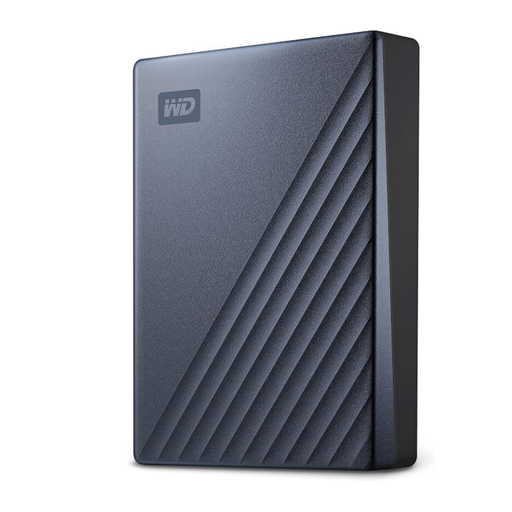 No image available
This portable HDD is an option when a recording archive needs to move between locations.
If you use macOS, check the file-system setup before storing recordings, as the product information indicates reformatting may be needed. Confirm how any security features will be enabled and managed.
 No image available
Consider this portable HDD for a Mac-oriented recording archive that may be carried between locations.
Windows use is described as requiring a downloadable HFS+ driver, so confirm the intended workstation setup. Check the applicable warranty term for this exact listing before buying.
 No image available
This portable HDD is worth considering if 2 TB accommodates the recordings you intend to retain and carry.
For a macOS workstation, check the required downloadable-driver setup. Compare the stated capacity with expected archive growth before committing to this variant.
 No image available
This portable HDD suits a recording archive when its 4 TB stated capacity fits your retention plans.
The title specifies USB 3.0. Check the file-system setup if using a Mac, and decide on a suitable protection method if the recordings contain personal information.
No: one external drive is one copy, not a complete preservation plan. The National Archives advises keeping several copies in different physical locations and using different storage technologies where practical; check periodically that the recordings remain readable.
Assess the risk and use appropriate protection if the recordings contain personal information and UK data-protection obligations apply to your processing. The Information Commissioner’s Office identifies encryption as a way to protect stored personal information, particularly if a device is lost or stolen; also plan access controls and password recovery.
It may, provided the exact drive, port and cable are compatible. Seagate’s One Touch Portable manual specifies a USB 3.0-or-higher port for USB-A use and says a USB-C-to-USB-A cable is not included, so check what the chosen model supplies.
Check the exact model: Seagate’s Expansion Desktop setup instructions require its power supply to be connected to a live outlet. Confirm that the workstation has a suitable connection and that a nearby outlet is available before choosing a desk-based drive.