At-home single-smoothie makers
If your afternoon break happens in the kitchen, a compact blender with a cup you can drink from may fit better than setting up a larger jug blender. Check how much space the appliance and its bottles need between uses.


For a single melon smoothie made mainly at home, a compact mains-powered personal blender with a to-go bottle lets you blend and drink from the same container without a charging routine. Choose a cordless model if you need to blend away from a socket, but account for charging and its blade-base cleaning instructions. Whichever format you choose, check the usable cup capacity and the manufacturer’s guidance for your ingredients.
If your afternoon break happens in the kitchen, a compact blender with a cup you can drink from may fit better than setting up a larger jug blender. Check how much space the appliance and its bottles need between uses.
If you need to blend away from a mains socket, look at rechargeable models, the carrying lid and how you will keep the appliance charged. Good Housekeeping UK’s portable-blender testing also shows why cleaning the powered base deserves attention.
If you plan to add ice or frozen fruit to melon, check the exact model’s ingredient instructions. Good Housekeeping UK reported that the Ninja Blast handled frozen ingredients in its test, but that result does not establish what another small blender can handle.
Decide where you will blend first: making a smoothie beside a kitchen socket and making one away from it call for different power arrangements.
Choose it when: You usually make one smoothie at home and want to use a blending cup without managing a battery.
Trade-off: Blending requires a suitable mains socket, even if you can take the finished drink with you.
Choose it when: You need to blend a single drink away from a socket, rather than merely carry it after blending.
Trade-off: You must manage charging and follow the model’s rules for cleaning its powered blade base.
| Concern | What to check | Who this matters to |
|---|---|---|
| One-drink preparation | Check usable cup capacity, the maximum-fill line and whether the blending cup doubles as a drinking bottle. | I want to make one melon smoothie during a break without setting up a large jug or finding another cup. Around 44% of consumers put that simple single-drink routine first. |
| Blending away from a socket | Check the charging connection, the maker’s stated blends per charge and how the lid is intended to be carried. | If my break takes me away from the kitchen, I need to be able to blend the drink where I am. For around 33% of consumers, that portability is the primary concern. |
| Ice or frozen additions | Check the exact model’s ingredient instructions and fill guidance; look for model-specific testing if frozen additions are important. | I sometimes add ice or frozen fruit, so I need a blender whose instructions cover my recipe rather than relying on its small size as a clue. That ingredient capability comes first for around 23% of consumers. |
A rechargeable blender adds a charging routine without helping much if the smoothie is always made in your kitchen. Some powered bases also have more restrictive cleaning instructions.
Choose cordless for a real away-from-socket need; otherwise, compare compact mains models with cups that suit your usual serving.
Frozen-ingredient results depend on the model. Good Housekeeping UK reported that the Ninja Blast handled frozen ingredients in its test, but that finding should not be extended to other portable blenders.
If ice or frozen fruit is part of your smoothie, check the exact model’s instructions and seek model-specific test results where available.
Removable blades can make parts easier to reach, while a base with a charging port may not be submersible. Good Housekeeping UK noted this restriction for the Ninja Blast it tested.
Check which parts detach, which are dishwasher-safe and how the manufacturer says to clean the powered section.
For a UK mains blender, the supplied plug arrangement is part of the buying decision. Electrical Safety First advises checking for a UK three-pin plug with a fuse and cautions against unverified third-party online sellers.
Check the mains model’s supplied plug information and buy from a retailer you can identify. For a rechargeable model, check its stated charging arrangement instead.
Relevant if you want to make a smoothie at home in a compact mains-powered blender and take it away in a bottle.
Relevant if blending a single drink away from the kitchen is a priority.
Relevant if you want to compare countertop personal blenders and portable formats within one brand’s range.
These models cover compact preparation at home and cordless blending away from a socket. Start with where you will make the smoothie, then compare the cup and cleaning arrangement of the models that fit.
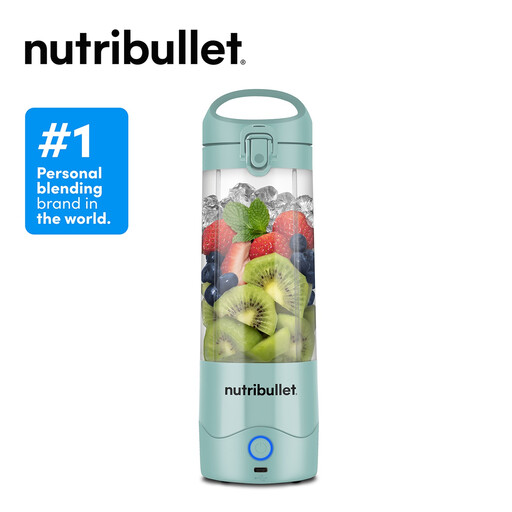 No image available
Consider this cordless cup if you want to blend a single smoothie away from a socket. Its listing names a 475 ml cup, to-go lid and USB-C charging cable, and claims 15 or more blending cycles; check the maximum-fill line against your serving and the maker’s ingredient instructions before adding frozen fruit.
 No image available
This compact mains-powered model suits making a smoothie at home and taking the finished drink in a bottle. Tefal specifies removable blades and one-button control for the BL15FDG0; check its maximum-fill guidance and confirm the supplied UK plug arrangement before buying.
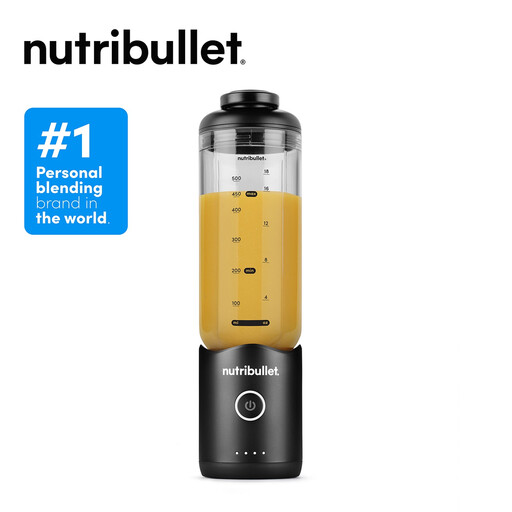 No image available
Consider this cordless model if you want to take the drink in its detachable vessel. The Joybuy listing describes a travel lid and a removable, dishwasher-safe blade block; follow its instructions not to immerse the motor base or blend hot liquids, carbonated drinks or hard solid ingredients. Check the charging details if you will blend away from a socket regularly.
 No image available
This model is worth comparing if you prepare a smoothie at home and want to drink from the blending cup. Its listed 900 ml cup may be larger than you need for one break-time serving; check the usable fill guidance, the included lid and the supplied UK plug arrangement. Follow the exact model’s instructions if you intend to blend ice or frozen fruit.
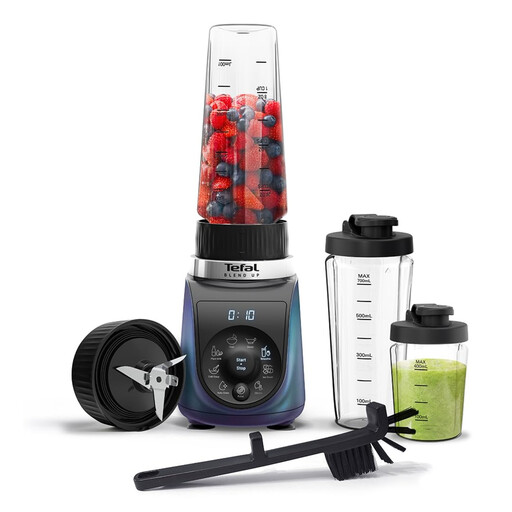 No image available
Consider this mini blender for making one smoothie at home if you prefer a model with programme choices. The listing describes a 0.7 L vessel; check its maximum-fill guidance and whether that vessel is intended for drinking or carrying before relying on it as a to-go cup.
Choose a cup around your usual finished serving, while allowing for the model’s maximum-fill line and the ingredients you add. For comparison, Tefal specifies two 0.6 L bottles for its Mix & Move BL15FDG0; that figure describes bottle capacity, not a serving you must fill.
Choose a mains-powered personal blender if you normally blend at home; choose rechargeable power if you need to blend away from a socket. For the latter, check charging and battery claims for the exact model. Good Housekeeping UK reported more than 10 blends per charge for the Ninja Blast in its 2026 test, not for portable blenders generally.
Unplug a mains blender before cleaning and follow its manufacturer’s instructions for detachable and dishwasher-safe parts. Electrical Safety First also advises keeping the appliance dry and checking blades for damage; never assume a rechargeable powered base can be submerged.
Check the supplied plug arrangement before buying a UK mains-powered blender. Electrical Safety First advises a UK three-pin plug with a fuse and recommends buying from a reputable retailer; a rechargeable USB model has a different power arrangement that you should check separately.