
24/7 Customer Support

Free returns

Same-day & Next-day Delivery

Quality Guaranteed

Unlock Your Welcome Offers: FREE Delivery | Up to 80% OFF | Free 30-day JoyPlus trial
Download the APP
A men’s windbreaker jacket can be useful throughout the UK: over a T-shirt on a breezy commute, over a base layer on a run or in a backpack during a changeable hiking trip. However, many jackets appear more capable than they are. Marketing language can make a thin shell sound suitable for prolonged rain, while a fashionable loose fit may become uncomfortable during active use.
As the Joybuy Product Recommendation Officer, I focus on practical details that help you separate useful features from vague claims. Before buying, watch for these common pitfalls.
A jacket described as water-repellent may shed light drizzle, but that does not automatically make it a waterproof men’s windbreaker. Water resistance can depend on the fabric treatment, seams, zip construction and length of exposure.
For short showers or passing drizzle, a treated woven shell may be sufficient. For persistent rain, look for clearly stated waterproof construction and sealed seams. If a listing only mentions “water-repellent” or a durable water-repellent finish, treat it as light-weather protection rather than a replacement for a rain jacket.
A very lightweight men’s jacket may pack easily, but a rigid fabric can restrict your arms when running or climbing. It can also feel clammy if the design does not allow heat to escape.
For active use, check for stretch fabric, a suitable cut and ventilation features. Four-way stretch, elastic cuffs and an adjustable hem can make a noticeable difference when cycling, hiking or reaching for a train handrail.
A packable anorak jacket is convenient for travel, but pullover designs can be slower to remove and may offer less ventilation than a full-zip jacket. Also check whether the storage pocket is stated clearly and whether essential items can be secured.
A jacket that packs small but lacks zipped pockets may be less useful for commuting or running. Consider how you will carry your phone, keys and travel card before prioritising minimum packed size.
Fabric weight is often shown in GSM, meaning grams per square metre. A 70–85 GSM shell is particularly light and suitable for carrying as an emergency layer. A 140–170 GSM woven jacket may feel more substantial and offer more comfortable layering, although GSM alone does not determine wind resistance or durability.
Material also affects comfort and care. Nylon is commonly used for lightweight, packable shells. Polyester and elastane blends can provide stretch, which is useful for a men’s running jacket or men’s hiking windbreaker. If recycled materials matter to you, check the percentage and whether it applies to the main body fabric rather than assuming the whole garment is recycled.
Look for precise wording:
For changeable British weather, a breathable windbreaker with a fluorine-free water-repellent treatment can be a sensible middle layer. It is not the same as a fully waterproof shell.
Do not rely on small, medium or large labels alone. Compare the garment’s chest and length measurements with a jacket you already wear. A loose cut may be useful over a jumper, while a closer fit can reduce excess fabric during running.
Check practical details such as zipped hand pockets, an adjustable hood, elastic cuffs and a drawcord hem. These features help retain personal items and reduce draughts. For travel, a jacket that fits into its own pocket or a backpack takes up less space, but confirm the product listing rather than assuming it is included.
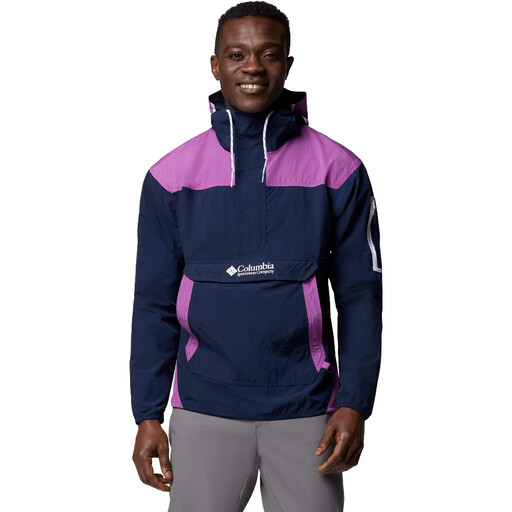
Why This Fits Their Persona: Its lightweight pullover design suits occasional walkers, commuters and first-time buyers who want a simple layer for breezy UK days.
The listing states a 100% nylon fabric, 75 GSM weight, adjustable hood and hem and two zipped hand pockets, giving clearer practical information than a generic “lightweight” claim.
100% nylon construction; packable format; elastic cuffs and adjustable drawcords.
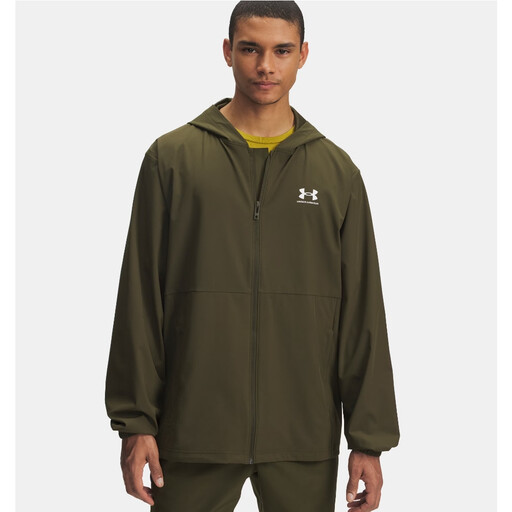
Why This Fits Their Persona: This option is suited to users who want stretch, light rain resistance and layering room for mixed exercise and everyday wear.
The product information identifies 140 GSM fabric, four-way stretch and a fluorine-free water-repellent treatment, while describing the protection as breathable rather than fully waterproof.
87% polyester/13% elastane; at least 80% recycled polyester in the main body; zipped pockets and adjustable hem.
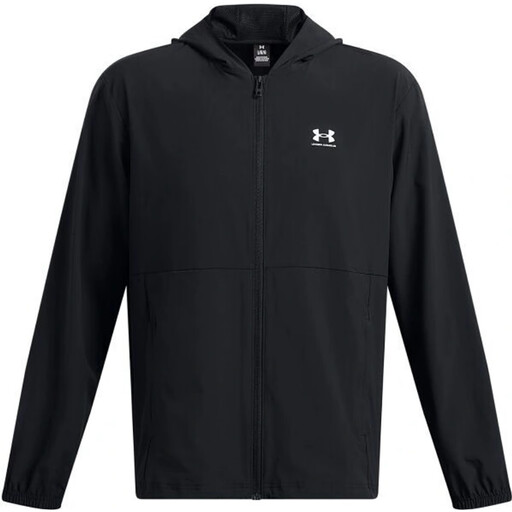
Why This Fits Their Persona: The full-zip hooded design works well for frequent commuters, casual wear and active users who need quick on-and-off flexibility.
Its specification lists 170 GSM woven fabric, a fuller cut and elastic cuffs, helping buyers assess layering and fit instead of judging the jacket only by its appearance.
Full-zip hooded construction; wind-resistant and water-repellent woven fabric; black colourway for versatile outfits.
We have compiled a complete, real-time list of products that fully satisfy these strict selection criteria and UK safety regulations.
A windbreaker’s performance can decline if its water-repellent finish is damaged by unsuitable washing. Follow the garment label, zip the jacket before washing and avoid bleach unless the instructions specifically allow it. Some products advise against fabric softener, ironing or dry cleaning.
For sizing, measure your chest and compare it with the product’s table. If you plan to wear a hoodie underneath, allow additional room around the chest and shoulders. A hem adjustment is useful in exposed locations, while a hood drawcord can improve coverage during a windy walk.
It can handle wind and light drizzle when the fabric has a water-repellent finish, but it should not automatically be treated as waterproof. For prolonged or heavy rain, choose a jacket with clearly stated waterproof construction and sealed seams.
There is no single suitable weight. A 70–85 GSM shell is easy to carry and may suit warm-weather running, while a 140–170 GSM woven jacket can provide more structure and layering comfort. Also consider stretch, breathability and pocket security rather than weight alone.
Lifespan depends on use, washing, abrasion and storage. Frequent backpack use can wear fabric around the shoulders, while repeated high-heat drying may affect coatings and elastic components. Store the jacket clean and dry, follow its care instructions and inspect zips, cuffs and seams regularly.