
24/7 Customer Support

Free returns

Same-day & Next-day Delivery

Quality Guaranteed

Unlock Your Welcome Offers: FREE Delivery | Up to 80% OFF | Free 30-day JoyPlus trial
Download the APP
Navigating the market for a reliable men's 3-in-1 waterproof jacket can feel like trekking through a fog. With so many brands making bold claims, it's easy to end up with a coat that leaves you damp and disappointed after one encounter with a proper British downpour. As a Joybuy Product Recommendation Officer, my role is to help you see through the marketing jargon and focus on what truly matters for staying warm and dry, whether you're on a mountain trail or a city street.
Before you invest in your next all-weather coat, let's look at the common pitfalls that catch many buyers out.
To avoid these traps, you need to look past the promotional photos and analyse a few core technical specifications. These numbers are the true measure of a jacket's performance.
This is the single most important metric for weather protection. Measured in millimetres (mm), the Hydrostatic Head (HH) rating tells you how much water pressure the fabric can withstand before it starts to leak.
Always look for fully taped seams, as this prevents water from penetrating the stitching, a common weak point.
A truly effective breathable waterproof jacket will have a high Moisture Vapour Transmission Rate (MVTR), measured in grams per square metre per 24 hours (g/m?/24h). This indicates how quickly sweat vapour can escape.
A durable outdoor jacket needs to withstand more than just rain. Look for materials with high abrasion resistance, often indicated by rub cycle tests (e.g., 40,000+ cycles). This ensures the jacket can handle scrapes from rocks, branches and rucksack straps. For a true men's windproof jacket, check for features like an adjustable hood, adjustable cuffs and a drawcord hem. These allow you to seal out drafts and lock in warmth, creating a protective microclimate.
Instead of a generic list, we've matched our recommendations to specific user needs. This ensures you get a jacket that is genuinely suited to your lifestyle.
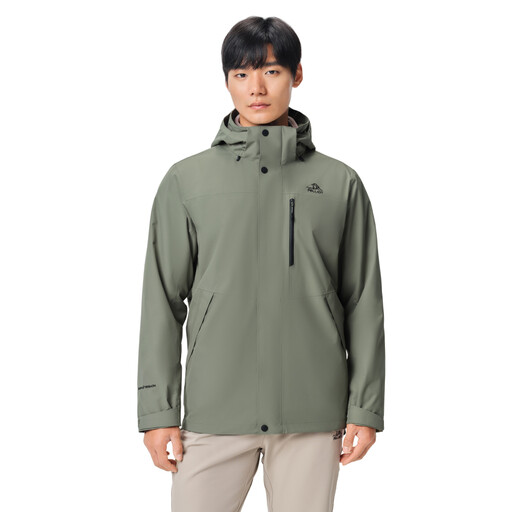
Why This Fits Their Persona: For those who tackle the challenging weather of the Brecon Beacons or the Lake District, technical performance is non-negotiable. This jacket's specifications are geared towards serious outdoor enthusiasts who demand protection in harsh conditions.
It sidesteps the "waterproof illusion" and "boil-in-the-bag" effect with clearly stated, high-performance metrics: a 35,900mm hydrostatic head and a 16,000g/m?/24h breathability rating. This is verifiable performance, not just marketing.
Its primary advantage is its storm-proof construction and exceptional durability, confirmed by a 40,000+ abrasion cycle test. This is an all-weather coat built for rugged terrain.
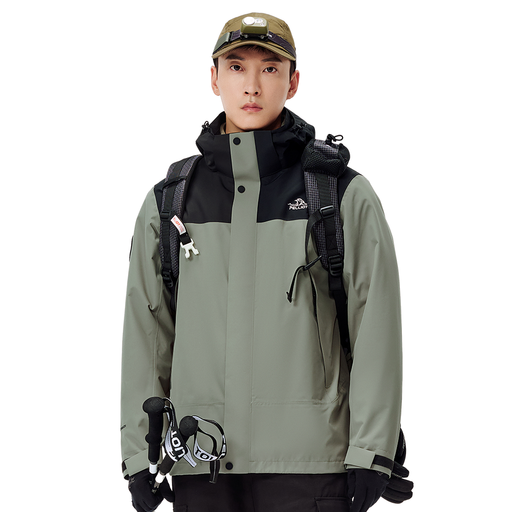
Why This Fits Their Persona: For campers, adaptability is everything. This jacket's 3-in-1 system is designed for changing conditions, from a cool evening around the fire to a cold, damp morning. The quality of the inner fleece is particularly important for overnight warmth.
It directly counters the "flimsy 3-in-1" pitfall with an upgraded tech thermal liner featuring circulating thermal-lock technology and an anti-static treatment. This prevents the fleece from clinging and ensures it provides consistent warmth, unlike cheaper alternatives.
The smart 3-in-1 system is its core strength, with defined temperature guides for each configuration. The scratch-resistant shell also adds the durability needed for setting up camp and exploring wooded areas.
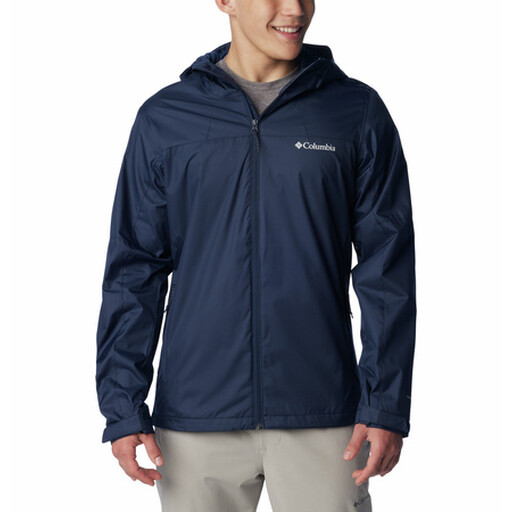
Why This Fits Their Persona: Not everyone needs an integrated fleece. For those who prefer to create their own layering system, a high-quality, packable shell is the most important component. This jacket is for the user who values lightweight, reliable rain protection above all else.
By focusing on being an excellent shell, it avoids the compromises of a poor 3-in-1 system. Its Omni-Tech technology provides proven waterproof and breathable performance and it is fully seam-sealed to prevent leaks.
Its key advantage is its packability. The jacket conveniently folds into its own pocket, making it an ideal emergency layer to keep in a backpack for unpredictable UK weather. It's a practical and reliable choice.
We have compiled a complete, real-time list of products that fully satisfy these strict selection criteria and UK safety regulations.
To preserve the waterproof and breathable properties, it's best to wash your jacket with a specialised technical wash, not standard laundry detergent. Always close all zips and fastenings before washing on a gentle cycle. Avoid fabric softeners, as they can clog the membrane's pores. Air dry the jacket or tumble dry on a low heat setting if the care label permits, as gentle heat can help reactivate the Durable Water Repellent (DWR) coating.
This is where the versatility of the system shines. For summer hiking, you can simply wear the outer shell on its own. It functions as a lightweight, breathable waterproof jacket that can be packed away easily and brought out when a summer shower strikes. The fleece liner can be left at home, giving you the right level of protection without overheating.
While layering separate items is a valid approach, a 3-in-1 system offers integrated convenience. The inner fleece zips directly into the outer shell, creating a single, cohesive garment. This ensures the layers move together without bunching or twisting and the fit is optimised, as both components were designed to work as a pair. It simplifies the process of adding or removing layers on the trail.